

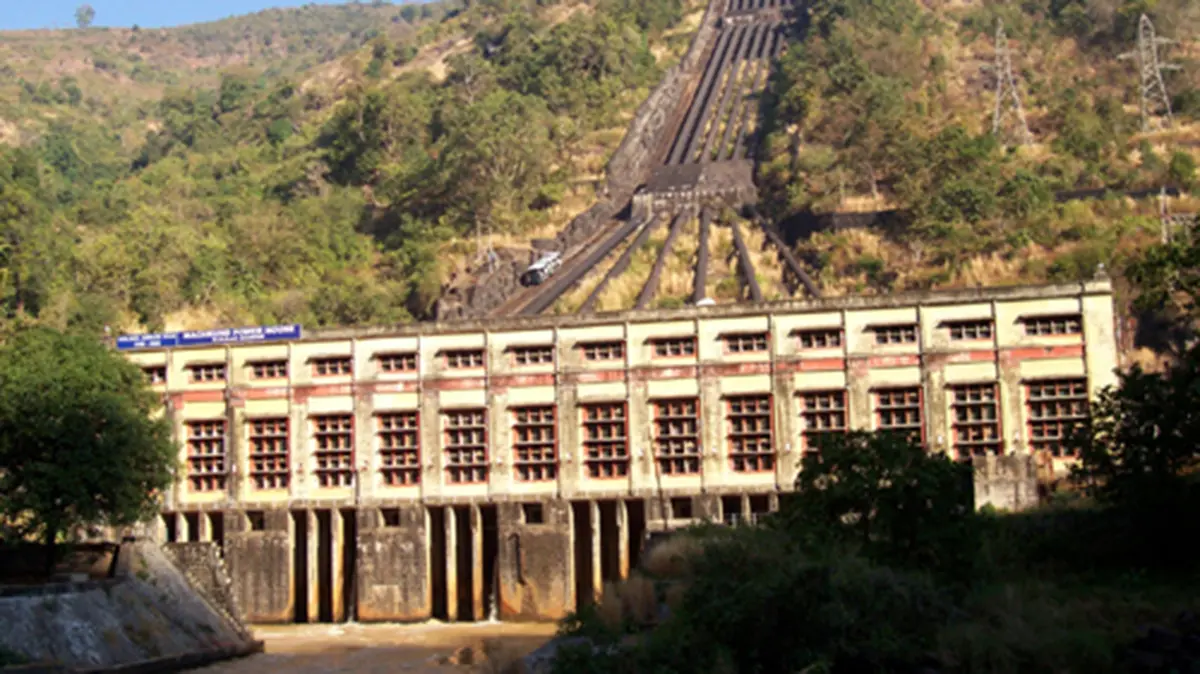
Why in news?
On 23 May 2026 a fire broke out in the underground powerhouse of the Machkund hydroelectric project on the border of Odisha and Andhra Pradesh. The blaze caused panic among workers and forced a shutdown of turbines until the flames were extinguished. No injuries were reported, but the incident raised concerns about ageing equipment at one of India’s oldest inter‑state power stations.
Background
The Machkund project is a 120 megawatt hydropower station located on the Machkund (or Sileru) river, which forms part of the boundary between Odisha and Andhra Pradesh. The idea for harnessing the river’s fall originated in the late 1920s when Maharaja Vikram Dev of Jeypore commissioned a survey by a British engineer. Construction began after World War II in 1948 and the plant was formally inaugurated in 1955 by President Rajendra Prasad. Originally the Madras Presidency (later Andhra Pradesh) and the Orissa government agreed to share power in a 70:30 ratio; this was later revised to 50:50 as demand grew on both sides. The plant has six generating units, and its output remains vital for nearby districts despite its age.
Recent incident
According to initial reports, a technical malfunction led to the fire inside the powerhouse. Workers noticed smoke around noon and evacuated the area while emergency teams switched off the turbines and fought the flames. The blaze damaged cables and control panels, causing power outages in surrounding areas. Investigations are ongoing to determine whether outdated equipment or maintenance lapses contributed to the accident. Authorities from both states have promised to upgrade electrical systems and review safety protocols to prevent similar incidents.
Impact and significance
- Energy supply: Machkund supplies electricity to several districts in southern Odisha and northern Andhra Pradesh. Even a short shutdown disrupts households and industries dependent on the grid.
- Joint venture: The project is jointly owned by the governments of Odisha and Andhra Pradesh. Its operation requires close coordination, and the fire has renewed calls for shared investment in modernization.
- Heritage value: As one of India’s earliest inter‑state hydro projects, Machkund is part of the country’s engineering heritage. Conservationists argue that ageing infrastructure should be retrofitted rather than replaced to preserve this legacy.
- Safety lessons: The incident highlights the need for regular inspections, updated fire‑fighting equipment and training for workers in older plants where wiring and control systems may be obsolete.
Conclusion
The Machkund fire serves as a reminder that India’s energy landscape includes many ageing hydro projects that still power millions of homes. Investing in modern controls, safety audits and preventive maintenance will be essential to keep these heritage plants running safely while meeting rising demand.