

Why in news?
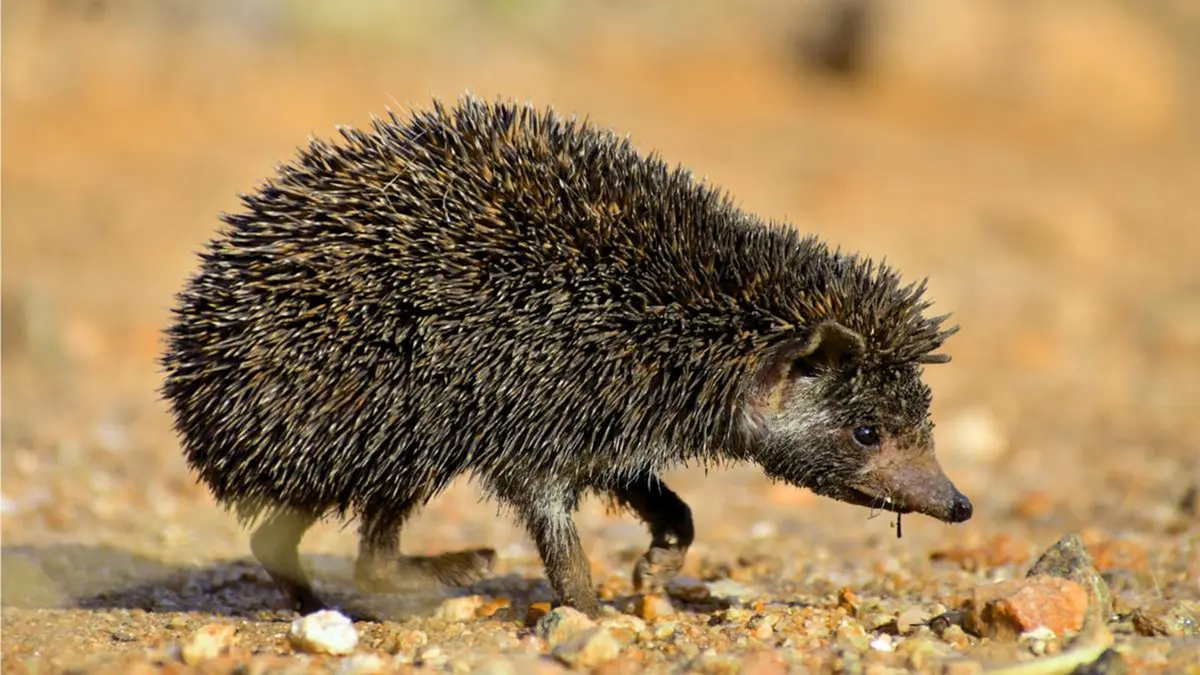
Researchers published the first complete mitochondrial genome of the Madras hedgehog (Paraechinus nudiventris), shedding light on its evolutionary history and aiding conservation efforts. The species, endemic to peninsular India, was previously poorly studied and often mistaken for other hedgehog species.
Background
The Madras hedgehog, also called the bare‑bellied hedgehog, is found in dry scrublands and thorn forests of Tamil Nadu, Andhra Pradesh, Kerala and Karnataka. It is small, with a head‑to‑body length of 14–25 cm and a weight of 300–435 g. Its back is covered with brown or grey spines while the belly has sparse fur, giving rise to its name. Like other hedgehogs, it is nocturnal and feeds mainly on insects, small reptiles and fruits.
Highlights of the mitochondrial study
- Genomic insights: Sequencing the mitochondrial DNA helps clarify the hedgehog’s phylogenetic position within the Erinaceidae family and reveals divergence from other African and Asian hedgehogs.
- Conservation value: Genetic data provide baseline information for monitoring population health and planning breeding programmes. The Madras hedgehog is listed as Least Concern on the IUCN Red List but faces local threats.
- Threats: In parts of India the species is hunted for meat and quills, partly due to beliefs that it cures ailments like tuberculosis and asthma. Habitat loss from expanding agriculture and urbanisation also pressures populations. It is protected under Schedule IV of India’s Wildlife Protection Act.
- Ecological role: Hedgehogs help control insect pests and aerate soil while foraging. Studying their genetics can inform wider ecosystem management strategies.
Outlook
The genome study paves the way for comparative analyses with other hedgehog species and highlights the importance of documenting genetic diversity in lesser‑known mammals. Conservationists call for awareness campaigns and stricter enforcement against hunting to ensure the species’ long‑term survival.
Source: Animalia.bio, The Hindu