

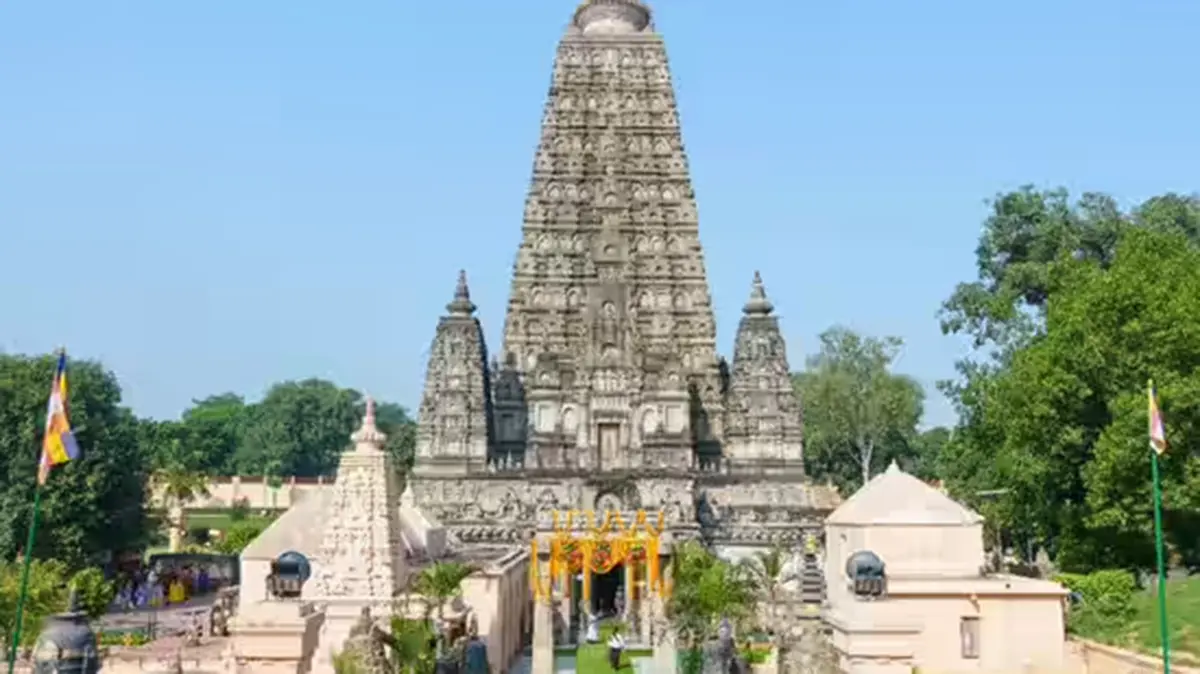
Why in news?
- The Indian Ministry of Home Affairs (MHA) resolved a long‑standing issue concerning foreign currency donations at the Mahabodhi Temple in Bodh Gaya.
- After the decision, the State Bank of India’s Bodh Gaya branch began accepting foreign currencies from 33 countries deposited in the temple’s donation boxes.
- The Bodh Gaya Temple Management Committee (BTMC) is now able to utilise foreign donations for maintenance and development of the UNESCO World Heritage site.
Background
The Mahabodhi Temple stands at the place where Siddhartha Gautama attained enlightenment. Emperor Ashoka built the first shrine here in the 3rd century BC, and the current brick structure dates to the 5th–6th centuries. The temple complex includes the sacred Bodhi Tree, the Vajrasana seat and several ancient stupas. Millions of Buddhists from India and abroad visit each year and offer donations in Indian and foreign currencies. For years, foreign currency deposited in the temple’s hundi remained unused because banks were not authorised to process certain currencies.
Key developments
- MHA intervention: The Foreign Exchange (FEMA) branch of the MHA directed the SBI Bodh Gaya branch to accept and convert foreign currencies. This allowed the BTMC to deposit money collected from more than 33 countries.
- Donation figures: After counting donations, the BTMC reported receiving over ₹2 crore this year. About ₹1.29 crore came in Indian currency and around ₹73 lakh in foreign currency.
- Utilisation of funds: With bank acceptance, foreign currency kept in sacks for decades will now be converted. The funds will go towards maintenance of the temple, facilities for pilgrims and conservation of the site.
- Administrative role: The Bodh Gaya Temple Management Committee manages the shrine. Its chairman, who is also the district magistrate of Gaya, sought MHA’s intervention to ensure proper management of donations.
Conclusion
Allowing the conversion of foreign currency donations will significantly enhance resources for the upkeep of the Mahabodhi Temple. It also ensures transparency in handling contributions from international pilgrims. Proper use of these funds can improve facilities and preserve this sacred heritage site for future generations.
Source: JAG