

Why in news?
The Union government told Parliament that no Mahadayi environmental-clearance proposal from Karnataka was pending before it.
Why the statement matters
Karnataka seeks to divert water through the Kalasa and Bhandura projects. Political claims often treat water allocation and environmental approval as one decision.
They are legally separate. A tribunal allocation or technical appraisal does not replace forest, wildlife and environmental permissions.
The Central Water Commission cleared modified detailed project reports in December 2022. Its decision expressly remained subject to mandatory approvals.
The parliamentary reply therefore described an administrative position, not final project permission. It also did not settle pending litigation.
Allocation does not authorise construction
A water share identifies an entitlement. Project work still requires every applicable statutory clearance and compliance condition.
The river’s geography
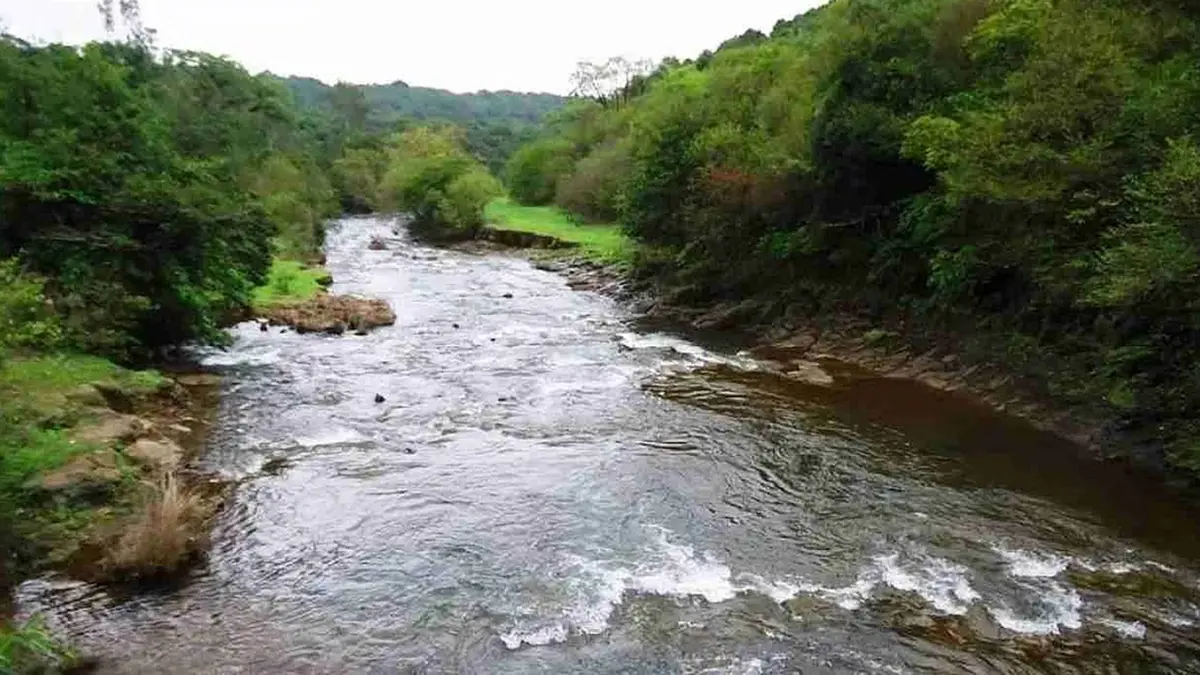
The Mahadayi rises in the Western Ghats of Karnataka’s Belagavi district. It flows west into Goa, where it is called Mhadei.
Downstream, the river becomes the Mandovi and reaches the Arabian Sea at Panaji. A small basin portion also lies in Maharashtra.
Kalasa and Bhandura are headwater tributaries in Karnataka. The proposed diversion would move water towards the Malaprabha in the Krishna basin.
That inter-basin transfer explains the dispute’s intensity. Upstream drinking-water claims meet downstream concerns about estuaries, ecology and freshwater flows.
Tribunal award and institutions
The Mahadayi Water Disputes Tribunal delivered its final award on 14 August 2018. The Union government notified it in February 2020.
The award allowed Karnataka to divert 3.90 thousand million cubic feet through Kalasa and Bhandura. Other allocations covered different uses.
The Union government created the Progressive River Authority for Welfare and Harmony, or Mahadayi PRAWAH, in May 2023.
The authority is intended to implement the award. It cannot displace judicial review or approvals under environmental law.
What should happen next
Authorities should publish the current clearance status for each project component. Public records must distinguish submissions, appraisals, approvals and conditions.
Cumulative assessment should examine lean-season flows and downstream salinity. It should also consider forests, wildlife and local water security.
Shared monitoring can reduce factual disputes among Goa, Karnataka and Maharashtra. Transparent data cannot remove politics, but can narrow disagreement.
One river, several legal gates
The tribunal award is important but not sufficient. Construction depends on clearances, court directions and verifiable compliance.
Conclusion
The latest reply clarifies that no proposal was pending. It does not convert contested projects into approved works.