

Why in news?
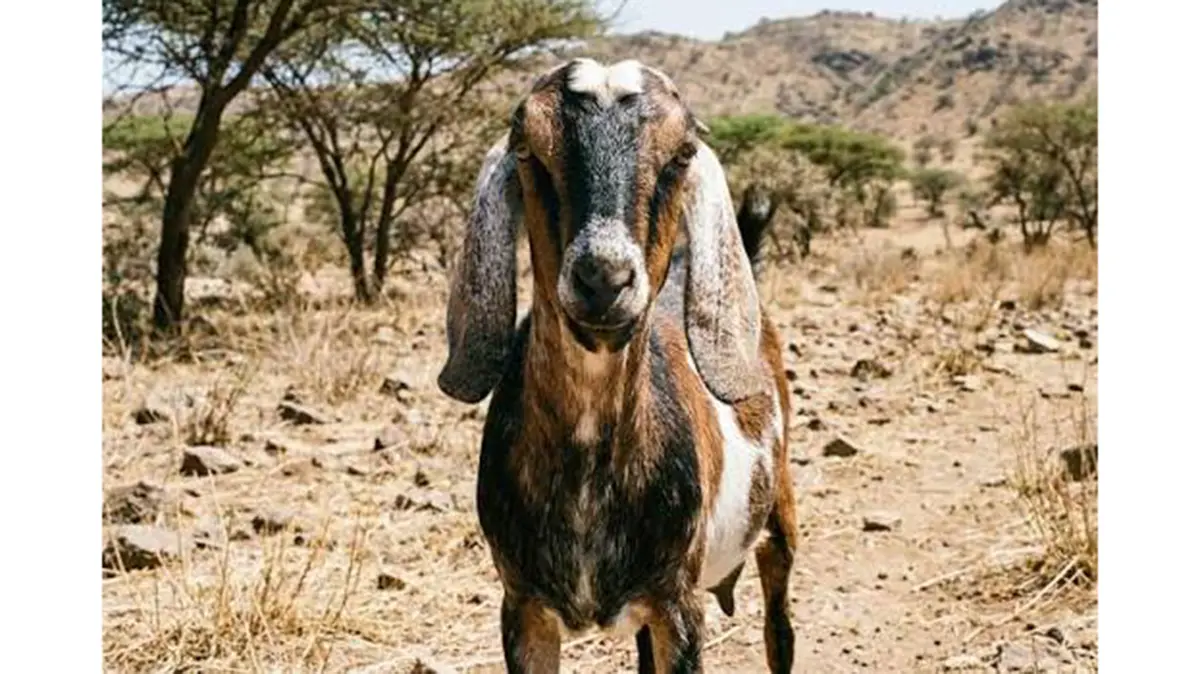
Kerala Veterinary and Animal Sciences University researchers have linked Malabari goats with maternal lineages around the Arabian region and beyond. Their study, published in Mammalian Genome on 1 September 2026, analysed pooled genetic samples from 20 unrelated goats. Malabari is a recognised breed associated with northern Kerala, used for milk and meat. The researchers interpret the relationships as evidence of historical livestock movement through maritime trade networks. The finding adds a biological clue to contact across the Arabian Sea. It does not identify a particular ship, date an individual voyage or establish the breed’s entire ancestry. The mitochondrial genetic material studied is normally inherited from the mother. It principally follows that line, rather than every branch of an animal’s family history.
A breed rooted in northern Kerala
The national goat-breed register lists Malabari with Kerala as its home state. Older breed surveys locate its distribution particularly around Kozhikode, Kannur and Malappuram. These districts form part of northern Kerala’s humid coastal and adjoining landscape. A breed’s home tract describes its established geographical association, not a rule that every animal lives within those boundaries.
The Food and Agriculture Organization’s breed account describes variation in coat colour and physical characteristics within Malabari goats. A domestic breed need not be visually identical in every individual. Breeding history, adaptation and management help shape the population over generations. It is a livestock population within the domestic goat, not a newly discovered wild species.
Its dual-purpose role also matters. Farmers may value animals for milk, offspring, meat and their fit within household farming. Genetic research can add information about ancestry without replacing this practical knowledge. A relationship with another population does not by itself prove that one breed produces more milk or withstands disease better.
What mitochondrial inheritance can reveal
Deoxyribonucleic acid, or DNA, carries genetic information. Most of an animal’s DNA is contained in the cell nucleus and reflects inheritance from both parents. Mitochondria, the structures involved in producing usable cellular energy, contain a much smaller genetic system of their own. In mammals, this mitochondrial material is normally inherited through the mother.
This makes mitochondrial sequences useful for tracing maternal relationships. Related sequences can be compared across populations, and shared variants help researchers group lineages. But a maternal line is only one part of ancestry. It does not capture the full contribution of males or every episode of crossbreeding in the population’s past.
A complete mitochondrial genome, often called a mitogenome, covers more sequence than a short marker alone. The study also examined a variable region known as the displacement loop, or D-loop. Comparing results from these different stretches of genetic material can reveal relationships at different levels, rather than producing one interchangeable family tree.
What the researchers found—and what remains an interpretation
The published abstract reports close maternal genetic affinity with Iraqi Meriz goats and Arabian goat populations. Its D-loop analysis placed Malabari within a lineage labelled B1, alongside goats from Iraq, Oman and Gujarat. A lineage label groups related genetic sequences; it is not a national identity or a measure of breed quality.
The whole-mitogenome analysis produced a grouping that also included sampled goats from Vietnam, Malaysia and Russia. This is not the same comparison as the D-loop grouping. The differences help explain why a short headline about a single foreign origin cannot convey the full research result.
Genetic relatedness supports a historical hypothesis; it does not supply a shipping record. Shared ancestry may be consistent with animal movement through established trading networks. Establishing a more exact route or period would require additional evidence, potentially including wider genetic sampling, archaeological remains and historical records.
Why the maritime explanation is plausible
Kerala faces the Arabian Sea, linking its western coastline with routes towards Arabia and the wider Indian Ocean. The spice trade was a network of ports and passages rather than one fixed road. Kerala’s Muziris heritage account describes long-distance commercial connections supported by knowledge of seasonal monsoon winds.
The United Nations Educational, Scientific and Cultural Organization’s Silk Roads programme likewise emphasises maritime exchange alongside overland routes. Trade carried commodities, people and knowledge between connected societies. That established context makes livestock exchange a reasonable subject for investigation, while the specific history of the Malabari lineage remains a question for evidence.
From ancestry research to breed conservation
A study using samples from 20 unrelated animals offers information about those sampled animals and their comparative relationships. It is not a census of every Malabari maternal line. Pooling samples also differs from reconstructing a complete, individually documented pedigree for each goat. Wider sampling would help establish how representative the observed pattern is.
For conservation, diversity within a breed matters alongside its historical origin. Breeding repeatedly from a narrow set of parents can reduce that diversity. Genetic records are therefore most useful when combined with information about health, reproduction, local adaptation and farmers’ needs. An interesting ancestry claim alone is not a complete breeding strategy.
Conclusion
The Malabari study brings livestock genetics into the history of Kerala’s maritime connections. Its strongest contribution is a documented maternal relationship that can be investigated further. Combining genetic, archaeological and historical evidence would clarify that story, while keeping the breed’s present value to local farming at the centre of conservation.