

Why in news?
India has placed emergency orders for more Igla‑S missile systems and begun developing its own Very Short Range Air Defence System (VSHORADS) to strengthen defences against low‑flying aircraft and drones. The procurements come amid heightened border tensions and growing concerns over drone attacks.
What are MANPADS?
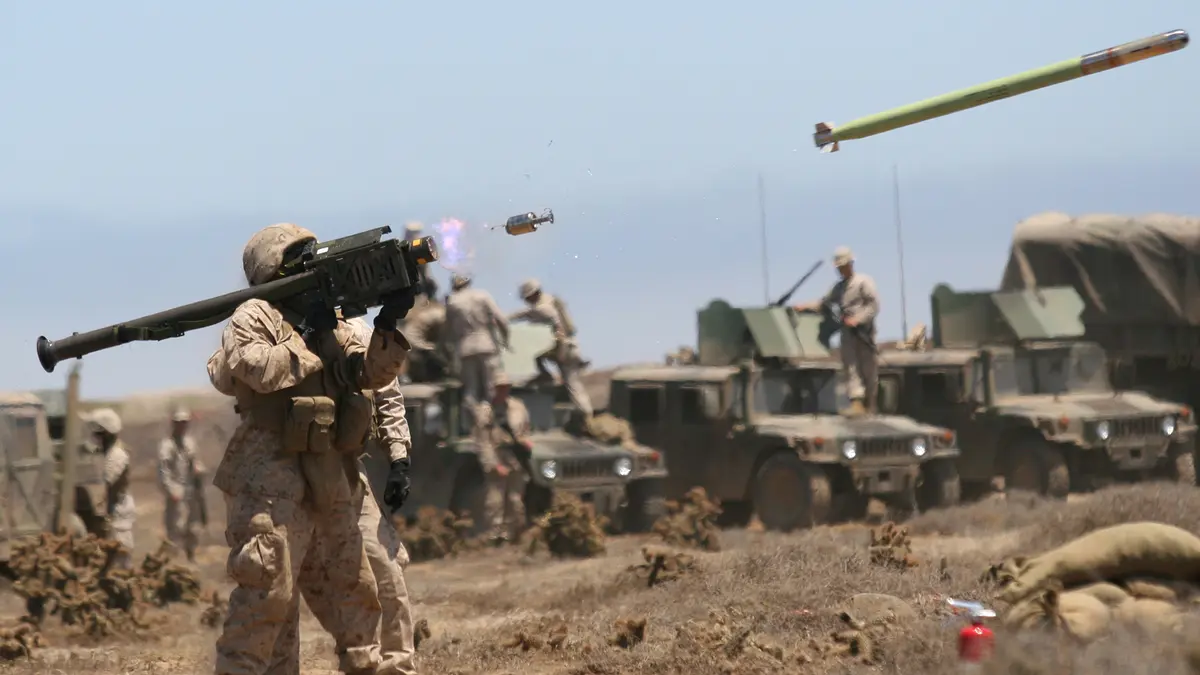
MANPADS are shoulder‑fired surface‑to‑air missiles designed for use by a single soldier or a small crew. The weapons typically weigh around 20 kg and consist of a missile sealed in a launch tube, a firing mechanism and a battery. Three main guidance technologies are used: infrared homing (heat‑seeking), command line‑of‑sight and laser beam riding. The most common type, infrared‑guided missiles, home in on the heat signature of aircraft engines. MANPADS can hit targets flying up to about 4.8 km away and 4.5 km in altitude. They should not be confused with rocket‑propelled grenades (RPGs), which are anti‑armour weapons.
Global context
- Origins: The United States and the Soviet Union first deployed MANPADS in the 1960s. Today more than 30 countries manufacture them.
- Types: Major families include the Soviet/Russian Strela and Igla series, the American Stinger, the Chinese QW series and other indigenous models. Most systems have an effective range of 3–6 km and are considered short‑range.
- Security concerns: Their portability and ease of use make MANPADS attractive to non‑state actors. Thousands of missiles have been illicitly traded, prompting international efforts to secure stockpiles and regulate transfers.
India’s procurement and plans
- Igla‑S acquisition: India ordered Russian Igla‑S missiles and launchers worth about ₹260 crore. The Igla‑S is an upgraded MANPADS with a range of up to 6 km and can engage targets at altitudes up to 3.5 km. It uses infrared homing and is designed to resist jamming.
- VSHORADS development: The Defence Research and Development Organisation (DRDO) is developing an indigenous VSHORADS missile to reduce reliance on imports. A recent Army tender calls for 48 launchers and 85 missiles with night‑vision sights.
- Operational role: The Indian Army is integrating MANPADS into a layered air defence network to counter drones, helicopters and cruise missiles. Enhanced training and radar integration aim to improve reaction times.
Significance
Modern conflicts feature a growing number of low‑flying threats, including unmanned aerial vehicles (UAVs) and precision‑guided munitions. Portable air defence systems provide frontline units with a flexible tool to protect troops, bases and critical infrastructure. India’s efforts to procure and develop MANPADS reflect its focus on self‑reliance and the need to plug gaps in air defence coverage.
Sources: DEF