

Environment

Meghalaya Cave Snails: New Micro-Snail Species Discovered

Meghalaya Cave Snails: New Micro-Snail Species Discovered

Why in news?

Researchers from India and Europe have discovered two tiny snail species, Georissa meghalayaensis and Acmella bensoni, in the limestone caves of Meghalaya. The finds were announced in mid‑2026 and underline the rich yet fragile subterranean biodiversity of Northeast India.

Background

The Indo‑Burma biodiversity hotspot encompasses northeastern India, Myanmar and parts of Southeast Asia. Its karst landscapes host numerous caves that remain poorly explored. Micro‑snails belong to families like Hydrocenidae and Assimineidae and often have shells just a few millimetres across. They play an important role in nutrient cycling and are sensitive indicators of habitat health.

Discoveries

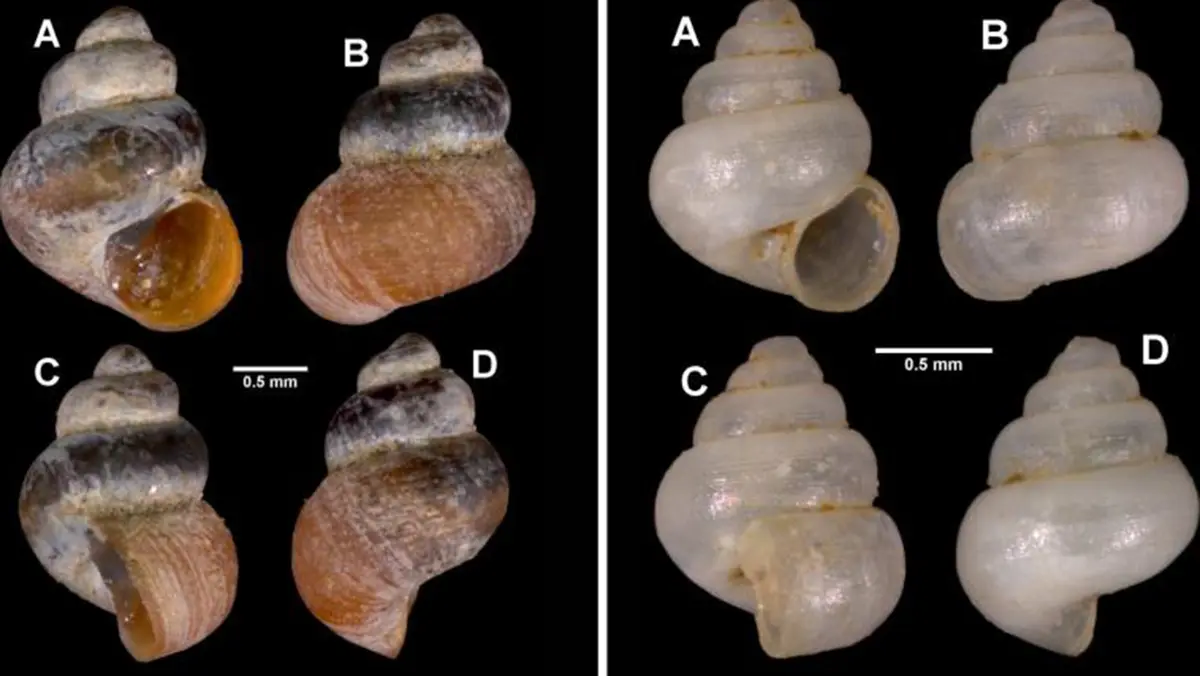
  • Georissa meghalayaensis: Found near the entrance of Krem Puri cave, this species has a vivid orange‑red shell with a dense mesh of ridges. Its closest relatives have yellow shells with simple spiral lines. The new species is named after its home state.
  • Acmella bensoni: Discovered deep inside Krem Puri and Arwah caves, this micro‑snail has a tiny transparent‑white shell with deeply impressed grooves and fine ribs that make it appear smooth. It honours William H. Benson, a 19th‑century British malacologist regarded as a pioneer of Indian mollusc studies.
  • Conservation message: The researchers urge caution when developing caves for tourism. Many cave species have very restricted distributions and can disappear if their microhabitats are disturbed by lighting, foot traffic or pollution.

Conclusion

The discovery of Georissa meghalayaensis and Acmella bensoni highlights how much remains to be learned about India’s cave fauna. Protecting limestone ecosystems and balancing tourism with conservation will ensure these miniature creatures continue to thrive.

Sources

Research Matters

Prelims MCQ Practice

Evaluate Your Retention

Assess your readiness with 4 high-yield multiple-choice questions on this article.

Mark your answers, submit, and see the key with explanations. Answers count only toward anonymous totals — nothing is linked to you, and it resets when you close this tab.

Practice questions 0 of 4 answered

Your result

0 / 4

Only anonymous totals are kept — nothing is linked to you. This resets when the tab closes.

1.

The limestone caves of Meghalaya, where two new micro-snail species were recently described, are formed mainly by:

2.

With reference to biodiversity hotspots, consider the following statements:

1.The Indo-Burma hotspot extends beyond India into Myanmar and Southeast Asia.
2.North-eastern India falls within the Western Ghats and Sri Lanka hotspot.
3.Biodiversity hotspots are designated by the United Nations Environment Programme.

Select the answer using the code given below:

3.

Animals that live permanently in the dark zone of caves typically show which one of the following adaptations?

4.

Snails such as Georissa meghalayaensis, recently described from Meghalaya, belong to which one of the following classes?

Answer all 4 questions, then submit.
Sign in Today’s news
Current affairs Daily news Daily quiz News Blitz Shorts Economic Survey 2025-26 Subjects
Polity Economy Geography Environment History Science & Tech Intl. Relations Internal Security Art & Culture Social Issues
All subjects Exam info UPSC Syllabus Prelims syllabus Mains syllabus Exam pattern Eligibility & attempts OBC & EWS checker Resources Free downloads Booklist 2026 Previous year papers Video notes YouTube channel