

Why in news?
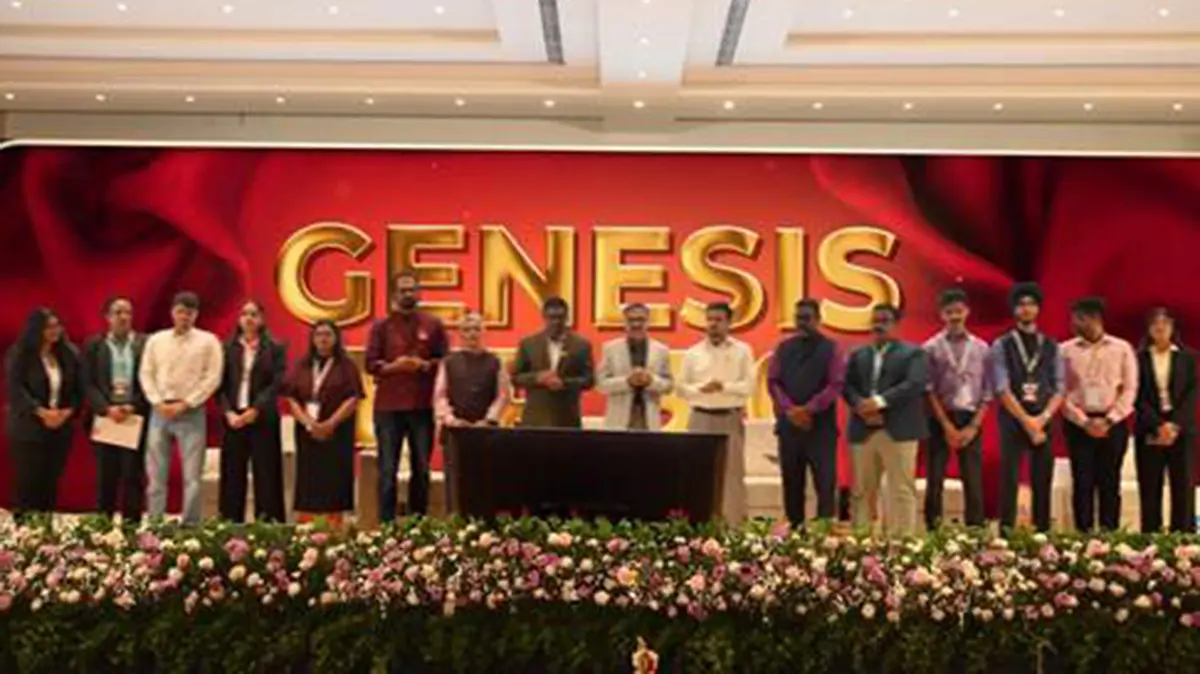
The Ministry of Electronics and Information Technology opened applications for GENESIS Entrepreneur-in-Residence Cohort 3. The programme was launched at a startup summit in Coimbatore on 4 August. The formal national call was announced on 24 August. Eligible applicants could apply until 3 September 2026 for incubation and support of up to ₹10 lakh.
What GENESIS means
GENESIS expands to Gen-Next Support for Innovative Startups. The MeitY Startup Hub implements it under the Ministry of Electronics and Information Technology. The broader scheme has an outlay of ₹490 crore. It focuses especially on startups in Tier-II and Tier-III cities.
The scheme contains several support routes. These include Entrepreneur-in-Residence, pilot, investment and deep-technology components. They cover different stages from an early idea to market growth. Cohort 3 concerns only the Entrepreneur-in-Residence route.
Who can apply
Applicants must be Indian citizens. Entrepreneurs, innovators, researchers and students may apply. Founders or co-founders of an early-stage startup are also eligible. An incorporated startup must be less than two years old on the application date.
The startup must be based in a Tier-II or Tier-III city. It must not have received more than ₹10 lakh from a government scheme for the same idea. This condition seeks to prevent duplicate public financing. It does not bar every applicant with earlier support.
The technology stage
Eligible ideas should be at Technology Readiness Level 1 to 4. These levels cover basic principles, an early concept, proof of concept and laboratory validation. The call also includes prototype and early minimum-viable-product work. Applicants are not expected to begin with a mature commercial product.
The focus includes electronics, information technology and deep technology. Named areas include artificial intelligence, machine learning and the Internet of Things. Semiconductors, cybersecurity, blockchain and quantum technology are also covered. Spatial and immersive technologies form another group.
What selected innovators receive
Financial assistance can reach ₹10 lakh per startup. Selection also provides access to a participating GENESIS incubator. Mentors can help refine the product and business model. Technical support can assist prototyping, testing and validation.
Incubation also connects founders with industry, investors and other entrepreneurs. These links are important for a first pilot. However, support does not guarantee investment or market success. A grant helps test an idea; customers still need useful and reliable products.
Why place matters
The launch took place in Coimbatore, a major industrial and educational city in western Tamil Nadu. The wider programme targets innovation outside the largest metropolitan centres. Smaller cities often have capable students and industry clusters. They may still lack specialised mentors and early risk capital.
Founders can face pressure to move to Bengaluru, Delhi or Mumbai. A local incubator can reduce that need. Regional support may also produce solutions for local manufacturing, agriculture and public services. Location-based inclusion should not weaken technical selection standards.
The difficult gap between idea and pilot
Early innovators often cannot attract commercial investors. Their product may be too untested, while testing itself needs money. The Entrepreneur-in-Residence model addresses this gap. It supports learning before a company is ready to scale.
Deep-technology ideas need longer development than many digital services. Hardware, semiconductor or quantum work can require expensive equipment. Regulatory approval may also take time. Milestones should therefore match the technology rather than apply one schedule to every project.
Governance and selection
Public support needs transparent selection criteria and conflict rules. Expert panels should assess novelty, feasibility and public value. Applicants need clear feedback and appeal channels. Incubators should disclose how they monitor funds and milestones.
Intellectual-property terms also require clarity. Founders must know what rights an incubator receives. Researchers need permission from their institution where necessary. Public money should not lead to hidden or unfair ownership conditions.
How success should be measured
The number of selected teams is only an early output. Useful measures include completed prototypes and validated pilots. Follow-on investment and customer adoption matter later. Survival should be tracked without treating every failed experiment as waste.
Regional impact also needs evidence. The programme should report city, gender and institutional diversity. It should examine whether supported firms remain in emerging centres. Lessons from unsuccessful projects can improve later cohorts.
Support is competitive and conditional
The call invites applications; it does not award ₹10 lakh automatically. Selection, incubation rules and verified milestones determine the actual assistance received.
Conclusion
GENESIS Cohort 3 targets the stage where promising ideas often lose momentum. Funding and incubation can help innovators reach a credible pilot. Its regional focus may broaden India’s technology map. Transparent selection and suitable milestones remain essential. The scheme should be judged by tested solutions and durable local ecosystems, not by application numbers alone.