

Why in news?
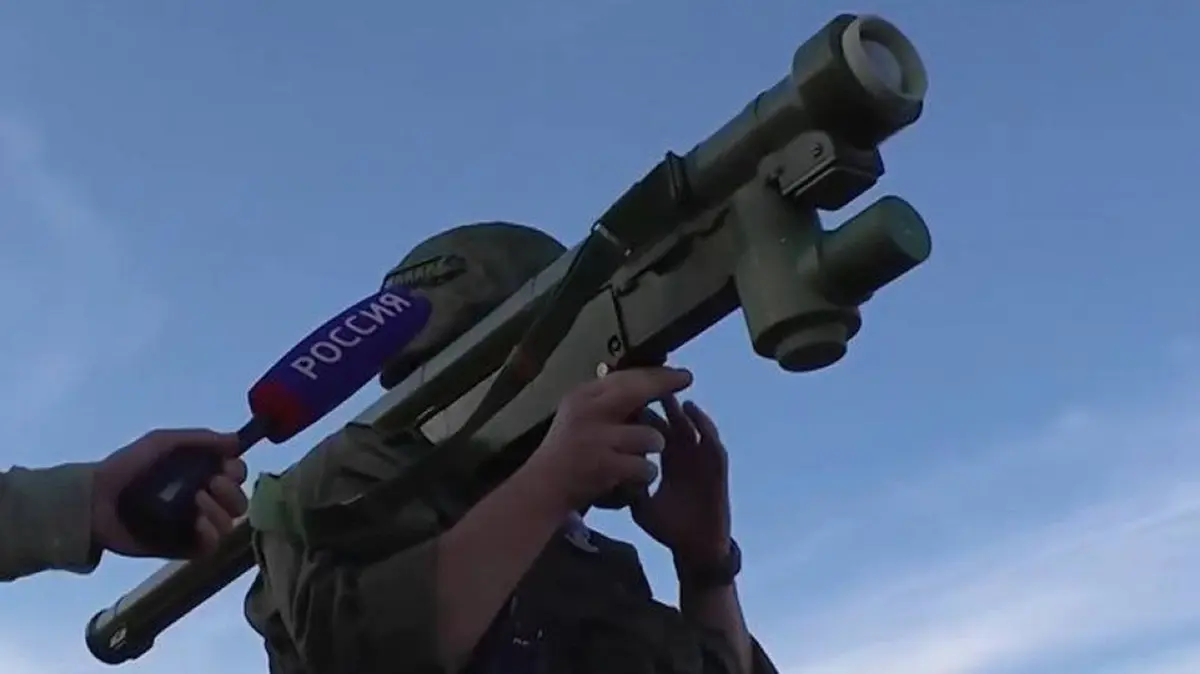
Reports on 29–30 September 2026 identified apparent Misagh-2 systems with Russian mobile air-defence groups in the Rostov region. Military Watch and The Times of India discussed imagery-based Ukrainian reporting about the weapons. Misagh-2 is an Iranian portable surface-to-air missile system, intended for short-range defence against aerial threats. Its reported appearance matters because such weapons can add a local defensive layer without the scale of a larger missile installation. However, the imagery-based account does not independently establish the delivery route, quantity or combat effectiveness of the systems shown. The development is a reported identification, not a verified procurement announcement or demonstrated battlefield result.
What a portable air-defence system does
Man-portable air-defence systems are commonly shortened to MANPADS. They are surface-to-air weapons small enough to be carried by personnel. Their defining role is defence against aircraft within a relatively short engagement range. They differ from large air-defence installations intended to cover much wider areas, and from unguided shoulder-fired rockets primarily designed for ground targets.
The Australian Government's information guide describes three broad guidance approaches: infrared, command guidance and laser-beam guidance. Infrared systems detect heat-related radiation from a target rather than relying on visible light alone. That principle explains the familiar description “heat-seeking”. It does not mean that every warm object can be engaged successfully, or that all portable systems use identical sensors.
For Misagh-2, the current reporting describes an infrared-guided weapon. Its role should be understood at that level before considering advertised specifications. A stated maximum range is not a promise of success against every target within that distance. The reported presence of a launcher also cannot demonstrate the condition of its missile, sensor or associated equipment.
Why identifying a model is not always straightforward
The Small Arms Survey uses the term “pattern” when a weapon resembles a design family but its precise variant is uncertain. Its 2024 report discusses Chinese-designed QW-18-pattern systems and Iranian connections. A footnote records earlier documents identifying some such weapons as Misagh-2. This provides background for the identification question, but it does not independently verify the equipment in the new Rostov imagery.
Closely related systems may share an external appearance. Photographs can also show only part of a weapon, and some components may be obscured or absent. The Survey distinguishes complete systems from partial or uncertain examples for this reason. An observed launch tube is evidence of that visible object; it is not automatically evidence of a complete, serviceable system with a confirmed manufacturer.
There are therefore several separate questions: what is visible, who possesses it, where it was photographed and how it arrived there. Evidence answering one does not necessarily answer the others. In this case, the reported Russian use is based on the identification account. The available reporting does not establish a documented shipment history or allow a reliable count of the inventory.
The wider issue of control and accountability
Portable air-defence weapons have legitimate military uses, but their movement also raises security concerns. United Nations resolutions reproduced in the Australian information kit recognise the danger of unauthorised access and illicit transfers. Civil aviation is among the concerns. This is why discussion of these systems extends beyond their battlefield role to transfer controls, records and secure storage.
Those safeguards concern the weapon's full life cycle rather than only its initial sale. Keeping reliable inventories and confirming authorised recipients help establish responsibility for equipment after a transfer. The existence of such safeguards should not be mistaken for proof that a particular reported transfer was lawful or unlawful. That conclusion requires the actual parties, route, authorisations and applicable restrictions to be established.
Conclusion
The Misagh-2 report points to a possible addition to local Russian air-defence resources, but its evidential scope remains limited. Understanding the weapon's short-range role explains why the sighting attracts attention. Confirmed identification, serviceability and transfer documentation would be needed before drawing stronger conclusions about the scale or military effect of its reported use.