

Why in news?
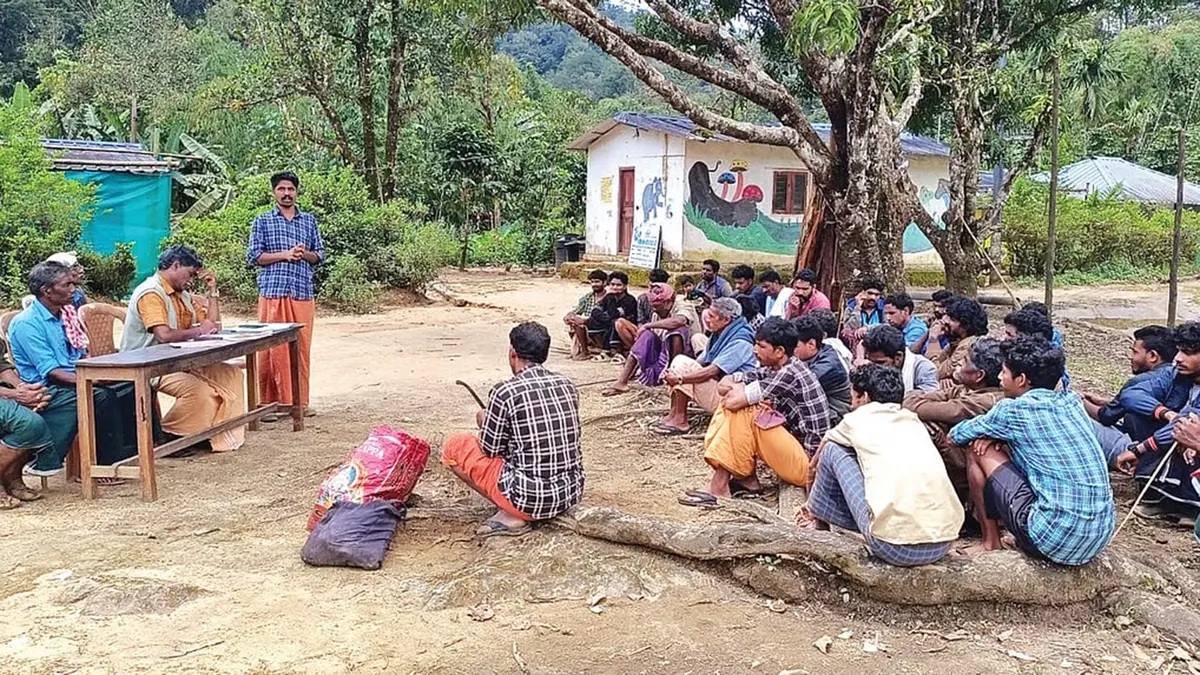
The Muthuvan community of Kerala came into the spotlight when elders and youth organised a convention to preserve their endangered language and traditions. The event highlighted the challenges faced by this small tribal group as modern influences encroach on their ancestral lifestyle.
Background
The Muthuvans (also called Muduvan or Muduvar) are an indigenous community residing mainly in the dense forests of the Anaimalai hills, which straddle Kerala’s Idukki district and adjacent regions of Tamil Nadu. Their name is derived from the Malayalam word muthuku meaning “back”, referencing a legend in which the community migrated from Madurai carrying their children, possessions and a deposed Pandyan prince on their backs. The tribe is divided into matrilineal clans and speaks a dialect related to Tamil but influenced by Malayalam.
Distinctive features
- Matrilineal social structure: Muthuvan society is organised into six clans that trace descent through the mother. Each clan is subdivided into lineages that regulate marriage alliances and social status. Elders elect a headman (Kani) who oversees village affairs.
- Livelihoods: Traditionally the Muthuvans were shifting cultivators, hunters and gatherers. Today they practise terrace farming of coffee, ginger, sugarcane, cardamom and paddy on forest clearings. Land ownership is important but many allocations are not fully recognised by the state.
- Housing and settlements: Villages, known as kudi, consist of reed‑and‑bamboo huts thatched with leaves, divided into a kitchen and a common room. Settlements are often remote and accessible only by foot.
- Religion and culture: The tribe follows animistic beliefs centred on ancestral spirits and deities associated with nature, although some families also practise Hindu rituals. Unique festivals honour their forebears and mark agricultural cycles. Songs, dances and oral epics preserve their history.
Challenges and preservation
- Language decline: The Muthuvan dialect has few speakers and faces competition from dominant regional languages. Community initiatives aim to document and teach it to younger generations.
- Economic pressures: Market integration and land insecurity force many Muthuvans to work as labourers in plantations or migrate for employment, leading to cultural erosion.
- Education and health: Access to schools and healthcare is limited in remote settlements. Low literacy among women and children hampers socio‑economic mobility.
Conclusion
The Muthuvan community embodies the cultural diversity of India’s Western Ghats. Preserving their language, customs and rights requires recognition of their land claims, better access to services and support for community‑led conservation of both forests and culture.