

Why in news?
The Environment Ministry urged the National Green Tribunal to seek annual Neelakurinji conservation plans from three states. Kerala, Tamil Nadu and Karnataka contain important populations. The rare mass-flowering shrub was assessed as Vulnerable globally in 2024. The case now focuses on coordinated protection, monitoring and legal clarity.
What Neelakurinji is
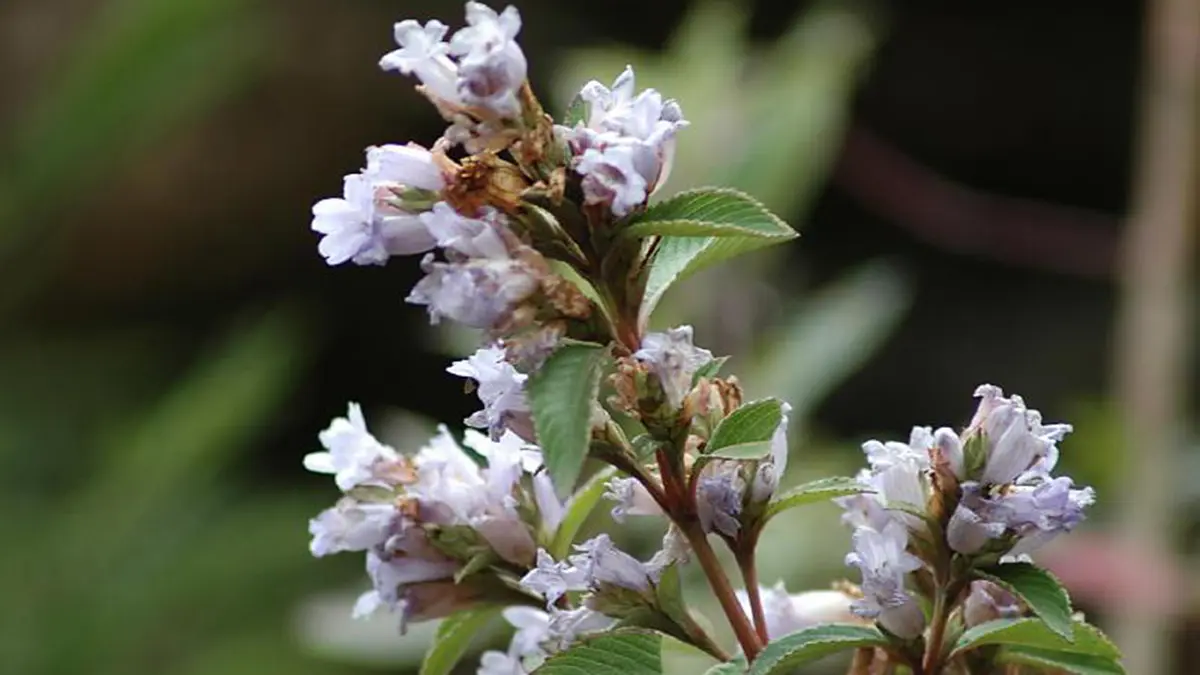
Neelakurinji is the shrub scientifically named Strobilanthes kunthiana. It belongs to the family Acanthaceae. The species is endemic to the southern Western Ghats. Its best-known populations grow in high-elevation grassland and shola landscapes.
The plant is semelparous. It flowers once, produces seed and then dies. Many populations flower together on a cycle of about twelve years. Their blue-purple blooms can temporarily cover large mountain slopes.
Mass flowering creates a major tourism event. It is also a critical reproductive stage. Trampling, fire or collection during this period can damage seed production. Management must protect both the flowering plants and the soil seed bank.
Where it occurs
The species is associated mainly with montane grasslands of Kerala, Tamil Nadu and Karnataka. Important landscapes include the Anamalai, Palani and Nilgiri hill systems. Most known populations occur in the Western Ghats. A separate reported population occurs in the Eastern Ghats.
These highlands form a mosaic of grasslands and stunted evergreen forest patches called sholas. Grasslands capture water and feed many streams. They also support specialised plants with narrow climatic needs. Replacing them with trees can damage an ecosystem that is naturally open.
Why it is classified as Vulnerable
The International Union for Conservation of Nature assessed the species in 2024. It placed Neelakurinji in the Vulnerable category under criterion A2c. The assessment cited an estimated habitat reduction near 40 per cent. Continuing decline in habitat quality also contributed.
Plantations of eucalyptus, pine and black wattle have replaced or altered montane grasslands. Roads, buildings and poorly managed tourism create further pressure. Invasive plants can close open habitat. Fire changes and climate shifts add uncertainty to future flowering and recruitment.
What the Tribunal case concerns
The National Green Tribunal took up the matter after a news report on the threatened status. The Ministry and Botanical Survey of India filed responses. The latest request seeks annual plans of operation from the three principal states. Such plans can turn broad concern into site-level actions.
A useful plan should map populations and flowering cohorts. It should identify invasive plants, tourism pressure and fire risk. Restoration needs measurable targets and responsible agencies. States should also report outcomes, not only planned expenditure.
Scientific status and Indian legal protection
An International Union for Conservation of Nature category is a scientific risk assessment. It does not itself create Indian criminal offences. Domestic legal protection comes through Indian statutes and notifications. These systems use different purposes and criteria.
The Ministry’s Tribunal filing noted the species in Schedule III of the Wildlife Protection Act framework. It also stated that no formal proposal then existed under the Biological Diversity Act. The Botanical Survey of India planned reassessment and field validation. Precise legal wording avoids overstating protection.
What effective conservation requires
Flowering-year crowd control is necessary but insufficient. Protection must continue during quiet years when the plant is less visible. Authorities should prevent grassland conversion and manage invasive trees carefully. Restoration must protect hydrology and native plant communities.
Long intervals make monitoring difficult. Permanent plots and georeferenced records can track each cohort. Local residents and researchers can report flowering and disturbance. Shared methods would allow meaningful comparison across state borders.
Tourism revenue should support habitat management and local communities. Visitor limits may be needed at sensitive sites. Paths and viewing areas can reduce trampling. Communication should explain that the plant’s full life cycle extends beyond the spectacular bloom.
Two kinds of status
“Vulnerable” describes global extinction risk under a scientific assessment. Indian schedules and biodiversity law determine domestic legal treatment. The two systems can inform one another but are not interchangeable.
Conclusion
Annual state plans could give Neelakurinji conservation a regular administrative structure. The main task is protecting montane grassland through the plant’s entire cycle. Monitoring must continue between mass blooms. Clear legal language and comparable data will improve accountability. Conservation should protect both the species and its water-producing mountain habitat.