

Why in news?
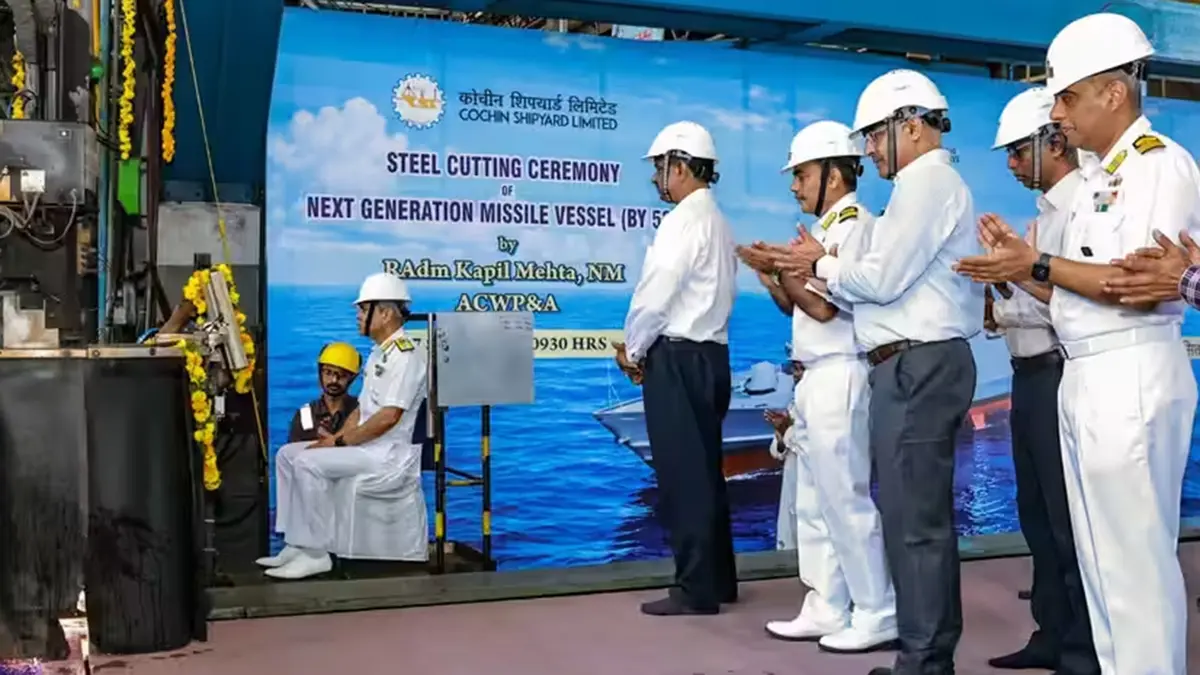
Cochin Shipyard held the keel-laying ceremony for the first of six Next-Generation Missile Vessels on 18 September 2026 in Kochi. The vessel, identified during construction as BY 531, is part of a contract signed with the Ministry of Defence in March 2023. These ships are intended to strengthen the Indian Navy's ability to threaten hostile surface ships and defend maritime areas. Keel laying marks a stage in assembling a ship; it is not its launch or entry into naval service. The programme had already passed its first steel-cutting milestone in December 2024. The latest event therefore shows construction progressing, while integration, testing and eventual delivery remain ahead.
What kind of naval vessel is being built?
Next-Generation Missile Vessels (NGMVs) are combat ships designed around missile-based surface warfare. Their purpose is not the same as that of a patrol vessel conducting routine surveillance. The shipyard describes offensive roles against surface targets as well as defensive employment around maritime assets. Speed, sensors, weapons and the ability to operate as part of a naval force all contribute to these tasks.
The March 2023 contract for six vessels was valued at approximately ₹9,805 crore. A separate contract announced alongside it concerned next-generation offshore patrol vessels. The costs and numbers of those two programmes should not be combined and attributed to the missile-vessel order. They cover different ships, with different operational roles and construction arrangements.
From steel cutting to operational service
Steel cutting marks the start of processing material for ship construction. Keel laying traditionally marks an early structural stage and, in modern construction, the assembly of major hull sections. Neither milestone means that a complete combat system is ready. Machinery, electrical systems, accommodation, sensors and weapons must still be installed and integrated. Construction progress and operational readiness therefore need separate descriptions.
After further assembly, a ship progresses through launch, fitting out and trials before delivery and commissioning. The precise sequence includes checks suited to the vessel and contract. Harbour tests assess systems while the ship remains alongside; sea trials examine performance at sea. A launch demonstrates that a hull can enter the water, not that every weapon and sensor has already completed acceptance testing.
Sea denial and defence of maritime assets
The shipyard identifies sea denial as an important role. This means making it dangerous or difficult for an opponent to use a maritime area. It is different from exercising complete control over that area for every purpose. Missile-armed vessels can contribute by presenting a credible threat to hostile surface ships. Their usefulness depends on finding, identifying and tracking targets as well as carrying weapons.
The announced equipment includes surface-to-surface missiles, anti-missile defences, air-surveillance radars and fire-control radars. Surveillance systems help build awareness of surrounding activity. Fire-control systems support the more precise tracking needed for weapon engagement. A defensive system must operate within this wider information chain. Listing individual pieces of equipment without explaining their relationship would give an incomplete picture of the ship's intended capability.
The latest shipyard release describes a speed of 33 knots and accommodation for around 80 personnel. These are programme specifications reported at the construction milestone, not measured results from completed sea trials. Older descriptions may carry different projected figures as designs evolve. Using the latest attributed specification avoids presenting every earlier publicity figure as a simultaneous, settled performance claim.
Indian construction and the propulsion supply chain
Cochin Shipyard is building the vessels in India. A separate announcement from GE Aerospace describes LM2500 gas-turbine kits for the programme, with assembly and testing involving Hindustan Aeronautics Limited in Bengaluru. This illustrates the difference between domestic shipbuilding and the origin of every component. An Indian-built vessel can involve foreign-origin machinery, licensed production and Indian integration within the same programme.
Propulsion machinery supplies the power needed to move the ship, while integrated platform-management systems help supervise onboard machinery and related functions. Combining these systems reliably is a major engineering task. It requires attention to maintenance access, crew operation and the interaction of mechanical and electrical equipment. The significance of a shipbuilding milestone therefore includes industrial integration, not only the visible growth of the hull.
What should be watched next?
The original contract announcement set out an expected delivery schedule, but the keel-laying event is not a fresh guarantee of every delivery date. Subsequent official updates will be needed to establish changes in schedule or completed testing. The exact weapon fit should also be described from confirmed programme information. A generic reference to surface-to-surface missiles does not justify assigning an unannounced missile model or a speculative loadout.
Conclusion
The first keel laying represents tangible progress in a six-ship naval construction programme. Its importance lies in the intended combination of surface-strike capability, defensive systems and domestic integration. The vessels have not yet demonstrated those capabilities in operational service. Following construction, trials and delivery separately will provide a clearer measure of progress than treating a ceremonial milestone as completion of the entire programme.