

Why in news?
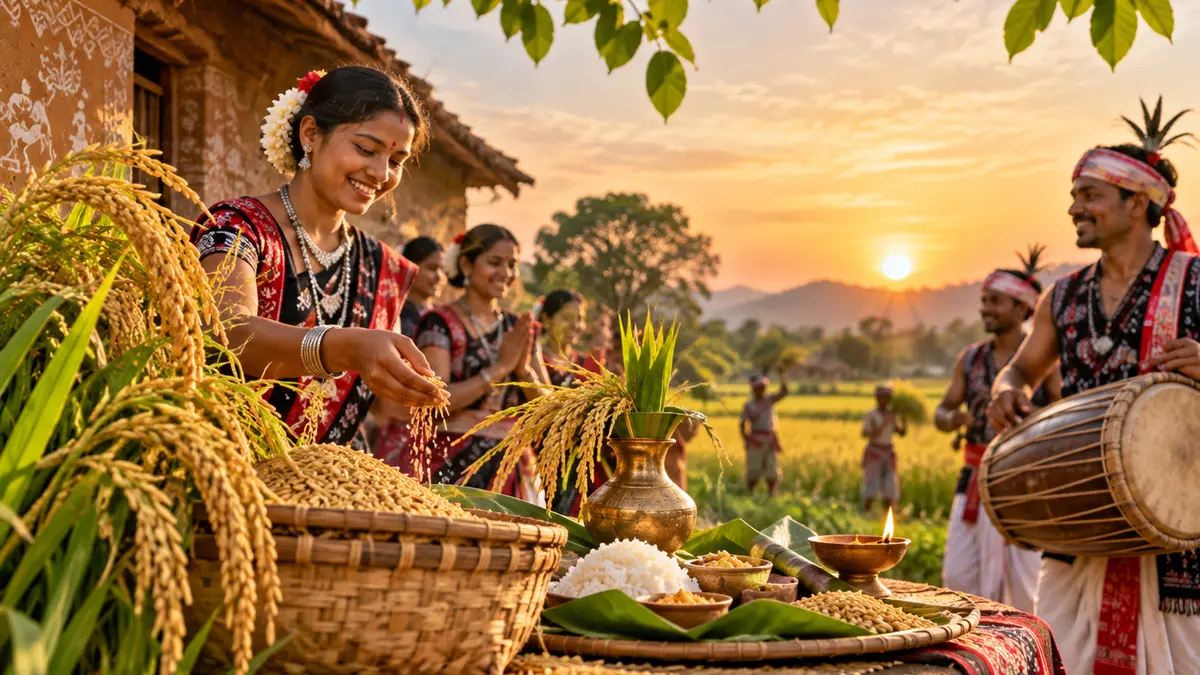
Prime Minister Narendra Modi extended Nuakhai greetings on 15 September 2026, recognising farmers, the harvest and community togetherness. Nuakhai is western Odisha’s new-rice festival, when the season’s first grain is offered to a deity before people share it. The occasion connects agricultural work with worship, family gatherings and respect for elders. At Sambalpur, offerings to Goddess Samaleswari form an important public expression of this tradition. Its meaning extends beyond the meal: the new crop becomes an occasion to renew relationships within the community. The Prime Minister’s message brings attention to an existing annual festival, not a newly introduced celebration. Understanding the order of its observances explains why food, gratitude and social bonds belong together.
What “eating the new” means
The name combines nua, meaning new, with khai, referring to eating or food. Rice is not simply another item on a festive menu. The newly harvested grain marks the movement from the work of growing a crop to its use as food. Offering it first gives that transition a religious and social meaning.
The Ministry of Tourism describes Nuakhai as rooted in western Odisha’s agricultural traditions. Its central act is the first ceremonial consumption of the new harvest. This should not be read as a statement that every field in the region is harvested simultaneously. A ritual occasion and the full agricultural harvesting period are different things.
From the temple offering to the household meal
The fresh-grain offering is commonly called Nabanna. At Samaleswari Temple, it is presented at an auspicious time, known as the lagna. The Tourism Ministry’s account describes conch sounds, drums and the offering to the goddess. The grain is therefore first treated as an offering and then received as blessed food.
After taking Nabanna, people seek the blessings of elders. This practice is associated with the greeting “Nuakhai Juhar”. The sequence gives the festival its shape: acknowledgement of the deity is followed by sharing food and honouring relationships. The meal and greeting therefore express both gratitude for food and respect within the family.
Odisha Tourism places the occasion usually on the day after Ganesh Puja, during August or September. Its date follows the festival calendar, rather than a permanently fixed day in the Gregorian year. The temple’s wider annual calendar contains other observances, so Nuakhai should not be confused with Sambalpur’s separate Sitalsasthi celebration.
Why Sambalpur matters
Sambalpur is a major cultural centre of western Odisha. Its district administration identifies Samaleswari as the town’s presiding deity, with a following extending into neighbouring Chhattisgarh. That regional setting helps explain why the temple offering has significance beyond one building or neighbourhood. It belongs to a wider network of communities and cultural practices.
The Samaleswari tradition also illustrates the layered character of regional worship. Odisha Tourism describes tribal influences alongside other elements in the temple’s rituals. These associations should not be compressed into a claim that a single ruler invented the festival. The present celebration brings together traditions that have developed through interaction over time.
A festival of meeting as well as eating
Community gatherings are known as Nuakhai Bhetghat. The Sambalpur district’s cultural account specifically associates them with meeting family and friends. This gives the occasion a public life beyond household worship. People can renew relationships through greetings, shared food and cultural gatherings, even when their everyday work no longer takes place in agriculture.
The district’s wider cultural landscape includes Sambalpuri speech, music, handloom traditions and several forms of community dance. Nuakhai sits within this living regional culture rather than outside it as an isolated ceremony. Cultural gatherings give its public celebrations a regional character, while sharing the new harvest remains the common thread.
Conclusion
Nuakhai makes the harvest meaningful through a connected sequence of offering, eating, greeting and meeting. The grain acknowledges agricultural labour, while the shared observances renew social relationships. Its continuing relevance lies in keeping those connections understandable and alive, including for families whose livelihoods and places of residence have changed.