

Why in news?
Researchers have described a new flowering plant called Ophiorrhiza assamensis. They found it beside the Sajjanpara-Satargaon Road in Assam’s Kamrup Metropolitan district. The formal description appeared in Phytotaxa on 27 August 2026. Recent reports highlighted its small known population and its genus’s medicinal importance.
From a field collection to a named species
Selim Mehmud and Birina Bhuyan collected the plant during a field survey. The first documented collection occurred on 22 June 2024. Its site stood at about 148 metres above sea level. Careful comparison later showed that it did not match any recognised species.
The authors named it after Assam, where the type specimen was collected. A type specimen provides the permanent reference for applying a scientific name. The published paper includes a description, illustration and identification key. These materials let other specialists examine the authors’ taxonomic decision.
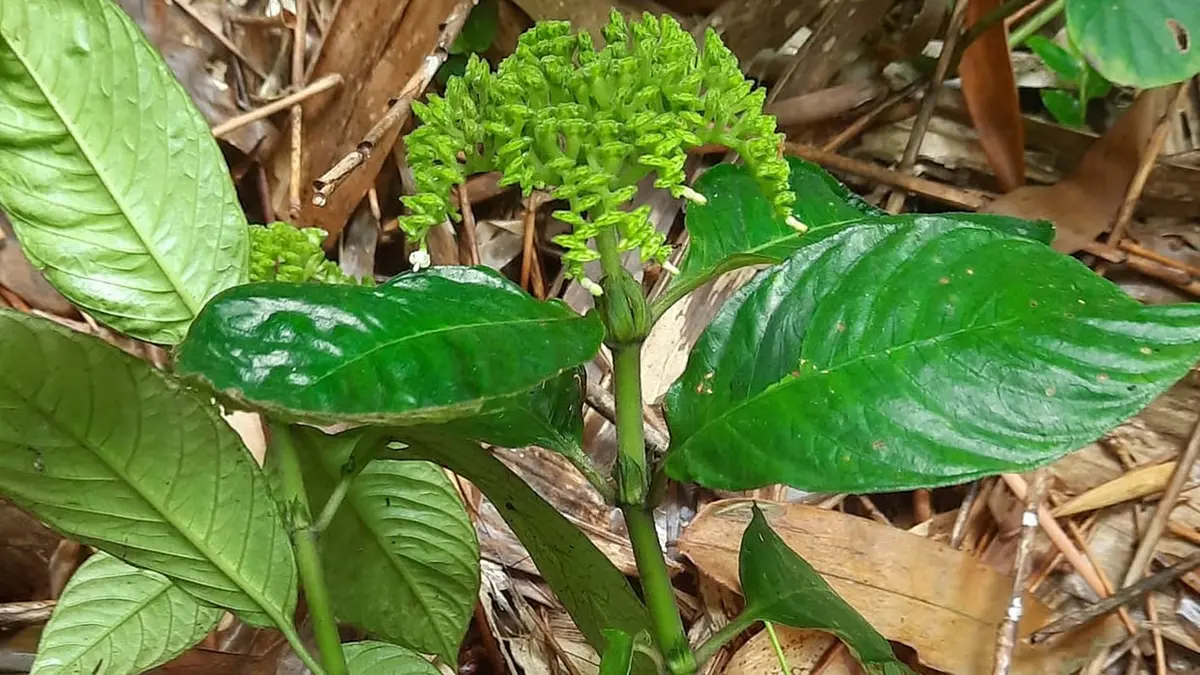
The species belongs to the coffee family, Rubiaceae. It is a small herb measuring roughly 20 to 45 centimetres. White or creamy-white flowers appear in dense groups. Flowering and fruiting were observed during June and July.
The evidence separating it from relatives
The plant resembles Ophiorrhiza mussaendiformis and Ophiorrhiza nepalensis. Similarity made detailed comparison essential. The new species has a rounded hairy stem and hairy leaves. Its stipules are conspicuous and range from egg-shaped to triangular.
Shorter bracts and projecting stamens provide further distinctions. The ovary is hairy, unlike the ovaries of the two compared species. Hairs also cover the inflorescence, flower and fruit capsule. A combination of these traits supports the new diagnosis.
Such work depends upon more than noticing an unusual plant. Researchers must consult earlier descriptions, specimens and identification literature. They must show consistent differences from the closest known taxa. Publication then exposes the evidence to specialist review and future correction.
Location and ecological context
The discovery site lies in the Rani area near Guwahati. Rani is one of Kamrup Metropolitan district’s development blocks. The district adjoins Meghalaya along its southern boundary. This setting connects Guwahati’s expanding urban region with forested foothills near an interstate boundary.
The plants occupied a moist and shaded roadside habitat. This is important because discoveries need not come from remote wilderness. Roadsides can retain small habitat patches and also expose them to disturbance. Construction, clearing and drainage changes can alter such sites quickly.
Researchers counted about twenty-three young and mature individuals within one square kilometre. That figure describes the surveyed site, not the species’ total population. Other suitable habitats may hold unrecorded plants. Wider surveys should examine neighbouring forests and comparable moist sites.
Conservation status and medicinal claims
The authors treated the species as Data Deficient under international assessment criteria. Too little is known about its range, population and threats. Data Deficient does not mean secure or endangered. It records that available evidence cannot support a firmer conclusion.
Several Ophiorrhiza species produce camptothecin, an important anti-cancer compound. Derivatives of that compound are used in cancer treatment. This knowledge explains scientific interest in the genus. It does not prove that Ophiorrhiza assamensis contains camptothecin.
The taxonomic paper describes the new species but reports no chemical assay. Therefore, calling this plant an anti-cancer source would exceed the evidence. Future research may examine its chemistry under proper permits. Conservation should precede any attempt at biological or commercial use.
What should happen next
Botanical surveys should map additional populations and record habitat conditions. Repeated counts can separate seasonal absence from a genuine decline. Voucher specimens and photographs should support any new locality record. Genetic work may later complement the published morphological evidence.
Local planning can protect the roadside population without disclosing harmful collection details. Authorities should examine drainage, vegetation clearance and road works near the habitat. Researchers should also study reproduction and seedling survival. These steps would convert a discovery into usable conservation knowledge.
Conclusion
Ophiorrhiza assamensis demonstrates the botanical value of Assam’s less-studied habitats. Its identity rests on published morphological comparisons. Only a tiny surveyed population is presently known. Medicinal promise belongs to the wider genus, not yet to this species. Careful surveys and habitat protection should now guide research before any stronger claim is made.