

Why in news?
Birders and rescuers have reported more distressed Oriental Darters around Bengaluru’s lakes. Plastic mesh, fishing material and cloth become trapped around their long bills. A trapped bird may lose the ability to catch or swallow fish. The reports show how ordinary urban waste can become a direct wildlife hazard.
What observers reported
Doddanekundi Lake in eastern Bengaluru became one focus of the reports. Birders saw darters with waste fixed around their bills. Rescuers also received cases from several other city lakes. Some birds were already weak by the time capture became possible.
Bright cloth, plastic packing mesh and discarded fishing nets were among the reported hazards. A darter may investigate or strike near such material while feeding. Threads can tighten as the bird shakes its head. Entanglement may then prevent normal feeding and grooming.
Rescue is difficult because the bird can fly, swim and dive. Approaching too early may drive it across the lake. Teams may need boats, binoculars and careful tracking. Delay, however, can leave a bird starving and exhausted.
The Oriental Darter
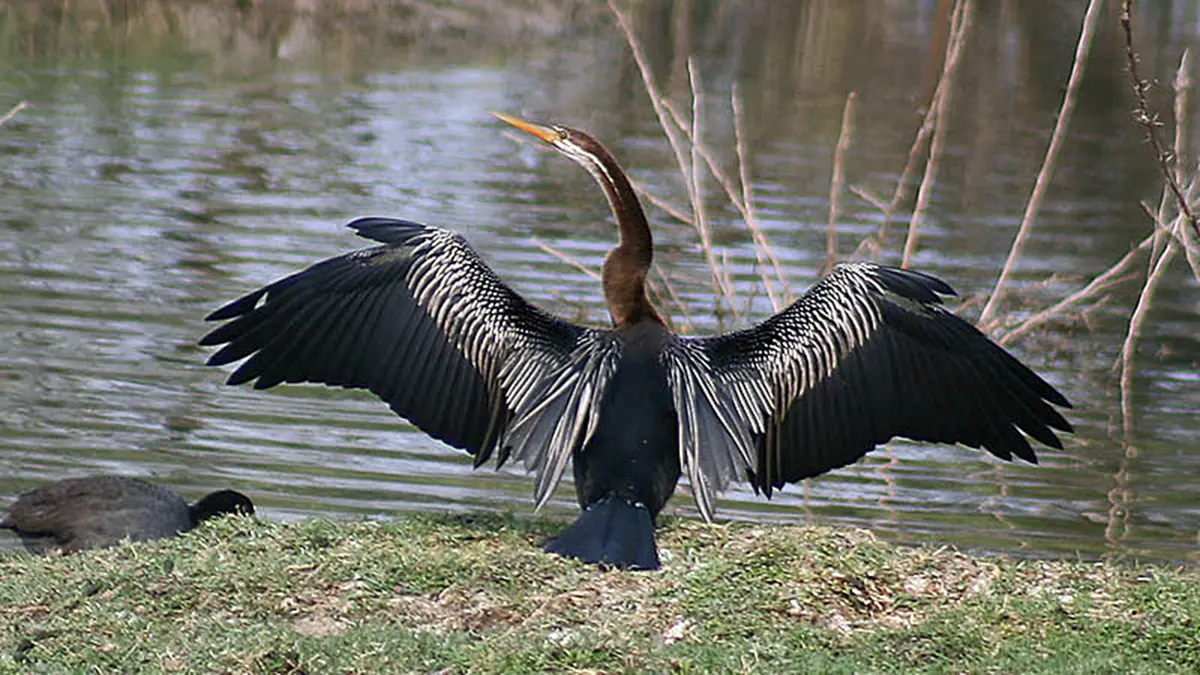
The species is scientifically named Anhinga melanogaster. It belongs to the family Anhingidae. It is also called the Indian Darter or snakebird. The last name refers to its long neck above water.
The bird swims with much of its body submerged. Its narrow, pointed bill helps it seize fish underwater. Fish form the main part of its diet. It may also take other small aquatic animals.
Darters often rest with their wings spread after swimming. Their plumage allows efficient diving but becomes wet more readily than many waterbirds. They use lakes, reservoirs, rivers and other inland wetlands. Trees near water provide resting and nesting places.
Range and conservation status
The Oriental Darter occurs across tropical South and South-East Asia. India supports a wide resident distribution. The State of India’s Birds classifies it as a wetland specialist. Its estimated national range is very large.
Its global Red List category is now Least Concern. The International Union for Conservation of Nature moved it from Near Threatened during the 2024 assessment cycle. This change reflected improved global information and recovery in parts of its range. It does not mean every local population is secure.
India’s 2025 bird assessment describes the current annual trend as stable. The long-term trend remains inconclusive. Local wetland loss and pollution can still harm birds. Conservation decisions should use both global status and local evidence.
Why urban lakes matter
Bengaluru’s lakes form stepping stones across a dense urban landscape. They provide feeding, breeding and resting sites for resident and migratory birds. Connected wetlands also absorb rain and support groundwater recharge. Their ecological role extends beyond the water surface.
Doddanekundi lies within a heavily built eastern technology corridor. Roads, apartments and offices surround many nearby wetlands. Waste reaches lakes through dumping, drains and public activity. Shoreline pressure also reduces quiet habitat for birds.
Polluted water can alter fish, insects and plant communities. Solid waste adds a separate physical danger. An item need not be toxic to kill wildlife. Its shape, colour and strength can turn it into a trap.
Prevention and management
Municipal agencies should stop dumping at entry points and lake edges. Regular removal must include fine mesh, thread and ceremonial cloth. Waste screens in storm drains can intercept floating material. Screens also need frequent cleaning before heavy rain.
Fishing activity requires marked collection points for damaged lines and nets. Religious offerings should use designated systems that prevent release into water. Public signs can explain the specific harm to birds. Clear examples often work better than general warnings.
Lake groups can record incidents through a common protocol. Useful details include species, location, material and rescue outcome. Such records can identify recurring sources and dangerous sites. Agencies can then target enforcement and clean-up.
Only trained teams should capture a free-ranging entangled bird. Poorly planned pursuit can increase stress and injury. Citizens should report the location and monitor from a distance. Prevention remains safer than repeated rescue.
Global status does not erase local danger
Least Concern describes overall extinction risk. It does not protect an individual bird from entanglement or excuse damage to an urban wetland.
Conclusion
The darter cases make Bengaluru’s waste problem visible through injured wildlife. The bird’s specialised bill becomes a weakness when rubbish enters lakes. Clean-up must be joined with prevention at drains and shorelines. Consistent incident records can guide enforcement and public education. Healthy urban lakes require everyday waste discipline, not occasional rescue alone.