

Why in news?
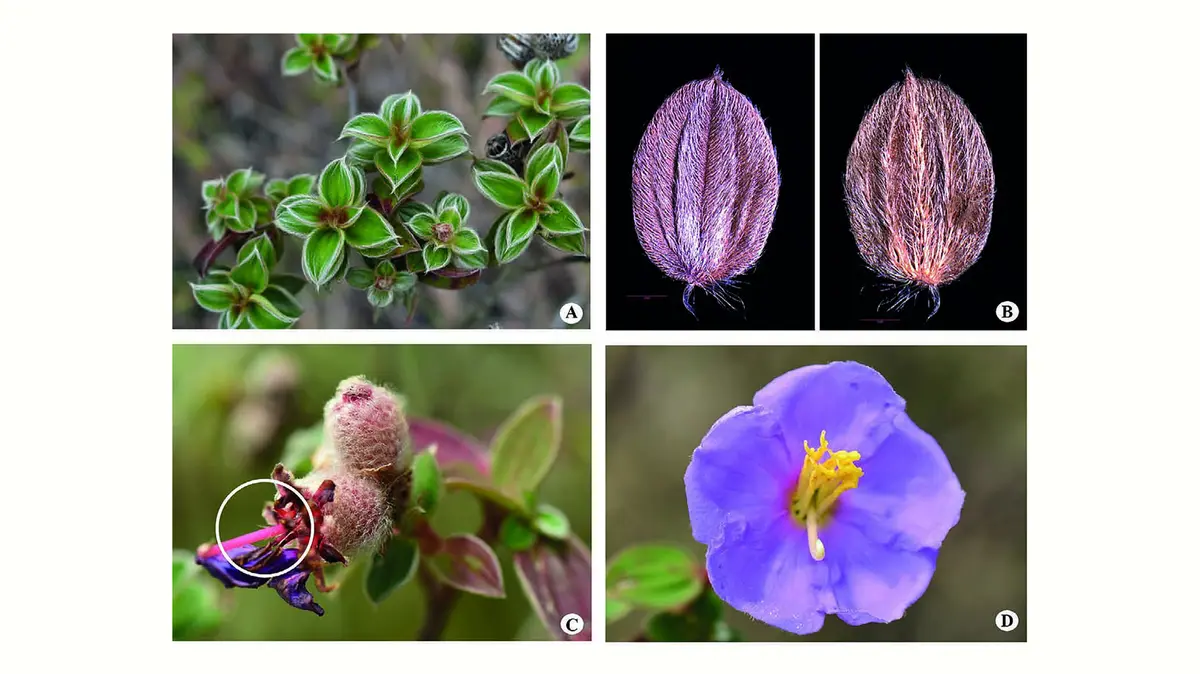
Botanists have formally described a flowering plant named Osbeckia ulotricha. The finding came from shola grasslands inside the Agasthyamala Biosphere Reserve. This reserve lies in the southern Western Ghats across Kerala and Tamil Nadu. The description was published in Lilloa and received wider attention in September 2026.
What the discovery means
A new species description does not mean that the plant recently appeared. It means scientists gathered enough evidence to recognise a distinct species. They compared the plant with related named specimens and published a diagnosis. Other botanists can now examine that evidence and test the classification.
The authors work at the Botanical Survey of India’s Southern Regional Centre in Coimbatore. Sujana Kanjiraparambil Arjunan led the four-member team. The peer-reviewed paper was published on 24 August 2026. It provides a botanical description, illustrations and microscopic details of pollen and seeds.
The plant belongs to the family Melastomataceae and the genus Osbeckia. Members of this family often have strongly veined leaves and conspicuous flowers. However, family resemblance cannot establish a species by itself. Taxonomy depends upon a stable combination of characters and careful comparison.
How botanists distinguished the plant
Osbeckia ulotricha resembles Osbeckia yercaudensis and some other Indian relatives. Its flower base, called the hypanthium, is almost spherical. The ovary carries a crown of true bristles. Upward-pointing hairs also occur on the style, a part of the female floral structure.
The leaves are grouped near the ends of branches. Researchers also examined the surface patterns of pollen and seeds. Such small features can remain more dependable than overall appearance. Together, these characters supported recognition of the plant as a separate species.
The name ulotricha refers to the plant’s woolly, curly hairs. Its roots come from Greek words connected with woolliness and hair. The name therefore records a diagnostic physical feature. Scientific naming also gives the species a common reference for future research.
Habitat and geographical setting
The known plants occur between about 1,200 and 1,500 metres above sea level. They grow along damp margins of shola forest and adjoining montane grassland. Sholas are compact evergreen forest patches within high-elevation grassland. Moist edges between these habitats can support specialised herbs and shrubs.
Agasthyamala occupies the southern end of the Western Ghats. The biosphere reserve covers parts of four districts in Kerala and Tamil Nadu. These are Kollam, Thiruvananthapuram, Tirunelveli and Kanniyakumari. Its highest peaks reach about 1,868 metres above sea level.
The reserve contains Neyyar, Peppara and Shendurney wildlife sanctuaries. It also includes the Kalakad-Mundanthurai Tiger Reserve in Tamil Nadu. The United Nations Educational, Scientific and Cultural Organization added it to its global network in 2016. Its changing elevation supports many forest types and unusually rich plant diversity.
What is known about its conservation
Researchers found nearly fifty flowering plants across three locations. All known locations occupied less than one square kilometre. This observation shows that the recorded population is very restricted. It does not establish the species’ complete population or full geographical range.
No comprehensive population survey has yet been completed. The authors therefore assessed the species as Data Deficient under international criteria. This is an evidence-gap category, not a statement that the plant faces no danger. More searches are needed before assigning a confident risk category.
A narrow known range makes local habitat quality especially important. Fire, invasive plants, trampling and altered moisture can affect grassland edges. Climate change may also shift conditions across an elevational band. Their actual effects on this species still require field evidence.
Why the finding matters
The discovery shows why repeated botanical surveys remain valuable in protected landscapes. A reserve can contain species that science has not yet distinguished. Formal identification allows later work on distribution, pollination and population trends. It also helps managers recognise the habitat supporting the plant.
Conservation should protect the wider shola-grassland system, not only mapped individuals. Water movement, fire patterns and surrounding vegetation shape the damp margins. Any collection for research should remain carefully documented and proportionate. Reliable monitoring can then reveal whether the known population is stable.
Conclusion
Osbeckia ulotricha adds a distinct species to India’s recorded flora. Its scientific importance rests on detailed comparative evidence. Its known habitat is both small and ecologically specialised. Wider surveys must establish its true range and population. Meanwhile, protecting Agasthyamala’s connected shola and grassland habitats offers the soundest precaution.