

Why in news?
A 15 September report in The Tribune highlighted research on Pangwala residents of Himachal Pradesh’s Pangi valley and migrants from the community. The study compared their gut microorganisms and found important similarities alongside differences in the abundance of particular microbes. The gut microbiome is the community of bacteria, fungi, viruses and other microorganisms associated with the digestive tract. Some help process food and perform other biological functions. The finding matters because migration changes several environmental exposures, yet microbial functions may partly persist. Published in June 2026, the study analysed 28 people and did not follow the same individuals before and after migration. It therefore suggests resilience in this sample, not that migration or diet has no effect.
The community and its mountain setting
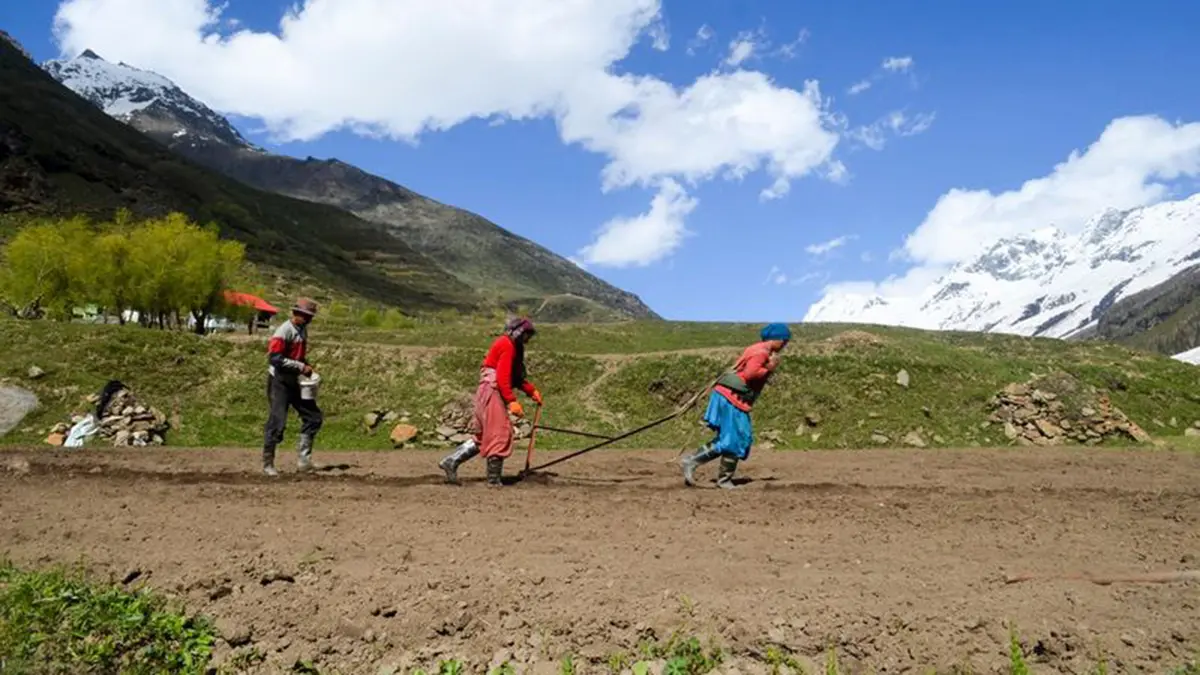
The Pangwala community is associated with Pangi in Chamba district. Pangwala is included in the official list of Scheduled Tribes for Himachal Pradesh. Pangi also forms part of the state’s constitutionally designated Scheduled Areas. These are related administrative facts, but a community’s Scheduled Tribe status and an area’s constitutional designation are not the same classification.
The Chandrabhaga, also known as the Chenab, runs through Pangi’s narrow gorges. The state’s Tribal Development Department describes these mountain areas as remote, with rugged terrain, glaciers and fast-flowing rivers. Chamba’s administration identifies Sach Pass as an approach to Pangi. Such geography affects transport and access to services, helping explain the study’s comparison between valley residents and people who had moved to urban settings.
Why microorganisms are part of the question
A human body supports many microbial communities; their presence does not automatically mean infection. The National Human Genome Research Institute explains that gut microbes help digest food and can limit opportunities for harmful organisms. Diet, medicines and environmental exposure can influence these communities. Studying them means asking both which organisms are present and what biological work they may perform.
Those questions are different. Two communities may contain somewhat different mixtures of organisms but share some functions. Conversely, finding a familiar bacterial name does not prove that every strain behaves identically. This distinction is important when interpreting the expression “core microbiome”: it describes shared features, not a complete and permanently unchanging microbial inventory.
How the comparison was made
The research recruited 100 healthy volunteers across resident and migrant groups. After selection and quality checks, the final analysis covered 28, equally divided between the two groups. The migrants had moved to urban areas roughly 15–20 years earlier. The study excluded participants who reported recent antibiotic use, but that does not provide a complete lifetime exposure history.
Researchers examined genetic material in stool samples using whole-metagenome shotgun sequencing. Deoxyribonucleic acid, or DNA, carries genetic information. Metagenomics studies genetic sequences drawn from a mixed community rather than examining just one isolated organism. Computational comparisons help identify organisms and genes in that mixture, including genes associated with particular metabolic functions.
This method extends the analysis beyond counting bacteria. It can also investigate fungal and viral components and potential biological capabilities. However, detecting a gene is not the same as measuring how strongly it is operating inside the gut. The findings should therefore be described as genetic and computational evidence, not as a direct measurement of every ongoing biochemical reaction.
What “functional redundancy” explains
The paper reports Prevotella and Bifidobacterium among prominent bacterial groups, with variation between residents and migrants. It also discusses functional redundancy: different organisms can contribute to similar biological tasks. Shared capabilities can persist even when the relative proportions of organisms change. That is a more precise explanation than saying the two groups had identical guts.
The reported similarity is scientifically useful because it challenges an assumption of uniformly dramatic change after migration. It does not establish that geography, diet or urban exposure are irrelevant. Participants were compared at the time of sampling; researchers did not possess repeated measurements from each person across the entire migration period. The design cannot reconstruct every earlier change.
Resistance genes are a warning signal, not a diagnosis
The investigators also examined the resistome, meaning the collection of genes associated with resistance to antimicrobial medicines. Their sequence analysis identified potential resistance-related features. This can guide further research, but it does not demonstrate that a participant had a resistant infection or that a particular treatment had failed.
The authors acknowledge the small sample and the absence of a separate validation group. Larger studies could test whether the observed patterns recur, while repeated sampling could clarify changes over time. The evidence should not be used to rank all valley residents as healthier than all migrants, or to recommend a diet or antibiotic.
Conclusion
The Pangwala study offers a focused comparison of microbial composition and potential function within one community. Its most useful insight is that shared biological tasks can coexist with differences in microbial abundance. Establishing how stable those patterns really are requires larger, repeated studies. The finding opens a research question rather than closing the debate about migration and health.