

Why in news?
A monsoon survey recorded 124 bird species in Peppara Wildlife Sanctuary in Kerala. The Thiruvananthapuram Wildlife Division conducted it with the birdwatching group Warblers and Waders. Surveyors found Western Ghats endemics, raptors and several first records for the programme. They also documented active nesting by the broad-tailed grassbird.
What the survey found
Recorded birds included the white-bellied sholakili and Nilgiri wood pigeon. Surveyors also noted the Ashambu laughingthrush and white-bellied treepie. Raptors included black eagle, Eurasian kestrel and Legge’s hawk-eagle. The great hornbill, Kerala’s state bird, was also present.
The team reported pied cuckoo and Sri Lanka frogmouth for the first time during this survey programme. Some wetland birds were also new programme records. Reptiles and amphibians endemic to the Western Ghats were observed. The Blue Nawab butterfly added another notable record.
Occupied nests and breeding activity of the broad-tailed grassbird were especially useful. Its scientific name is Schoenicola platyurus. The species is closely associated with Western Ghats grasslands. Breeding records identify habitat needing protection during a sensitive season.
Where Peppara lies
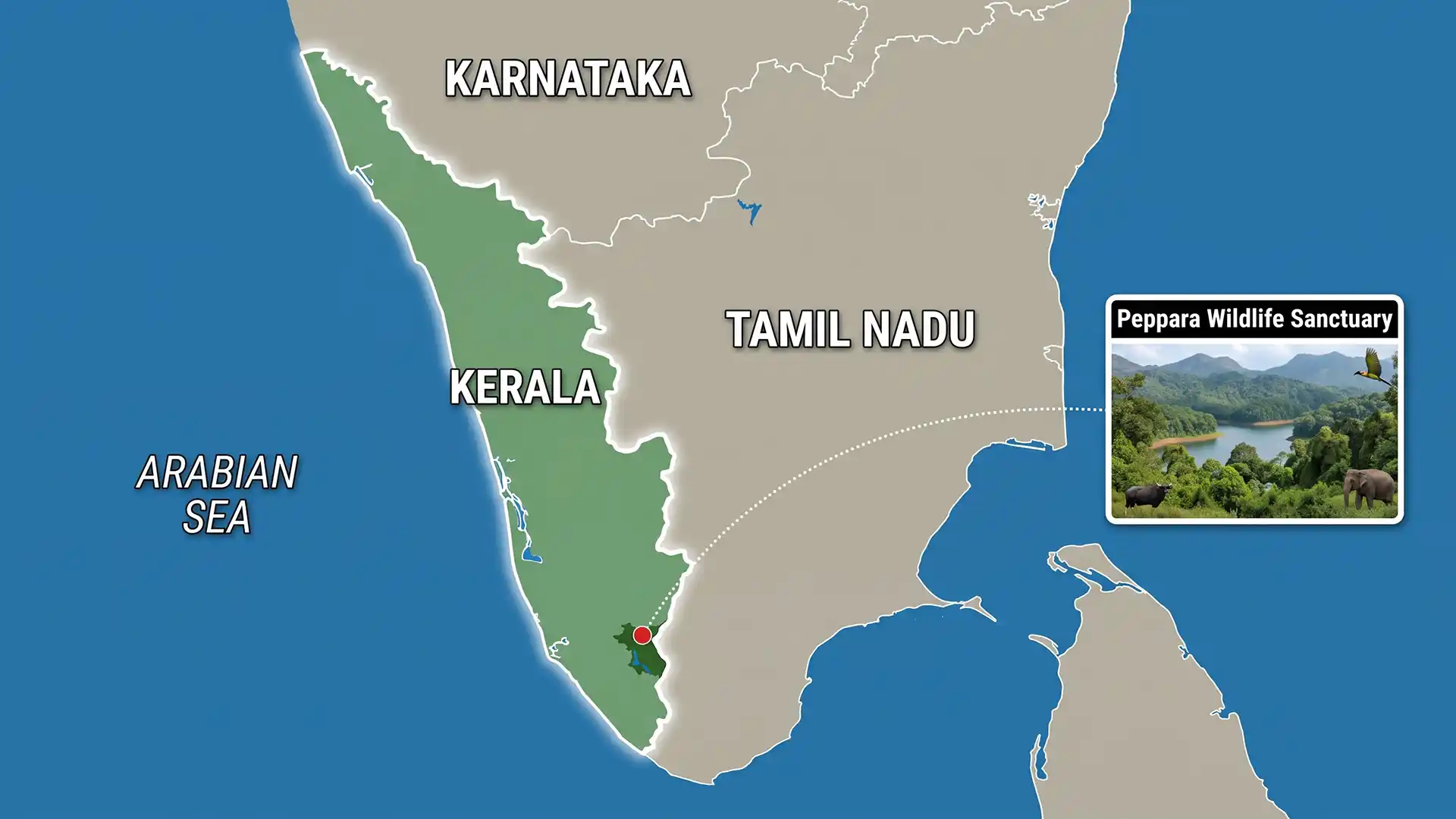
Peppara Wildlife Sanctuary lies in Thiruvananthapuram district in southern Kerala. It is about fifty kilometres north-east of Thiruvananthapuram city. The protected area covers 53 square kilometres. It occupies hilly terrain in the southern Western Ghats.
The sanctuary forms the catchment of Peppara reservoir on the Karamana River. Elevation rises from about 100 metres to 1,717 metres. This steep range creates several forest and grassland conditions. It also links biodiversity protection with water security for downstream settlements.
Peppara belongs to a wider forest landscape near Kerala’s Neyyar Wildlife Sanctuary. Forests continue towards Tamil Nadu’s Kalakkad–Mundanthurai landscape. Such connections allow animals and genetic populations to move. Roads, settlements and disturbed edges can weaken those links.
How the sanctuary was created
Kerala notified Peppara Wildlife Sanctuary on 21 December 1983. The Peppara dam had already created a reservoir within the area. Protection aimed mainly at conserving its catchment and wildlife habitat. The sanctuary includes the Palode and Kottoor reserved forests.
Forest types include tropical evergreen and semi-evergreen formations. Moist mixed deciduous forest and Myristica swamps add further diversity. Reservoir margins, streams and high grasslands create additional habitats. This variety explains the presence of forest, wetland and open-country birds.
Why seasonal comparisons matter
The regular survey programme began in 2025. Teams recorded 166 species in December and 164 in March. The monsoon count of 124 was lower. Surveyors linked much of the difference with fewer migratory birds during the rainy season.
Counts across seasons should not be compared as a simple rise or fall. Weather, observer effort and bird movement affect detection. Monsoon cloud and dense vegetation can hide species. Repeated surveys using similar methods can reveal a more reliable pattern.
From a list to conservation action
A species list establishes presence at a place and time. Nest records add evidence about habitat use. Repeated observations can identify breeding sites and seasonal refuges. Managers can then adjust fire control, tourism and habitat work.
Grassland birds need protection from poorly timed cutting or burning. Forest birds depend on canopy continuity and native vegetation. Wetland species need water quality and suitable reservoir margins. Management must therefore protect a habitat mosaic rather than one uniform forest.
Community and catchment value
The landscape also contains tribal settlements and customary resource use. Conservation decisions should involve residents and recognise legitimate needs. Local knowledge can improve wildlife monitoring and fire response. Fair participation also reduces conflict around access and livelihoods.
Catchment protection gives Peppara importance beyond wildlife sightings. Healthy slopes reduce erosion and regulate runoff into the reservoir. Forest loss can increase sediment and weaken water quality. Bird monitoring can therefore support a broader picture of watershed condition.
One seasonal count does not prove population change
The survey confirmed 124 species during one monsoon exercise. Different seasonal totals reflect migration, weather and detection as well as ecology. Long-term standardised monitoring is needed before claiming a trend.
Conclusion
The Peppara survey expands knowledge of a small but varied Western Ghats sanctuary. Breeding evidence gives managers more than a simple checklist. Seasonal repetition can guide habitat and visitor decisions. The sanctuary also protects a vital river catchment. Long-term conservation should connect birds, water, landscape corridors and local communities.