

Why in news?
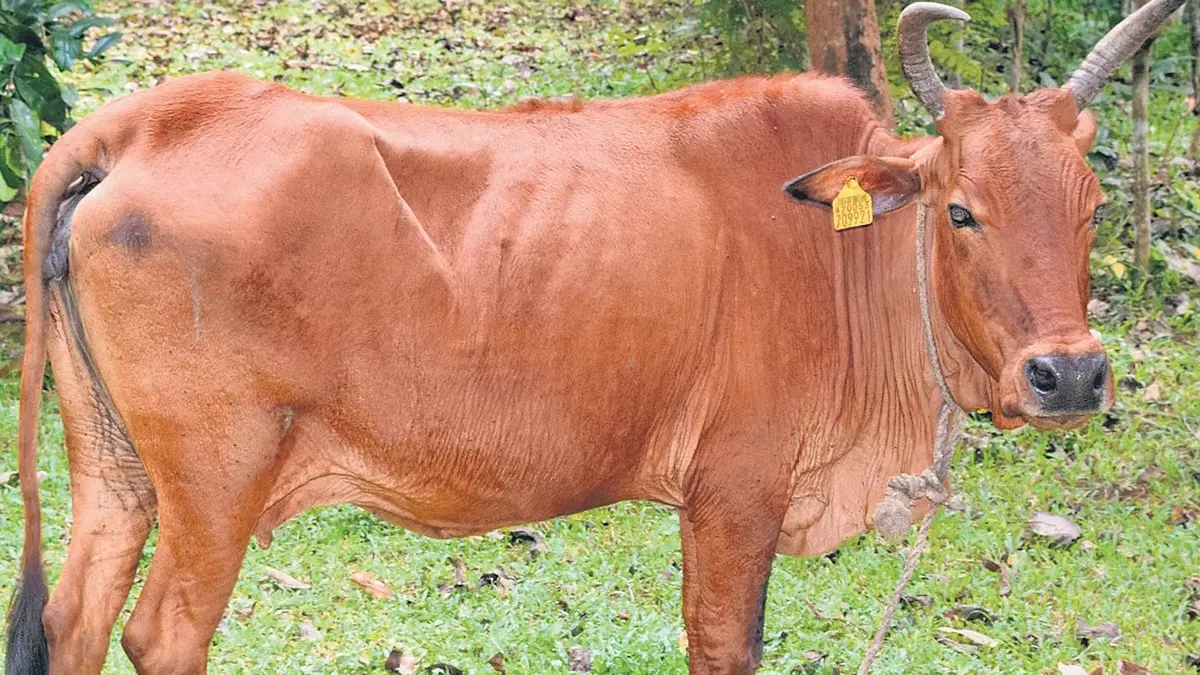
The Indian Council of Agricultural Research announced the registration of Periyar cattle as a distinct indigenous breed. Its National Bureau of Animal Genetic Resources assigned the accession number INDIA_CATTLE_0900_PERIYAR_03058. The breed is associated with central Kerala’s Periyar landscape and is also called Kuttampuzha cattle locally. Registration followed years of documentation by farmers, state institutions and animal scientists.
What breed registration establishes
A livestock breed is a population with identifiable inherited features and a recognised home tract. Registration records that identity through standard scientific descriptors. Researchers examine appearance, performance, distribution and genetic information. The process separates a defined population from a broad “non-descript” category.
India’s National Bureau of Animal Genetic Resources manages this work. It assigns a unique accession number after expert review. Recognition can improve census reporting and targeted conservation. It does not certify every popular claim about milk quality or disease resistance.
The Periyar home landscape
Periyar cattle are linked with the riverine, forest-edge and plantation areas of central Kerala. The local name Kuttampuzha refers to a settlement near the Western Ghats in Ernakulam district. The Periyar River and adjoining hill forests shape this humid landscape. Farmers often manage cattle across mixed vegetation and plantation margins.
The Western Ghats rise east of Kerala’s coastal plain. Their slopes receive strong monsoon rainfall and contain dense forests, streams and plantations. Small-bodied cattle can move through uneven ground more easily. Local adaptation may include heat tolerance and efficient use of available forage.
What official evidence confirms
The registration announcement lists Periyar among four newly registered cattle breeds. It identifies Kerala as the home state and provides the accession number. Bureau records also show earlier characterisation work through Kerala Veterinary and Animal Sciences University. This institutional trail supports the breed’s formal identity.
Kerala government material from 2022 described conservation work for Kuttampuzha Kullan, another local name. The programme procured two bulls for semen collection. These steps show that preservation began before registration. They also show why farmer knowledge and scientific work must operate together.
Why indigenous breeds matter
Locally adapted livestock hold genetic traits shaped by climate, disease pressure and farming practice. Some traits may become valuable under hotter or less predictable conditions. Small cattle can also suit households with limited land and feed. Their role includes manure, savings and cultural identity.
High-yielding crossbred animals may produce more milk under excellent care. They can also require greater feed, cooling and veterinary support. Conservation should not create a false choice between productivity and diversity. Breeding policy needs several options for different farming systems.
Recognition should lead to population planning
Officials need a reliable baseline count across the home tract. Animals should be identified through physical descriptors and pedigree records where possible. Breeding males require careful selection. Excessive use of very few bulls could reduce diversity even while the total population grows.
In-situ conservation keeps animals within the farming system that shaped them. Ex-situ measures can preserve semen, embryos, cells or DNA. Both approaches are useful. A gene bank provides insurance, while living herds retain behaviour, adaptation and farmer knowledge.
Protecting farmers and breed identity
Farmers who maintained the population deserve practical support and recognition. Breed societies can maintain records and share breeding services. Local milk marketing may improve returns. However, nutritional or medicinal claims need laboratory and clinical evidence before commercial promotion.
Uncontrolled branding could encourage crossbreeding or false sale under the Periyar name. Traceability can protect genuine keepers. Extension teams should explain breeding choices and animal health. Conservation payments may help where low market returns threaten herd continuity.
Wider significance for animal genetic resources
The same registration round covered sixteen livestock and dog breeds from thirteen states and one Union Territory. The bureau reported 262 registered breeds afterwards. Such documentation makes previously overlooked diversity visible. It can also guide research on climate resilience and sustainable rural livelihoods.
Registration is only the beginning. Population decline can continue after formal recognition. Land-use change, reduced grazing access and younger farmers leaving livestock work remain serious pressures. Conservation plans must therefore address farms, markets and habitats, not only genetic samples.
What recognition does not prove
The official decision confirms Periyar cattle as a distinct indigenous breed. It does not prove that every animal produces medically superior milk. Health and production claims need separate, transparent evidence.
Conclusion
Periyar cattle now have a formal place in India’s documented livestock diversity. That status honours both scientific study and years of farmer stewardship. The next task is a careful population census and broad breeding base. Government support should protect the home tract and reward genuine keepers. Recognition will matter most when it secures living herds for future generations.