

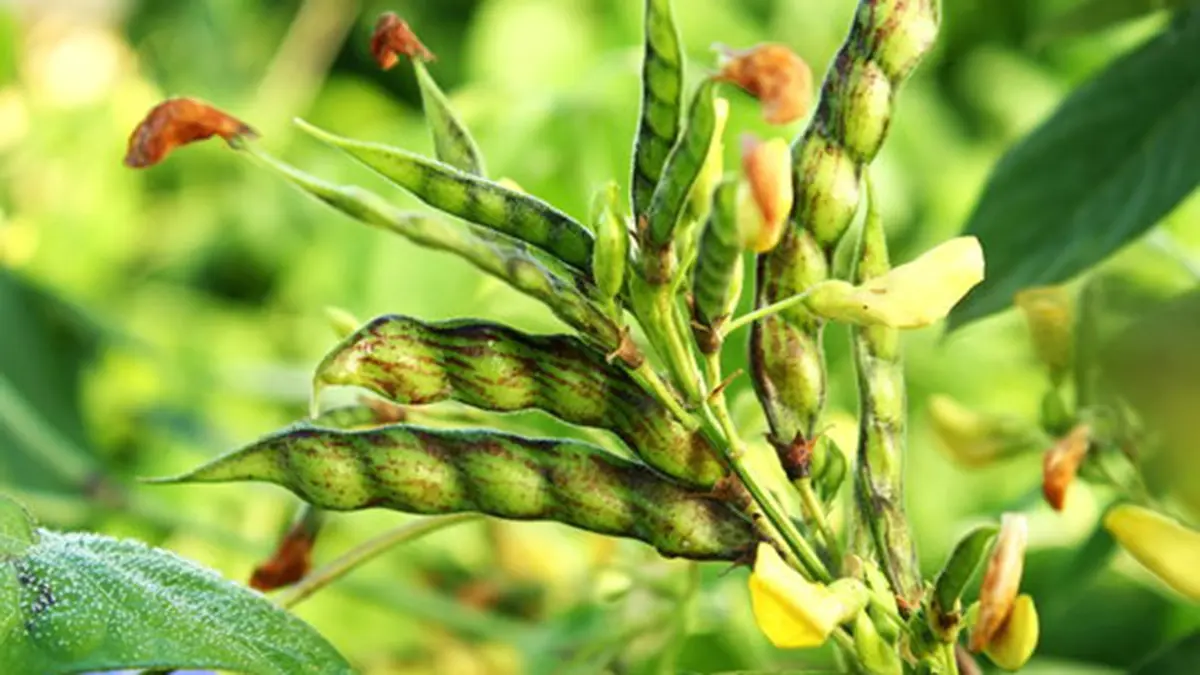
Why in news?
Indian scientists completed a telomere-to-telomere reference genome for the pigeonpea variety Asha. The assembly covers difficult repetitive regions and both chromosome ends. It is India's first fully annotated gapless reference for this crop. The resource supports breeding research but does not itself create a new variety.
Background
Pigeonpea is a protein-rich pulse known widely as arhar or tur. Its scientific name is Cajanus cajan, and it belongs to Fabaceae; farmers cultivate it across tropical and subtropical regions.
The crop suits many rainfed and semi-arid farming systems; its deep roots can reach moisture unavailable to shallow-rooted crops. Root bacteria also fix atmospheric nitrogen and support soil fertility.
Pigeonpea commonly grows with cereals, oilseeds or other pulses. Intercropping spreads production risk and uses sunlight across different plant heights. Its stalks also provide fuel, fodder and fencing material in some regions.
India produces and consumes more pigeonpea than any other country. Domestic output can still vary sharply with rainfall, pests and disease. Yield stability therefore matters for farmers, nutrition and food prices.
From early sequencing to a complete reference
Indian researchers produced an important draft sequence for the Asha variety during 2011–12. That assembly contained about 511 million high-quality base pairs; it also predicted roughly 47,000 protein-coding genes.
The earlier work was a draft rather than one continuous sequence per chromosome. Repetitive deoxyribonucleic acid (DNA) caused gaps or uncertain ordering; short-read sequencing could not cross many complex regions.
Modern long-read platforms can follow much larger DNA fragments; improved algorithms then combine overlapping reads and correct remaining errors. Chromosome-conformation and optical data can further verify the assembly structure.
The new reference reaches telomeres at both ends of every assembled chromosome; pigeonpea has eleven chromosomes in its basic set. Complete centromeres and other repeated regions provide information that drafts often miss.
What telomere-to-telomere means
Telomeres are repeated DNA structures that protect chromosome ends. Centromeres help chromosomes separate during cell division. Both regions contain extensive repetition and are technically difficult to assemble.
A telomere-to-telomere assembly aims to represent each chromosome without sequence gaps. “Fully annotated” means researchers have marked genes and other meaningful features. Annotation remains improvable as biological evidence grows.
The achievement concerns one reference genotype, Asha, whose institutional pigeonpea-line code is 87119. It is not the first pigeonpea genome ever sequenced. It is the first Indian fully annotated gapless reference described for pigeonpea.
How breeders can use the resource
A complete genome can reveal genes hidden beside repetitive sequences. It can also identify structural changes, including large insertions, deletions and inversions; such changes may influence agronomic traits.
Breeders can connect reliable genetic markers with resistance, maturity or yield traits. Marker-assisted selection then tracks useful regions across breeding generations; genomic prediction can combine many small genetic effects.
Wilt and sterility mosaic disease cause serious pigeonpea losses. Earlier work identified resistance genes and markers within Asha and related material. A better reference can sharpen those searches and reduce false locations.
Researchers may also study drought tolerance, flowering time and pod development. Yet field trials remain essential because genes interact with soil and climate; laboratory predictions cannot replace multi-location evaluation.
Why crop diversity remains essential
Asha is valuable, but dependence upon one genetic background would narrow future options. Landraces carry adaptations shaped by farmers across different landscapes; wild Cajanus relatives may contain further resistance genes.
Genebanks preserve seeds, while community conservation keeps varieties evolving in fields. Breeding programmes need both sources and fair access arrangements; farmers' knowledge should also receive recognition under applicable law.
Climate change may alter heat, rainfall and pest pressure together. No single gene can manage every future condition. Broad diversity allows breeders to combine resilience with taste, cooking quality and local preference.
From sequence to farm impact
Genomic data becomes useful only through accessible breeding pipelines; public institutions need computing, phenotyping and seed-multiplication capacity. Small breeding programmes also need usable markers rather than raw sequence files.
New varieties require testing, release and quality seed production; farmers then evaluate whether performance matches local needs. These stages can take years after a reference genome becomes available.
Open data can accelerate collaboration while protecting legitimate germplasm rights. Clear metadata prevents confusion between reference coordinates and field performance. Long-term curation will keep the genome useful.
Conclusion
The Asha assembly closes important gaps in pigeonpea's genetic map. Its agricultural value will emerge through diverse germplasm, rigorous trials and reliable seed delivery.