

Why in news?
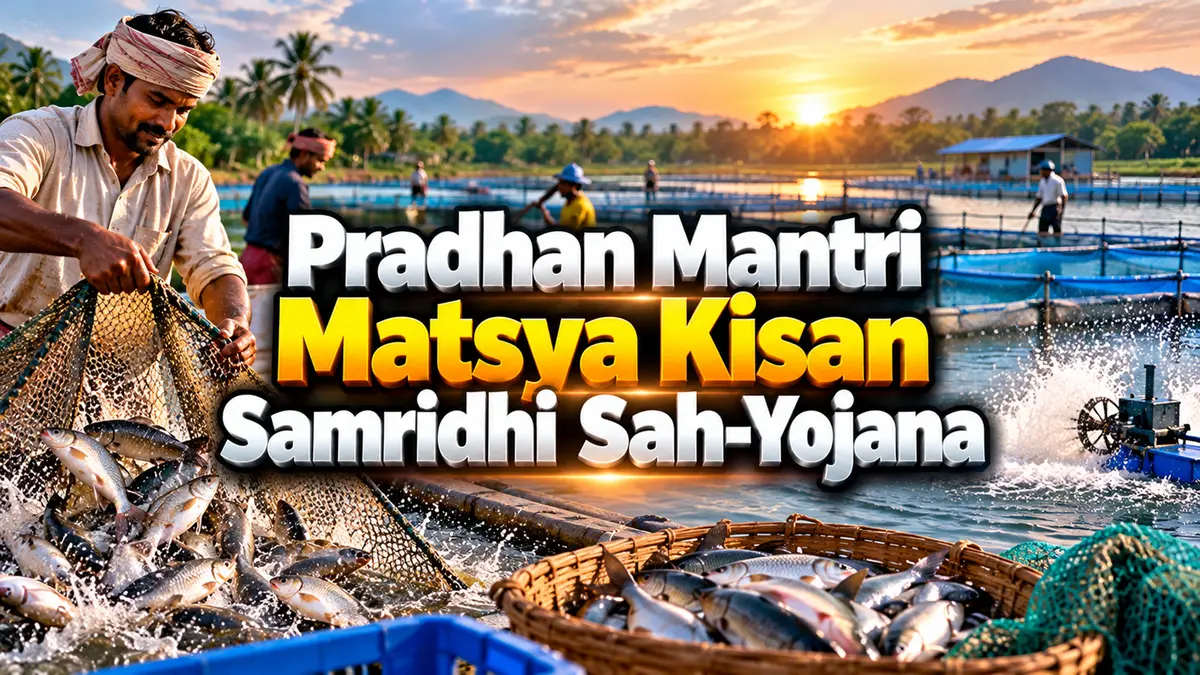
The fisheries ministry's 28 September update described progress in insurance support under Pradhan Mantri Matsya Kisan Samridhi Sah-Yojana. The programme helps eligible fish farmers meet part of the premium for an aquaculture insurance policy. Aquaculture means cultivating aquatic organisms, rather than catching only naturally occurring stocks. Disease or flooding can destroy a farmer's investment in a growing cycle. Insurance aims to reduce the resulting financial shock. The update reported 127 approved and disbursed premium-incentive applications, amounting to ₹40.03 lakh. These were payments supporting insurance purchase, not compensation for 127 completed loss claims. The scheme's support is a one-time incentive for one crop cycle.
Why a fish crop creates an insurable risk
Aquaculture involves investment before harvest, including stock, feed and the management of the production system. The term crop cycle refers to the period of cultivating a batch before harvest. If a covered event destroys that stock, the farmer may lose both expected sales and money already spent. Insurance addresses part of that financial exposure; it does not prevent the physical event.
The premium is the amount paid to purchase insurance. The claim is a request for payment after an event covered by the policy. The sum insured and policy conditions determine the protection available. A government contribution towards the premium therefore differs from paying the entire production cost or guaranteeing reimbursement of every loss.
Where this support fits within the wider scheme
The government approved Pradhan Mantri Matsya Kisan Samridhi Sah-Yojana, abbreviated PM-MKSSY, in February 2024. It is a central-sector sub-scheme under Pradhan Mantri Matsya Sampada Yojana, the wider fisheries development programme. Its work includes formalisation, access to finance and insurance, value-chain improvement and product quality. Insurance is one component, not the whole programme.
The National Fisheries Digital Platform provides work-based registration and a route to relevant scheme services. Formalisation here means making participants and their activities more visible through records that can support service delivery. Registration should not be confused with automatic approval of every benefit. Applications, eligibility checks and supporting documents remain necessary for particular components.
How the premium incentive is calculated
For eligible pond-based aquaculture, the support is forty per cent of the premium, subject to a ₹25,000-per-hectare limit. The general maximum is ₹1 lakh, with eligible water-spread area limited to four hectares. Water-spread area refers to the relevant farm water area, not simply the total size of a landholding. The area cap and premium percentage must be considered together.
Consider an illustrative one-hectare eligible pond with a premium of ₹40,000. Forty per cent is ₹16,000, below the ₹25,000 area-based cap. If the same eligible pond carried an ₹80,000 premium, forty per cent would be ₹32,000. The cap would limit the general-category incentive to ₹25,000. These examples explain the arithmetic; they are not actual approved applications.
For more intensive systems, the framework specifies a maximum incentive of ₹1 lakh and a maximum eligible unit size of 1,800 cubic metres. These systems include cages and recirculating arrangements that treat and reuse culture water. Their eligibility is expressed partly through volume rather than pond area. The rules should therefore not be transferred between production systems without checking the relevant category.
The additional incentive is not ten percentage points
The framework provides an additional incentive for Scheduled Caste, Scheduled Tribe and women beneficiaries. Its wording is ten per cent of the incentive payable to the general category. That is different from adding ten percentage points to the premium-support rate. In the uncapped ₹16,000 example, ten per cent adds ₹1,600, not ₹4,000.
This distinction matters because a small change in wording changes the calculation. It also illustrates why a headline such as “fifty per cent subsidy” would be misleading here. The approved general incentive must first be established under the applicable rules. The additional amount is then related to that incentive, rather than assumed to be another tenth of the entire premium.
What the implementation figures actually show
The ministry reported 316 one-time-incentive applications covering 730.61 hectares. Of these, 127 had been approved and disbursed, covering 321.74 hectares and totalling ₹40.03 lakh. These figures describe the administration of premium support. They do not establish the number of insured losses, the proportion of loss claims accepted or the speed at which insurers paid compensation.
Those later outcomes matter to whether farmers find insurance useful. A policy must clearly identify covered events, exclusions, reporting requirements and the evidence needed after a loss. The ministry's update describes notification to the insurer and assessment of damage as parts of the claim process. Premium affordability and dependable claim handling are connected requirements, but evidence of one does not prove the other.
Conclusion
PM-MKSSY's insurance component reduces the initial cost of obtaining protection for an eligible aquaculture cycle. Its rules combine a percentage contribution with area or volume limits and category-specific support. The reported disbursements show that the premium-incentive mechanism is being used. Its longer-term value will depend on understandable policies, fair assessment and useful protection when covered losses occur—not only on registration or subsidy totals.