

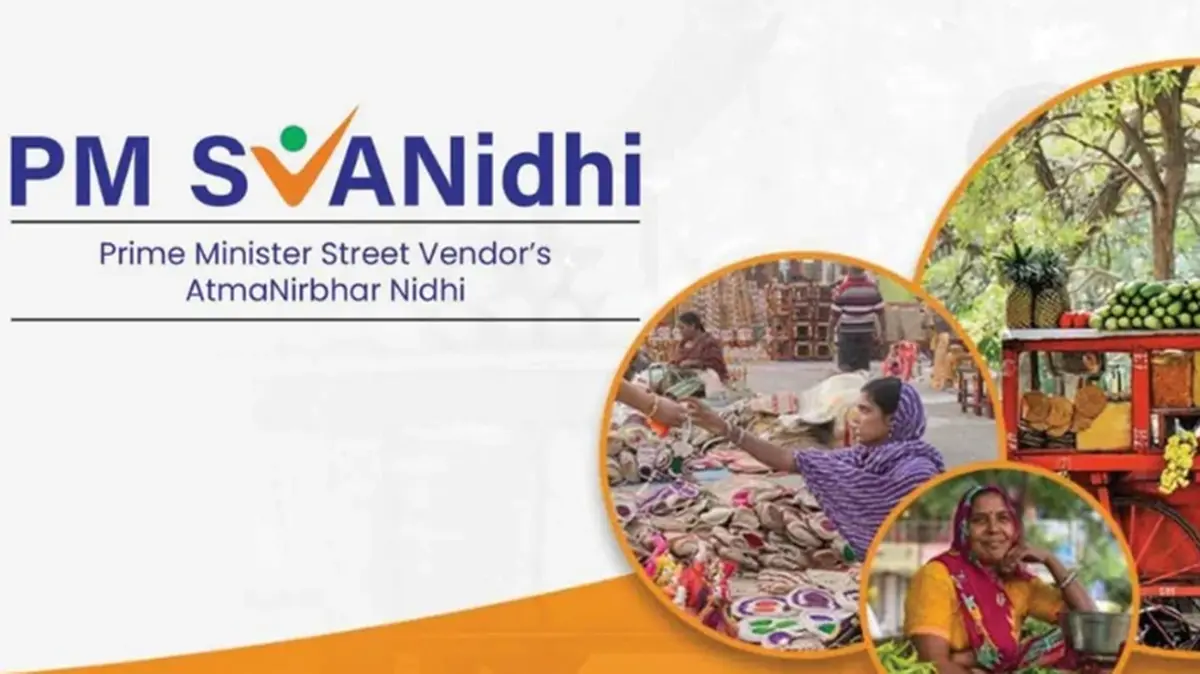
Why in news?
The government has restructured the PM Street Vendor’s AtmaNirbhar Nidhi (PM SVANidhi) scheme, extending it to March 2030 and introducing UPI‑linked RuPay credit cards for eligible vendors. The move aims to deepen financial inclusion and enhance working capital for millions of urban micro‑entrepreneurs.
Background
Launched in June 2020 during the COVID‑19 pandemic, PM SVANidhi provides working capital loans to street vendors in three tranches: up to ₹10,000 in the first cycle, ₹20,000 in the second and ₹50,000 in the third. Vendors who repay each tranche on time become eligible for the next, while a subsidy on interest and cashback incentives encourage digital transactions. The scheme targets vendors in urban local bodies, census towns, urban agglomerations and peri‑urban areas.
Key developments
- Extension and wider coverage: The lending period has been extended until March 2030 to provide long‑term support. The restructured scheme now covers census towns and peri‑urban areas in addition to statutory towns, bringing more vendors into the formal credit fold.
- Introduction of RuPay credit cards: Street vendors who repay the second tranche of ₹20,000 are eligible for a UPI‑linked RuPay credit card to meet recurring business expenses. By February 2026 more than 15,000 applications had been received and 2,479 cards issued. The cards promote digital payments and allow vendors to build a credit history.
- Reach and impact: As of early 2026 about 71.57 lakh vendors had availed the first loan, 27.28 lakh had received the second, and 6.61 lakh had progressed to the third. A study by the Indian School of Business found that the average annual business income of beneficiaries grew by roughly 20 percent between 2023 and 2025 and that nearly 30 percent of borrowers now access formal credit institutions.
- Awareness and digital literacy: Urban local bodies organise Lok Kalyan Melā camps and digital literacy programmes to onboard vendors onto the scheme and teach them to use QR codes and UPI. Cashback incentives further encourage cashless transactions.
Conclusion
PM SVANidhi has evolved from a pandemic relief measure into a comprehensive initiative for street‑vendor empowerment. By extending the scheme, expanding its geographic coverage and offering RuPay credit cards, the government aims to nurture entrepreneurship, formalise informal trade and accelerate the adoption of digital payments among millions of vendors.