

Why in news?
A study published on 16 September 2026 has identified an unexpected route through which a disease-causing fungus can develop drug resistance. The researchers examined Pneumocystis jirovecii, which can cause serious pneumonia in people with weakened immunity. They found mutations linked to exposure to mycophenolic acid, a medicine used to suppress the immune response after organ transplantation. The drug targets human cells, rather than being prescribed to kill this fungus. Yet fungal enzymes carrying the mutations resisted its effects in laboratory tests. The finding, reported by The Hindu on 19 September, raises questions about unintended evolutionary pressure from human medicines. It does not establish that standard pneumonia treatment has stopped working.
A fungus that becomes dangerous when immunity weakens
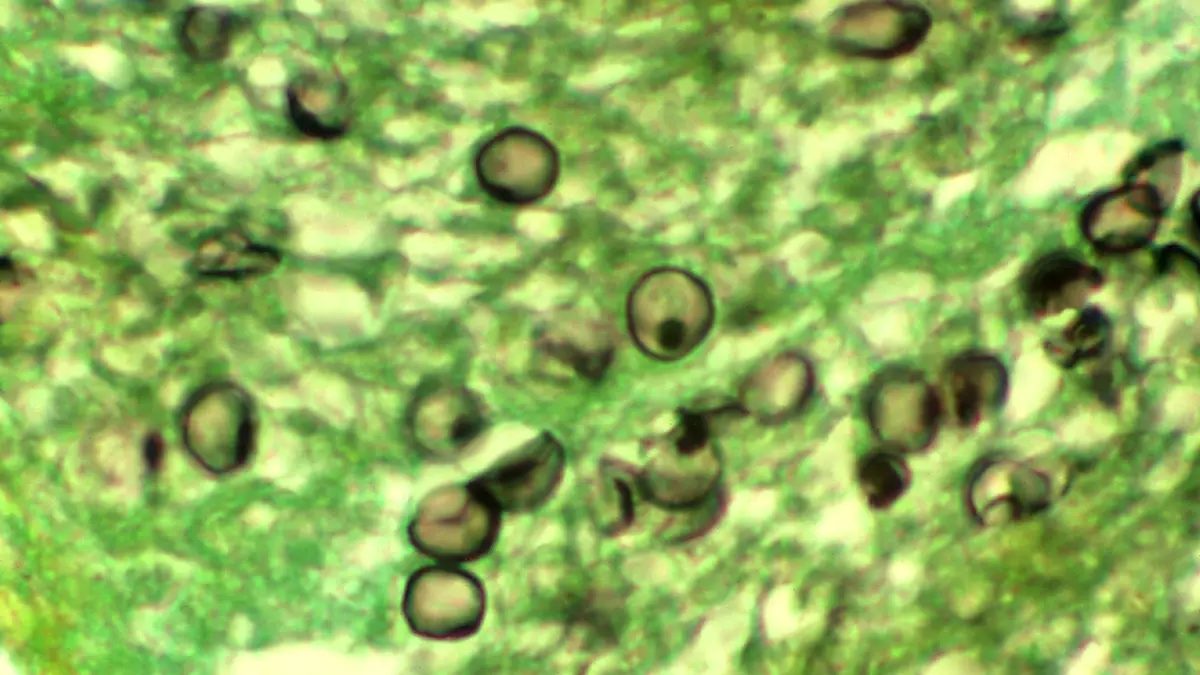
Pneumocystis jirovecii is a fungus associated with the human respiratory system. It causes Pneumocystis pneumonia (PCP), particularly when the immune system cannot control the infection. People receiving organ transplants or cancer treatment can be vulnerable. So can people with advanced human immunodeficiency virus infection, or those taking certain immune-suppressing medicines. The important connection is weakened immune protection, rather than membership of any single patient group.
The organism was once classified with protozoa, which are single-celled organisms distinct from fungi. Later molecular and biochemical evidence established its fungal identity. Its present scientific name also matters: P. jirovecii refers to the human-associated species. Pneumocystis carinii, a name found in older medical literature, is now used for a different, rodent-associated species. Older terminology should therefore not be mistaken for a newly discovered human pathogen.
The United States Centers for Disease Control and Prevention describes spread through the air between people. A person may carry the organism without obvious illness. In susceptible patients, infection can produce fever, cough, breathlessness, chest discomfort and fatigue. These symptoms are not unique to this infection, so clinical assessment and appropriate testing matter. A general description of symptoms cannot establish the cause of an individual patient's pneumonia.
How a transplant medicine can affect a fungus
After transplantation, the immune system can recognise a donated organ as foreign and attack it. Mycophenolic acid (MPA) helps restrain this response. It inhibits an enzyme called inosine monophosphate dehydrogenase, which participates in producing building blocks needed by cells. Restricting this pathway helps reduce the proliferation of immune cells. Its intended benefit is protection of the transplant, not treatment of a fungal infection.
The complication is that the fungus also uses a related enzyme. A medicine designed around a human biological pathway may therefore exert pressure on an organism sharing that pathway. Fungal variants that remain functional despite the drug may gain an advantage over more sensitive variants. This is selection: the drug does not consciously teach the fungus to resist it. Instead, conditions can favour variants with particular inherited changes.
What the research actually established
The paper in Science Translational Medicine examined 163 samples from six countries, including transplant-associated outbreaks and comparison cases. The researchers identified six mutations in the gene encoding the fungal enzyme. Four had not previously been reported. The distribution of these changes was associated with prior exposure to MPA, geographical location and sampling period. Their reconstruction indicated independent emergence in several fungal strains, rather than one simple worldwide chain of transmission.
The team then examined how the changes might affect the enzyme. Structural modelling suggested altered stability and reduced binding of the drug. Enzyme-inhibition experiments showed resistance associated with all six mutations. These complementary approaches strengthen the biological explanation: the sequence differences were not merely names in a genetic database. However, an enzyme experiment remains different from demonstrating treatment failure or measuring patient outcomes in a clinical trial.
This work also extends earlier research. A 2021 study had investigated enzyme mutations among transplant recipients exposed to MPA. The broader international analysis now provides additional evidence about their emergence and functional effects. The chronology matters because the September development is a substantial new investigation of an existing concern. It is not the first discovery that this fungus can change genetically under drug-related pressure.
Why the distinction matters for patient care
The resistance studied here concerns MPA's effect on a fungal enzyme. It should not be relabelled as resistance to every medicine used against PCP. A commonly used treatment and preventive medicine is trimethoprim–sulfamethoxazole, also called co-trimoxazole. Decisions about prevention, diagnosis and treatment remain clinical decisions. Transplant recipients should not interpret this research as a reason to stop prescribed immunosuppression, which protects the donated organ.
Conclusion
The study broadens the discussion of drug resistance beyond medicines intentionally aimed at microbes. A human-targeted treatment may also influence organisms that encounter it. The immediate contribution is stronger genetic and laboratory evidence for that possibility in P. jirovecii. Its practical implications require further investigation, including surveillance and patient-level studies. Keeping those evidence levels separate preserves the importance of the finding without turning it into an unsupported warning about treatment failure.