

Why in news?
Renewed attention to India’s polychaete worms has highlighted their ecological importance and growing commercial collection. A September 2026 field feature examined these animals through researchers and coastal livelihoods. Shrimp hatcheries value some species as live feed. Their use raises a wider question about protecting the habitats that supply them.
Understanding marine bristle worms
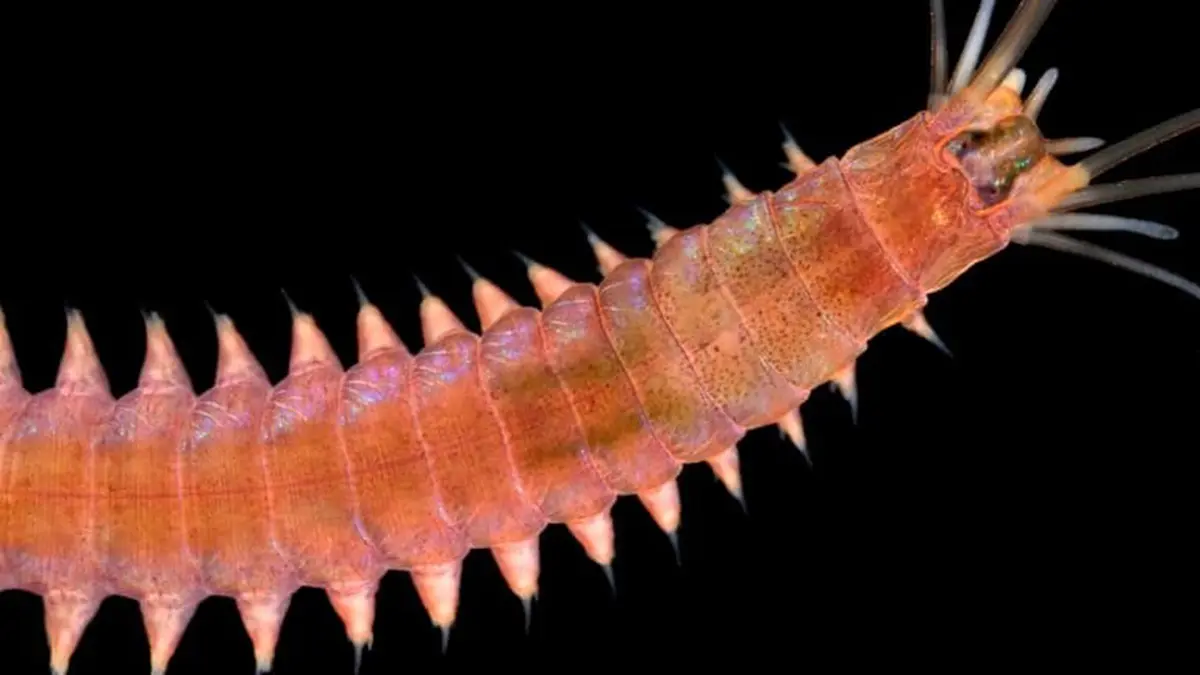
Polychaetes are commonly called bristle worms and belong to the segmented worms, or annelids. Many have paired fleshy appendages called parapodia along their bodies. These appendages often carry bristles known as chaetae. Their arrangement helps specialists identify species and understand how different worms move.
The group includes much more than worms buried in mud. Some crawl over the seabed, while others occupy tubes or swim. Their habitats range from shallow coastal environments to deep ocean settings. Differences in feeding, movement and body structure reflect these varied ways of living.
Some species collect particles from sediments, while others filter food from water. Predatory forms capture small animals instead. These feeding differences make polychaetes important at several levels of marine food webs. Fish and other animals also consume them, transferring energy from the seabed into larger organisms.
Why coastal sediments need them
Burrowing and feeding can move sediment and redistribute organic material. This process is often called bioturbation, meaning the disturbance of sediment by living organisms. Burrows can also influence exchanges between sediment and overlying water. These activities connect worm communities with nutrient cycling and seabed conditions.
Scientists therefore examine polychaetes when assessing environmental change. However, different species respond differently to organic enrichment and pollution. Some decline under disturbance, while tolerant species may become more abundant. A meaningful assessment studies the community’s composition, rather than simply recording whether worms are present.
India’s coasts contain many suitable habitats, including estuaries and intertidal mudflats. Intertidal areas are exposed and submerged as tides change. A study documented commercial collection from Mumbai’s intertidal zones in Maharashtra. Such locations connect urban coastal environments, marine ecosystems and the livelihoods of collectors.
Collection, hatcheries and habitat pressure
Certain polychaetes provide nutrients useful to breeding shrimp in hatcheries. Their commercial value creates income opportunities for coastal households. Research on Mumbai’s collection system demonstrates that this is an organised livelihood activity. It should therefore be understood through both ecology and the conditions faced by workers.
Heavy collection can remove animals while also disturbing the surrounding sediment. The effect depends on harvesting intensity, technique and habitat recovery. Restricting collection without considering livelihoods could transfer hardship to vulnerable households. A better approach would combine habitat assessment, community participation and credible alternative supplies.
Controlled cultivation offers one possible alternative to dependence on wild stocks. A 2026 study examined culture of the polychaete Perinereis nuntia as shrimp feed. It assessed production, fatty-acid composition and economic feasibility. Such work provides evidence for cultivation, although results still need evaluation under different local operating conditions.
Why accurate identification remains important
India’s knowledge of marine annelids still contains substantial gaps. A 2020 checklist assembled 727 reported species from the Indian continental shelf region. The authors identified 183 records that required further examination. These figures describe a reviewed historical inventory, not a newly verified count of living species.
A mistaken species name can distort both conservation and commercial decisions. Different worms may have different habitat needs, breeding cycles and tolerances. Reliable identification is therefore essential before transferring animals or designing culture systems. Better reference collections and specialist training would strengthen both environmental monitoring and responsible aquaculture.
Research should also distinguish local resource conditions from national assumptions. A harvest that appears small at one site may affect a concentrated population. Conversely, cultivation success at one facility does not establish universal profitability. Site-specific evidence can help communities and regulators choose measures that are practical and ecologically sound.
Conclusion
Polychaete worms connect seabed processes, marine food webs and coastal incomes. Their small size should not hide this importance. Sustainable use requires accurate identification and attention to habitat recovery. Carefully assessed cultivation could reduce pressure on wild collection. Protecting these animals means managing the entire coastal system that supports them and their collectors.