

Environment

Red-Necked Phalarope: Chandu Budhera Wetland & Migration

Red-Necked Phalarope: Chandu Budhera Wetland & Migration

Why in news?

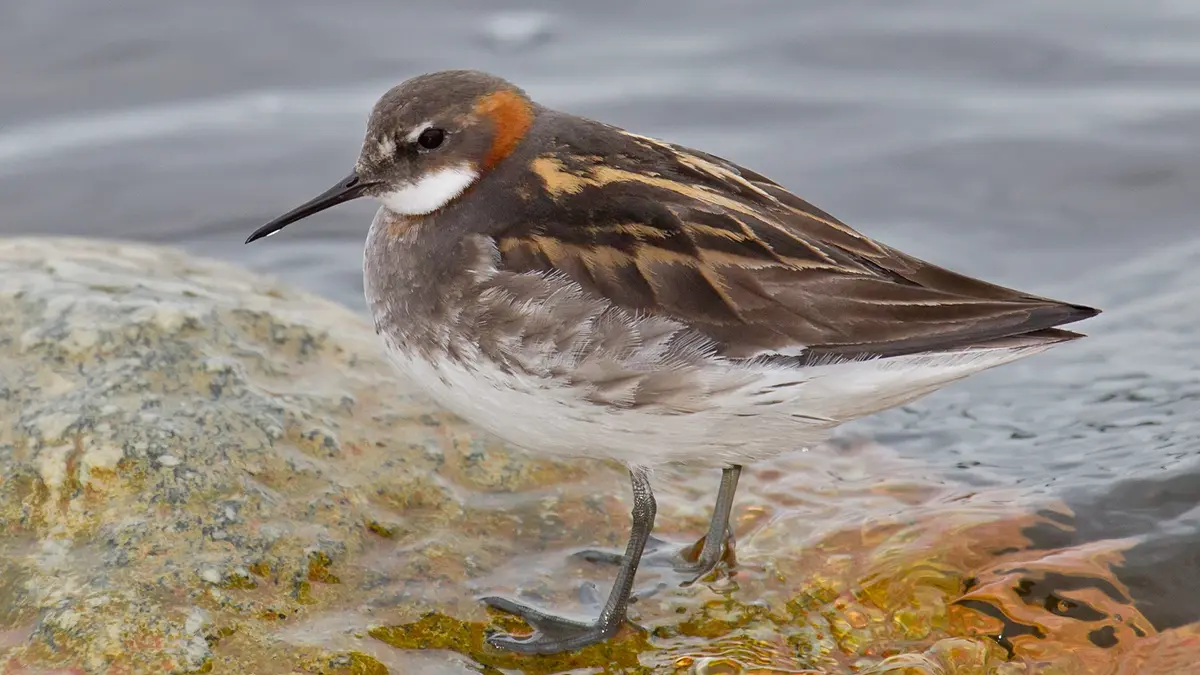
In May 2026 birdwatchers at the Chandu Budhera wetland near Gurugram, Haryana, spotted a red‑necked phalarope. This tiny shorebird rarely stops in inland freshwater habitats during its long migration, making the sighting notable and drawing attention to the importance of protecting urban wetlands.

Background

The red‑necked phalarope (Phalaropus lobatus) is a small Arctic shorebird with a slender, needle‑like bill. Unlike many birds, females are more colourful than males: during the breeding season the female has a striking chestnut neck, grey back and white underparts, while the male is duller. The species breeds in the Arctic tundra of North America and Eurasia. After nesting, the females leave the males to incubate the eggs and rear the chicks. During winter the birds move to open oceans, feeding on plankton and tiny invertebrates.

Unique behaviour and migration

  • Reversed roles: Females court males, compete for mates and then depart soon after laying eggs; males incubate and care for the young.
  • Feeding technique: Phalaropes spin rapidly on the water, creating whirlpools that bring prey to the surface. Their long legs and lobed toes allow them to swim like ducks.
  • Migration: After breeding, they migrate thousands of kilometres to tropical oceans. Sightings in India are sporadic and usually confined to coastal areas; an inland record near Delhi had last been reported in 2022.

Significance of the sighting

Observing a red‑necked phalarope at a small wetland near a major urban centre highlights the value of conserving such habitats. Urban wetlands serve as vital stopover points for migratory birds, provide flood protection, recharge groundwater and offer recreational spaces for residents. Protecting them ensures that rare migrants have safe havens on their journeys.

Sources

HT

Prelims MCQ Practice

Evaluate Your Retention

Assess your readiness with 5 high-yield multiple-choice questions on this article.

Mark your answers, submit, and see the key with explanations. Answers count only toward anonymous totals — nothing is linked to you, and it resets when you close this tab.

Practice questions 0 of 5 answered

Your result

0 / 5

Only anonymous totals are kept — nothing is linked to you. This resets when the tab closes.

1.

With reference to the red-necked phalarope, recently sighted at a wetland near Gurugram, consider the following statements:

1.It breeds in the Arctic tundra of North America and Eurasia.
2.It spends the non-breeding season largely on the open ocean.
3.It is a resident breeding bird of the wetlands of northern India.

Select the answer using the code given below:

2.

Which one of the following is characteristic of breeding in the red-necked phalarope?

3.

Phalaropes are known for spinning rapidly in tight circles on the water surface. This behaviour serves to:

4.

The Central Asian Flyway, for which India has adopted a national action plan, relates to the conservation of:

5.

The Ramsar Convention on Wetlands, to which India is a party, takes its name from a city in which one of the following countries?

Answer all 5 questions, then submit.
Sign in Today’s news
Current affairs Daily news Daily quiz News Blitz Shorts Economic Survey 2025-26 Subjects
Polity Economy Geography Environment History Science & Tech Intl. Relations Internal Security Art & Culture Social Issues
All subjects Exam info UPSC Syllabus Prelims syllabus Mains syllabus Exam pattern Eligibility & attempts OBC & EWS checker Resources Free downloads Booklist 2026 Previous year papers Video notes YouTube channel