

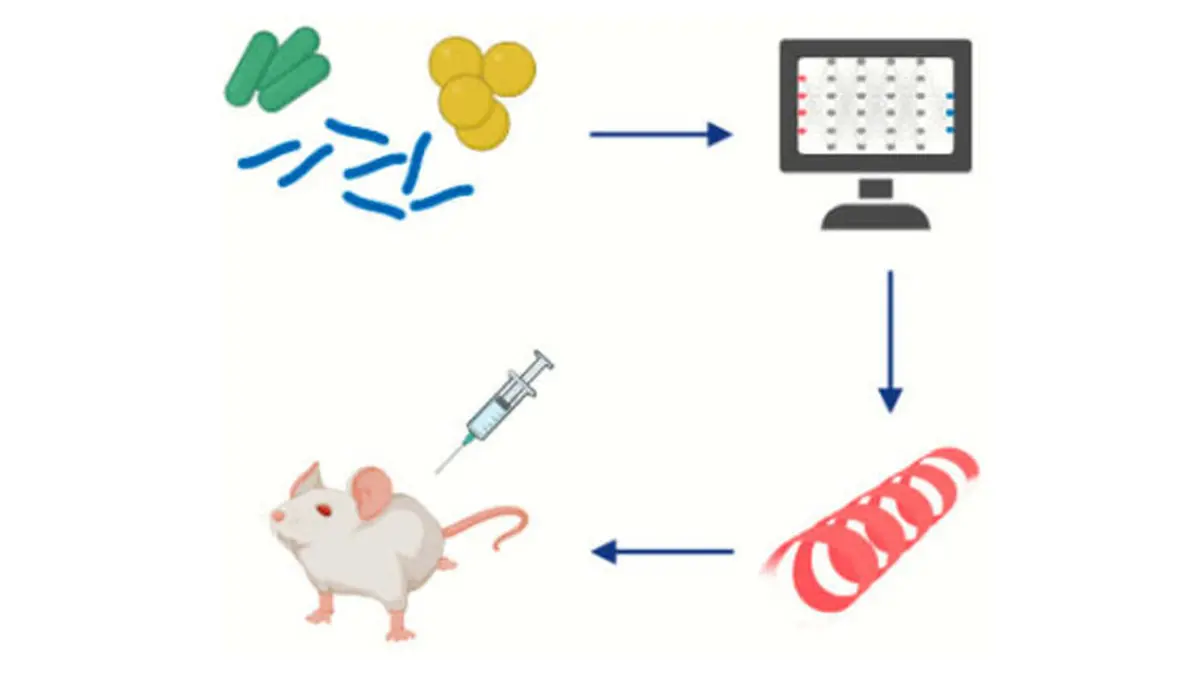
Why in news?
Scientists have developed a faster method for finding vaccine targets in Streptococcus pneumoniae. This bacterium can cause pneumonia, meningitis and bloodstream infection. Their four-protein experimental formulation protected mice against pneumonia and sepsis. The work extends reverse vaccinology but is not yet a vaccine for human use.
Why pneumococcal vaccines remain difficult
Streptococcus pneumoniae, commonly called pneumococcus, carries a sugar capsule around its surface. Differences in this capsule define more than one hundred serotypes. Existing conjugate vaccines target selected capsule types. They have reduced serious disease but cannot cover every circulating variant.
A conjugate vaccine joins capsule sugars to a carrier protein. This connection improves immune memory, especially in infants. However, manufacturing many separate capsule components is complex. Non-vaccine serotypes can also become relatively more common after targeted types decline.
A broadly protective vaccine would ideally target features shared across many strains. Conserved proteins offer one possible route. Yet some proteins remain hidden beneath the capsule or provoke weak protection. Finding a protein is therefore only the beginning of vaccine development.
What reverse vaccinology changes
Traditional antigen discovery often starts with a pathogen grown in a laboratory. Scientists then isolate its components and test their immune effects. Reverse vaccinology begins with the pathogen’s genome. Computer analysis predicts proteins that might be exposed, conserved and suitable as vaccine targets.
The approach became prominent during work on serogroup B meningococcus. Genome screening identified many possible antigens that older methods had missed. Laboratory testing then reduced that list to useful components. This history shows that computation guides experiments but does not replace them.
Reverse vaccinology can compare many strains before choosing targets. This helps researchers avoid highly variable proteins. It can also reveal candidates that are hard to purify directly from bacteria. Its main weakness is that a predicted antigen may not generate protective immunity.
The new functional approach
The 2026 study calls its method Functional Genomic Vaccinology, or FGV. It combines genome-guided selection with protein-scale screening and functional tests. Researchers first selected 222 conserved pneumococcal proteins. They then expressed the proteins and tested immune responses in mice.
A protein microarray measured Immunoglobulin G, or IgG, responses after vaccination. Ninety-one proteins produced measurable responses in the initial screen. Human serum data helped the team select a smaller group. Twenty-two successfully produced proteins then received more detailed testing.
The team examined both antibodies and T-helper 17 cellular responses. Antibodies can mark bacteria for removal by immune cells. T-helper 17 responses may help defend mucosal surfaces against pneumococcal colonisation. Strong results in one measure did not always predict strength in the other.
Four complementary proteins were combined into one experimental formulation. They were identified by laboratory codes SP_0368c, SP_1882, SP_0992 and SP_1128. The combination reduced bacterial burden and improved survival in mouse models. Antibodies also recognised multiple pneumococcal serotypes.
What the result does and does not show
The experiment provides proof that the screening pipeline can find promising combinations. It also supports the idea of protection that is less dependent on capsule type. However, the evidence comes from small mouse studies. Human immune responses and safety can differ substantially.
The researchers had not tested another 1,138 conserved proteins in their selected collection. They also noted limits from group size and the chosen adjuvant. Future work must compare combinations and examine protection against nasal carriage. Manufacturing stability and dose requirements will matter as development progresses.
A candidate must pass several stages before public use. These include further animal work, phased clinical trials and regulatory review. Researchers must establish safety, immune response and real protection in people. Existing vaccination programmes remain essential during this long process.
Wider significance
The method may apply to other bacteria with diverse strains. Its value lies in linking genomic conservation directly with experimental protection. This reduces reliance on prediction alone. It can also examine antigen combinations earlier within the discovery process.
Broad protection could simplify future vaccination and reduce gaps between serotypes. That possibility is especially important where vaccine cost and disease burden remain high. Yet universal protection is an objective, not an established result. Claims should remain proportional to the present preclinical evidence.
Conclusion
Reverse vaccinology has widened the search for bacterial vaccine targets. Functional screening now adds stronger experimental selection to that search. The pneumococcal study produced a promising four-protein combination in mice. It has not yet demonstrated safety or effectiveness in humans. Careful clinical development must determine whether broad protection can become a practical vaccine.