

Why in news?
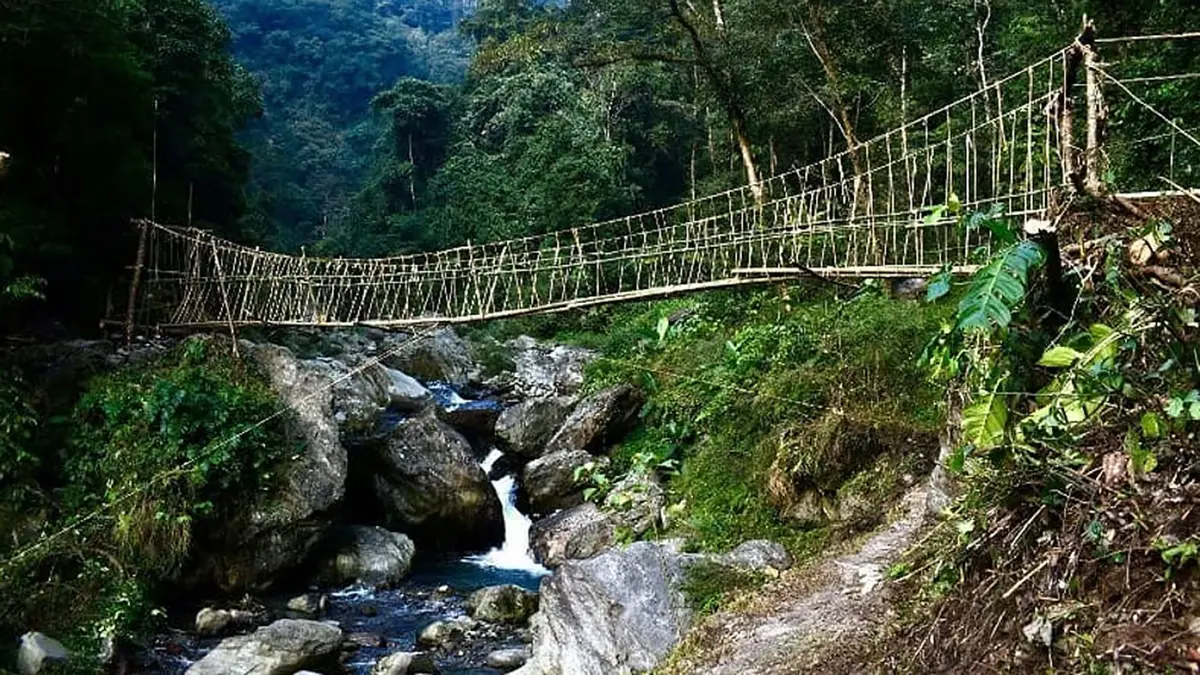
UNESCO and the Government of Sikkim have launched a project to document and conserve the Ru-Soam bridges built by the indigenous Lepcha community. These cane and bamboo bridges, found mainly in the Khangchendzonga Biosphere Reserve, have withstood floods and landslides. The new initiative will study their design and explore how traditional knowledge can contribute to modern climate adaptation.
Background
The Lepcha people, who consider themselves the original inhabitants of Sikkim, have been building cane bridges for centuries. Crafted from bamboo, cane and wood, Ru-Soam bridges connect remote hamlets across deep gorges and fast-flowing rivers. The techniques used are passed down orally from generation to generation and reflect a deep understanding of local materials and ecology. During the October 2023 glacial-lake outburst flood in north Sikkim, several Ru-Soam bridges survived where modern structures did not, highlighting their resilience.
Key features of Ru-Soam bridges
- Materials and construction: Builders use locally sourced bamboo and cane, which are woven and lashed together to form flexible yet strong spans. Wooden elements and natural fibres provide additional support.
- Design principles: The bridges are slightly curved and anchored into the landscape, allowing them to sway with wind and water without collapsing. This flexibility dissipates energy during floods or earthquakes.
- Cultural significance: Bridge building is a communal activity tied to Lepcha beliefs about harmony with nature. The practice reinforces social bonds and embodies a philosophy of working with, rather than against, the environment.
Current project and significance
- Documentation and analysis: UNESCO experts, engineers and community elders will map existing bridges, record construction methods and assess durability. Findings may inform guidelines for incorporating indigenous techniques into modern infrastructure.
- Climate resilience: As extreme weather events become more common, lightweight and flexible structures like Ru-Soam bridges could inspire sustainable designs that adapt to local conditions.
- Recognition of indigenous knowledge: The project emphasises that traditional engineering is not inferior but offers lessons for contemporary society. It also seeks to safeguard Lepcha cultural heritage for future generations.
Conclusion
The Ru-Soam bridges of Sikkim illustrate how indigenous knowledge can produce elegant solutions to environmental challenges. By documenting and learning from these structures, policy-makers can promote climate-resilient infrastructure while honouring the cultural heritage of the Lepcha people.
Source: The New Indian Express