

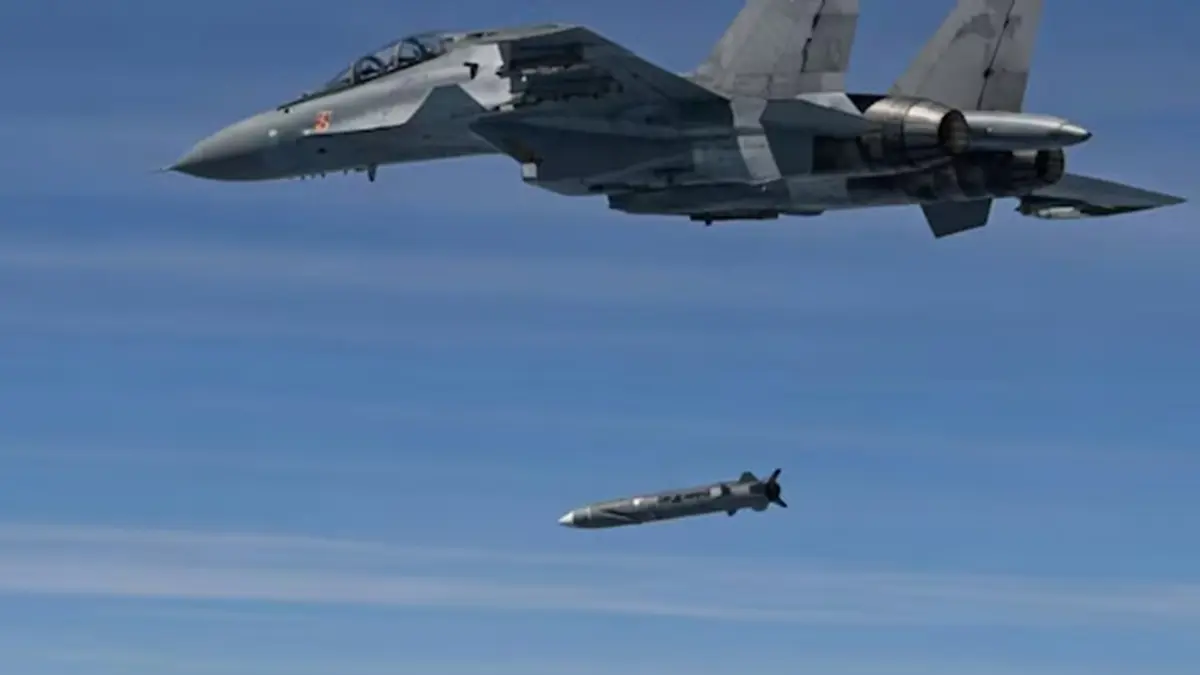
Why in news?
On 2 June 2026 the Defence Research and Development Organisation (DRDO) and the Indian Air Force (IAF) successfully flight‑tested the RudraM‑II air‑to‑surface missile from a Sukhoi Su‑30MKI aircraft at the Integrated Test Range in Chandipur, Odisha. The test validated the missile’s performance under extreme release conditions and marked a significant step in India’s indigenous weapons programme.
Background
The RudraM series—derived from the Sanskrit word for “roaring”—is a family of anti‑radiation missiles designed to locate and destroy enemy radar and communication systems. Such weapons are crucial for Suppression of Enemy Air Defences (SEAD) operations, as they clear the way for follow‑on aircraft by neutralising air‑defence networks. RudraM‑II follows the earlier RudraM‑1, offering greater range, speed and sophistication. Development involves multiple DRDO laboratories, Hindustan Aeronautics Limited and other industry partners.
Key features
- Range and speed: RudraM‑II can strike targets approximately 300 kilometres away and reach speeds up to Mach 5.5 (about 6,800 km/h). This hypersonic speed reduces the time available for enemy radars to react.
- Warhead: The missile carries a warhead of about 200 kilograms, sufficient to destroy radar installations, command nodes or other high‑value targets.
- Guidance: It employs a hybrid navigation system combining an inertial navigation system (INS), GPS and a passive homing seeker capable of detecting and locking onto radio‑frequency emissions across a broad spectrum. This allows the missile to track radars even if they switch off during the attack.
- Launch platform: RudraM‑II is designed to be launched from frontline fighter aircraft, including the Su‑30MKI. It can be fired from altitudes between 3 km and 15 km, giving pilots the flexibility to strike from standoff distances.
- Indigenous development: The missile has been developed entirely within India. Research Centre Imarat in Hyderabad serves as the nodal lab, with support from other DRDO facilities and development‑cum‑production partners such as Hindustan Aeronautics Limited.
Strategic importance
- SEAD capability: RudraM‑II will enable the IAF to suppress enemy air defences by destroying radars, communication hubs and surface‑to‑air missile batteries. This makes follow‑on strikes safer and more effective.
- Independence: The new missile is expected to replace imported Kh‑31 anti‑radiation missiles, reducing dependence on foreign suppliers and supporting the Aatmanirbhar Bharat (self‑ reliance) initiative.
- Deterrence: A hypersonic, long‑range, precision weapon complicates adversary calculations and enhances India’s deterrent posture in the Indo‑Pacific region.
Conclusion
The successful test of RudraM‑II showcases India’s growing expertise in advanced missile technology. By integrating high speed, long range and sophisticated guidance into a single weapon, DRDO and the IAF have strengthened the country’s ability to neutralise enemy air defences. Continued development and eventual induction of this missile will significantly enhance India’s air‑power capability.