

Why in news?
A new solar-powered water arrangement began serving Velladhotti hamlet inside Sathyamangalam Tiger Reserve. Residents had faced a long and difficult walk for potable water. Forest officials repaired a borewell and laid a pipeline to renovated tanks. The work was reported under the Union government’s Project Elephant support.
What was changed at Velladhotti
Velladhotti lies in the reserve’s Germalam range. The hamlet has about ten tribal families, according to the Forest Department’s account. Residents previously walked more than two kilometres for drinking water. An older borewell system had failed because of low voltage and a damaged motor.
Officials discussed the problem through the local Eco-Development Committee. They repaired the borewell and renovated an existing tank. A supplementary tank and solar panels were added. About one kilometre of pipeline now connects the water source and storage points.
The department placed the project cost at about ₹8 lakh. It reported morning and evening water supply after completion. These figures come from the official quoted in the first news report. Long-term performance will depend on maintenance records and resident experience.
Where Sathyamangalam lies
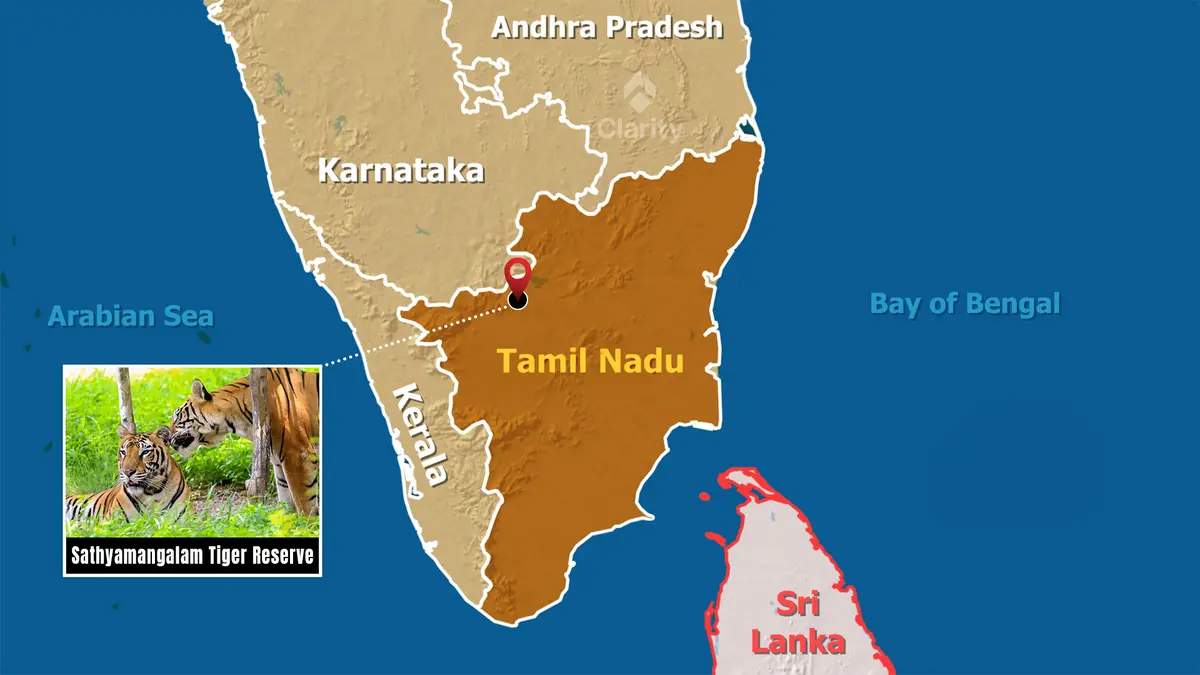
Sathyamangalam Tiger Reserve is in northern Erode district, Tamil Nadu. Karnataka lies along its northern side. The reserve sits at the meeting zone of the Western and Eastern Ghats. The perennial Moyar River and its gorge shape the southern landscape.
The National Tiger Conservation Authority records a total area of about 1,408 square kilometres. The reserve was notified in 2013. Its forests range from thorn and dry deciduous vegetation to wetter formations. This variation supports elephants, tigers and many other species.
A landscape connection for wildlife
Sathyamangalam links protected areas across the Nilgiri and Eastern Ghats landscape. Neighbouring connections include Biligiri Ranganatha Temple, Bandipur and Mudumalai tiger reserves. The Moyar valley supports animal movement between major forest blocks. Such movement helps populations maintain genetic exchange.
Roads and other linear infrastructure can fragment these connections. Human settlements also have legitimate needs for water, health and mobility. Conservation planning must address both realities. Denying essential services can deepen hardship without producing durable ecological gains.
Why water access matters for safety
Long water walks impose time and physical burdens. The burden often falls heavily on women. Walking through wildlife habitat can also increase the chance of dangerous encounters. Nearby supply can reduce exposure while improving hygiene and daily life.
Solar power is useful where grid voltage remains unreliable. It can operate a pump without regular diesel delivery. Yet panels, batteries and pumps still require inspection. A repair fund and trained local operators are necessary for continuity.
Project Elephant and local development
Project Elephant began in 1992 as a centrally sponsored scheme. It supports elephant habitat, corridors and conflict management. It can also assist measures that reduce dangerous interactions between people and elephants. The reported water project fits this practical interface.
Eco-Development Committees can connect residents with protected-area management. Their effectiveness depends on real participation and transparent decisions. Local knowledge can identify broken infrastructure early. It can also help schedule maintenance and prevent avoidable waste.
What should be monitored
Water quality requires periodic testing, especially after borewell repairs. Supply hours and seasonal yield should also be recorded. Falling groundwater could make the arrangement unreliable during dry periods. Demand management and backup planning can reduce this risk.
Officials should assess whether the project actually reduced water journeys. Residents should have a direct way to report failures. Similar projects elsewhere need site-specific design. Solar pumping is not a substitute for aquifer assessment.
A service project with conservation value
The intervention primarily meets a basic human need. Its conservation benefit comes from reducing risky movement and strengthening cooperation. Those gains will endure only through reliable local maintenance.
Conclusion
The Velladhotti project shows how small infrastructure can improve life inside a protected landscape. Solar pumping addresses the site’s weak power supply. Community consultation also supports practical ownership. Regular water testing and maintenance now matter most. Reliable services can strengthen both resident safety and trust in conservation institutions.