

Why in news?
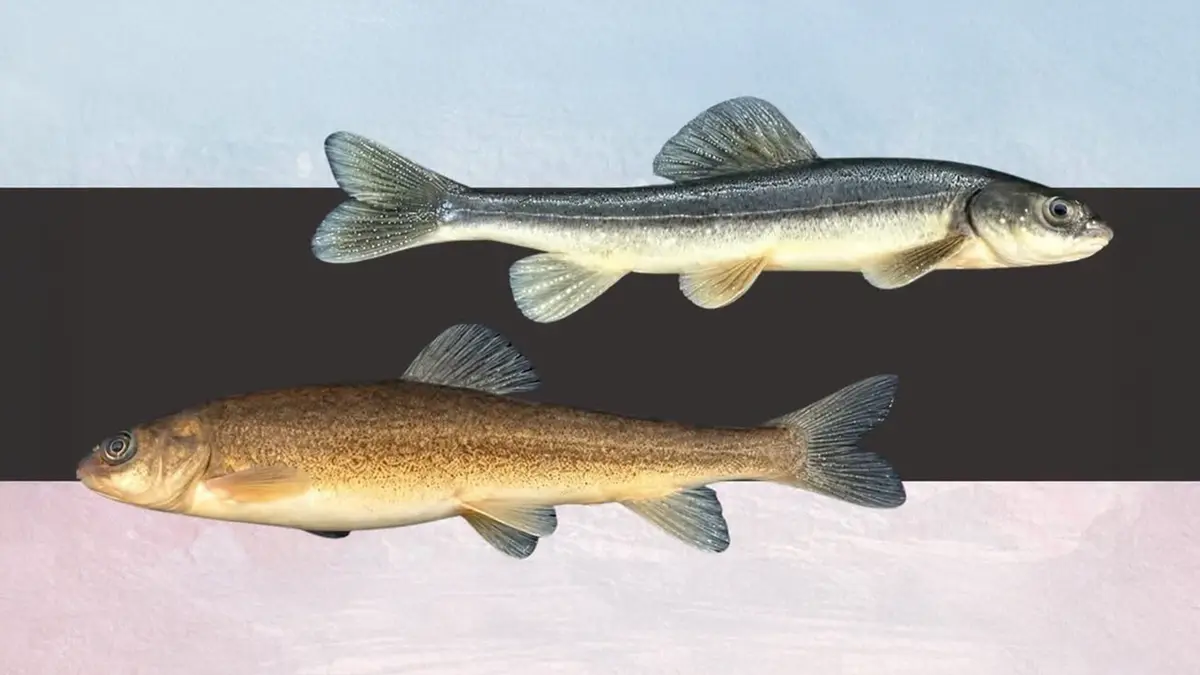
Researchers have reported Schizopygopsis waddellii from Pangkang Teng Tso Lake in Arunachal Pradesh’s Tawang district. The Times of India published the finding on 11 September 2026. Ten specimens collected in July were identified by coldwater-fisheries researchers. This is a reported extension of a known species’ range, not the discovery of a new species.
Identifying the fish correctly
Eschmeyer’s Catalog of Fishes recognises Schizopygopsis waddellii as a valid freshwater species. It places the fish in Cyprinidae, the carp family, and the subfamily Schizopygopsinae. These classifications are more informative than a loose common name. They connect the new report with an existing body of taxonomic knowledge.
The species was originally described by Charles Tate Regan in 1905 under the name Gymnocypris waddellii. The catalog records Yamdok Lake in Tibet as its type locality. A type locality is the place associated with the original description’s reference specimens. It is not a claim that the animal can occur nowhere else.
The change from Gymnocypris to Schizopygopsis explains why older literature may use a different combination of names. Taxonomic revisions can alter the genus while retaining the species identity. Searching only the newest name may therefore miss relevant older records. The spelling waddellii, with two final letters “i”, also matters.
The lake within the Himalayan landscape
Pangkang Teng Tso, also written Pankang Teng Tso, is commonly called P.T. Tso. Tawang’s district administration identifies it as a high-altitude lake near Tawang town. The discovery report gives an elevation of about 12,800 feet, or approximately 3,900 metres. The rounded conversion is more appropriate than implying survey-level precision.
This is not Sangetsar Lake, popularly known as Madhuri Lake. The district’s tourism records list the two separately. Similar travel descriptions can obscure that distinction. A biodiversity record belongs to a particular waterbody. It cannot simply be extended to every lake in the surrounding district.
Tawang lies in northwestern Arunachal Pradesh, within the Eastern Himalayas. Tibet, administered by China, lies to its north; Bhutan borders its western and southwestern side. West Kameng lies towards the east and southeast. These connections place the finding within a Himalayan–Tibetan setting, rather than the lowland Brahmaputra floodplain.
The district administration notes seasonal freezing at P.T. Tso. That provides an important clue to the environment researchers are studying. A high-altitude lake experiences strong seasonal constraints. Temperature, ice cover, water chemistry and food availability deserve measurement. Those observations can support conclusions about the fish population’s ecology.
What the new record establishes
The report attributes identification to the Indian Council of Agricultural Research’s Central Institute of Coldwater Fisheries Research at Bhimtal. This institutional name is current: the former directorate was elevated to a central institute in February 2025. The September report concerns its subsequent field research, not the date of that administrative change.
Finding correctly identified specimens establishes occurrence at the sampled location and time. It does not show when the fish first arrived there. The population may have been overlooked by previous surveys. A newly published record can therefore be genuinely new knowledge even when the species has occupied the habitat much longer.
The ten collected specimens are a sample, not a census of the lake. They cannot establish the total population or its trend. Nor does the word “rare” in reporting automatically assign a formal conservation category. Estimating abundance and extinction risk requires evidence about distribution, pressures and change over time.
How the finding can guide further research
A useful next step would be repeated sampling across seasons, with documented locations and retained reference specimens. Researchers could compare body features with established descriptions and, where appropriate, genetic material with reference sequences. Those complementary checks would strengthen identification. They should not be described as completed unless the research record confirms them.
The larger question is how Himalayan freshwater populations are connected. A shared species record can prompt investigation of historical drainage links or dispersal. It does not prove a present-day water connection between two distant lakes. Geographic proximity, geological history and biological similarity must be examined separately before proposing an explanation.
Conservation planning should begin with the lake and its catchment rather than immediate fish stocking. Water quality, shoreline disturbance and changes in inflow are sensible monitoring priorities. Introducing other fish without ecological assessment could alter existing relationships. The new record provides a reason to understand this habitat before attempting to modify it.
Local observations can also help direct scientific surveys. Residents and field staff may know seasonal changes or earlier sightings that formal records lack. Such information is useful when its origin is documented and checked. Combining it with consistent sampling can make a biodiversity inventory more complete and practically useful.
Conclusion
The Tawang report adds a precise new locality to knowledge of an already named freshwater fish. Its importance rests on reliable identification and geographical documentation. It does not establish a newly evolved species or a known population size. Continued surveys can turn this first reported Indian record into stronger ecological understanding.