

Why in news?
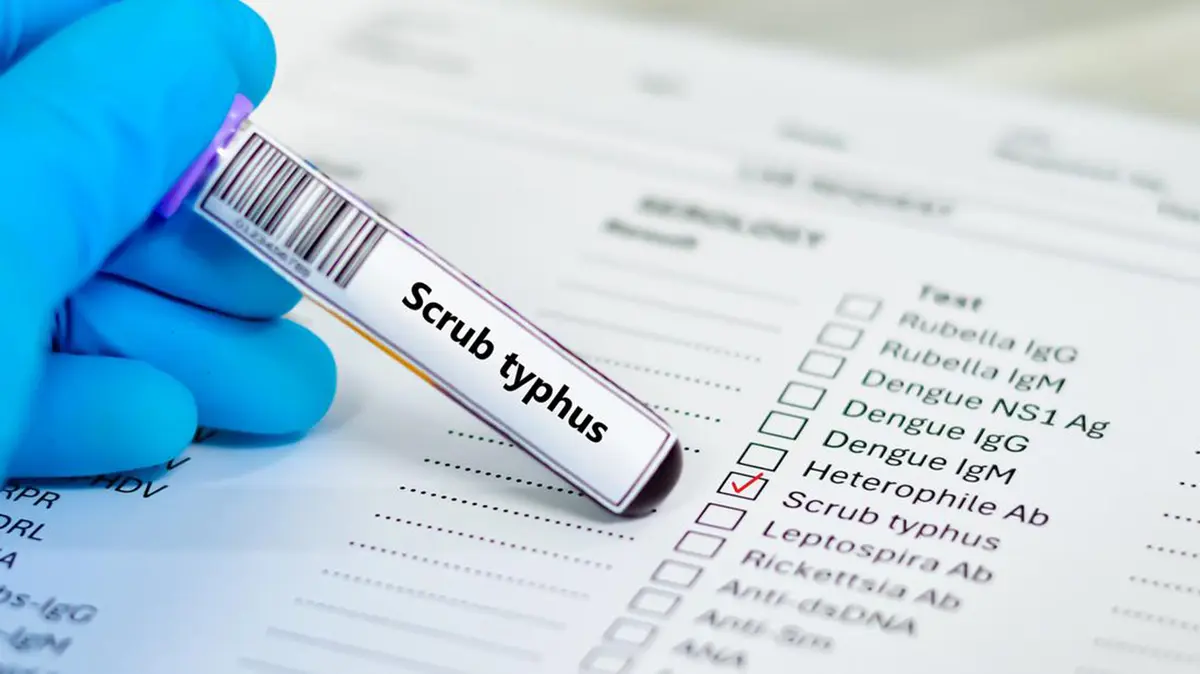
An Anna University student died of scrub typhus at Chennai's Government Kilpauk Medical College Hospital on 18 September 2026. The Hindu reported the death in its 22 September explainer. The university subsequently screened students for scrub typhus and other fever-causing infections. Scrub typhus is a bacterial disease transmitted through infected larval mites, not mosquitoes. Its early symptoms resemble several common fevers, which can delay recognition and treatment. The incident highlights the importance of prompt assessment when fever follows possible exposure to mite habitats. However, a screening exercise does not establish a campus-wide outbreak or prove where an individual acquired the infection.
A small vector with an important distinction
The bacterium Orientia tsutsugamushi causes the form of scrub typhus widely recognised in Asia. It reaches people through the bite of an infected chigger, the larval stage of a mite. This makes the disease different from dengue, which is transmitted by mosquitoes. That difference affects prevention: measures aimed only at mosquito breeding do not address every fever risk. People working, resting or walking through suitable grassy or scrub-covered habitats may encounter infected mites without noticing the bite.
The name can also confuse scrub typhus with other illnesses. Other forms of typhus involve different bacteria and vectors, including fleas or body lice. Typhoid fever is a separate disease and should not be treated as another name for scrub typhus. The useful starting point is therefore the actual organism, exposure and clinical picture. Similar-sounding names do not justify assuming the same transmission route, diagnostic test or treatment for each condition.
Why the first signs can be misleading
Symptoms commonly begin around a week or more after an infected bite. Fever, headache and body pain can initially resemble many other infections. Some patients develop swollen lymph nodes, a rash or an eschar, a dark, scab-like lesion at the bite site. An eschar can provide a valuable clue, but it is not present or noticed in every patient. Its absence therefore cannot safely rule out the disease when other evidence suggests it.
Untreated infection can become severe, affecting organs such as the lungs, kidneys or brain. This is why recognition matters before a patient develops obvious organ failure. The clinical problem is not that every ordinary fever represents scrub typhus. It is that a clinician must consider it among plausible causes when exposure and symptoms fit. The United States Centers for Disease Control and Prevention advises prompt treatment when scrub typhus is suspected. Treatment should not be delayed unnecessarily while waiting for confirmation.
Diagnosis combines evidence rather than one clue
Assessment brings together the patient's illness, examination and exposure history. Laboratory tests can look for the organism's genetic material or for the body's antibody response. These approaches answer different questions, and their usefulness depends partly on when samples are collected. Antibodies may not yet be detectable early in an illness. A test result therefore needs interpretation alongside the stage of disease. Its meaning depends on the clinical circumstances in which it was obtained.
Screening after a reported death serves a different purpose from proving the source of that death. It can help identify people who need medical assessment and distinguish among several causes of fever. Investigators would need additional evidence to link cases through a particular place or exposure. The Chennai report also mentioned screening for dengue and leptospirosis. That reflects the overlap in initial symptoms, not proof that all three infections were spreading together on the campus.
Treatment evidence must be used at the right scale
Doxycycline is an important antibiotic used by clinicians to treat scrub typhus. Severe illness may require hospital care, including support for affected organs. Treatment decisions depend on the patient and the severity of disease. A medicine name in a news report is not a prescription for self-treatment. Early professional assessment is particularly important because waiting for a distinctive rash or a positive test can allow a serious infection to progress.
A 2023 trial published in the New England Journal of Medicine studied intravenous treatment in patients with severe scrub typhus. Combined doxycycline and azithromycin performed better than either alone on the trial's combined outcome measure. That measure included death, persistent complications and persistent fever, assessed at specified times. It was not simply a demonstration that combination treatment reduced deaths alone. Nor does a hospital trial in severe disease establish that every mild infection requires the same combination.
Prevention follows the route of exposure
There is no vaccine routinely available to prevent scrub typhus. Practical prevention therefore focuses on reducing contact with chiggers and recognising illness after possible exposure. Protective clothing and appropriately used insect repellents can help people entering affected habitats. Advice should match local conditions and product instructions, rather than treating all outdoor activity as equally dangerous. In institutions, clear fever-reporting arrangements and timely access to care complement environmental precautions by reducing delays after symptoms begin.
Conclusion
The Chennai death brings attention to a treatable infection that can become dangerous when recognition is delayed. A sound response combines exposure-aware prevention, careful diagnosis and prompt clinical treatment. It also keeps the evidence in proportion: an individual case warrants action, but the location and extent of transmission require investigation rather than assumption.