

Why in news?
Vice-President Chandrapuram Ponnusami Radhakrishnan met a parliamentary delegation from Seychelles in New Delhi on 3 September. Speaker Azarel Ernesta, the country's first woman Speaker, led the visiting group. Their discussion came during the fiftieth year of bilateral diplomatic relations. It highlighted parliamentary cooperation within a wider Indian Ocean partnership.
What the visit covered
The delegation also met Lok Sabha Speaker Om Birla on 2 September. India offered training through the Parliamentary Research and Training Institute for Democracies. Possible areas included legislative practice, paperless working and artificial intelligence translation. Such cooperation can strengthen institutions without requiring a formal treaty.
Ernesta had also attended the Commonwealth Speakers and Presiding Officers Conference in India during January 2026. Repeated contact helps legislators compare rules, committee systems and public engagement. It also widens relations beyond governments and security agencies. Parliamentary ties can survive leadership changes on either side.
An island state with a large maritime space
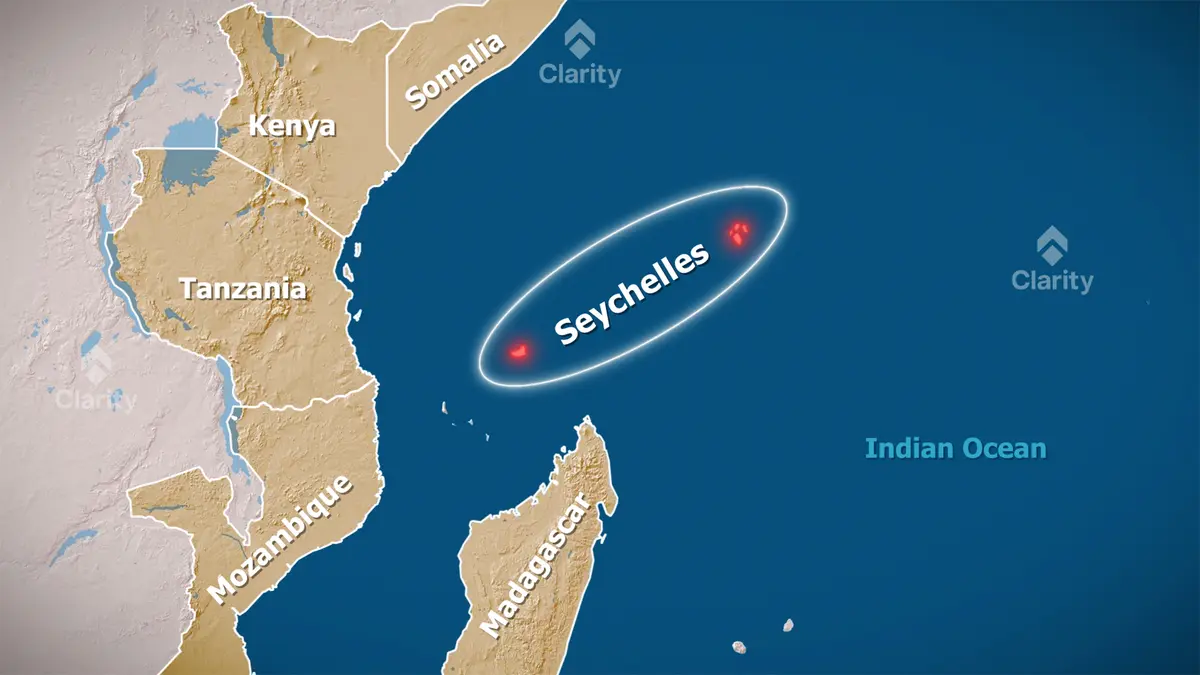
Seychelles is an archipelago of 115 granitic and coral islands in the western Indian Ocean. It lies east of mainland Africa and north-east of Madagascar. The islands are scattered across about 1.3 million square kilometres of ocean. They have no land borders and depend heavily upon maritime connections.
Mahé is the largest granitic island and contains the capital, Victoria. It also holds the main commercial port and most administrative activity. Smaller inhabited islands include Praslin and La Digue. Numerous outer coral islands extend the country's presence across a much wider sea area.
The country's exclusive economic zone covers roughly 1.37 million square kilometres. That maritime domain is vastly larger than its land area. Fisheries, tourism and healthy ocean ecosystems are therefore central national interests. Monitoring such an area is difficult for a small population and limited fleet.
Why the location matters to India
Seychelles sits near routes linking Africa, West Asia and Asia through the Indian Ocean. The surrounding waters also face piracy, narcotics trafficking and illegal fishing risks. Maritime awareness helps authorities distinguish normal shipping from suspicious activity. Search, rescue and disaster response require reliable regional partnerships.
India has supported Seychelles through training, hydrographic surveys, defence cooperation and maritime surveillance. These activities serve shared needs rather than only military objectives. Better charts improve navigation, while coastal awareness also protects fisheries. Cooperation must respect Seychelles' sovereignty and stated development priorities.
India now places this engagement within Mutual and Holistic Advancement for Security and Growth Across Regions. The framework connects security with development, capacity and consultation. Seychelles can also link India more closely with African and island-state concerns. Climate resilience remains especially important for low-lying coral islands and coastal infrastructure.
Fifty years of diplomatic relations
India and Seychelles established diplomatic relations in 1976, when Seychelles became independent. Their relationship has since covered health, education, defence, development projects and people-to-people links. High-level visits during 2026 gave the anniversary added political weight. Parliamentary dialogue complements those executive-level contacts.
During Prime Minister Narendra Modi's June 2026 visit, India announced a special economic package worth 175 million United States dollars. It comprised a rupee line of credit worth 125 million dollars and a 50-million-dollar grant. Both sides also adopted a joint vision for sustainability, economic growth and security. Delivery will matter more than the announcement alone.
Development finance can support infrastructure and public services chosen by Seychelles. However, small island states can face debt, climate and implementation constraints. Projects need transparent terms, local consultation and credible maintenance plans. Benefits should reach communities without weakening sensitive island environments.
The value of parliamentary diplomacy
Legislatures review public spending and hold governments accountable for agreements. Training can strengthen committee research, digital records and accessible proceedings. Exchanges also help representatives understand each country's domestic concerns. This creates a broader base for a durable partnership.
Digital assistance should still preserve institutional independence and data security. Artificial intelligence translation needs human review, especially for laws and parliamentary records. Paperless systems require dependable archives and access for all members. Capacity programmes should therefore follow needs identified by Seychelles itself.
Conclusion
The September meeting added a parliamentary layer to India-Seychelles relations. Geography makes Seychelles an important partner across the western Indian Ocean. Shared interests include secure seas, sustainable fisheries and resilient island development. Promised projects need transparent and locally useful implementation. Regular legislative dialogue can help both democracies review that progress.