

Why in news?
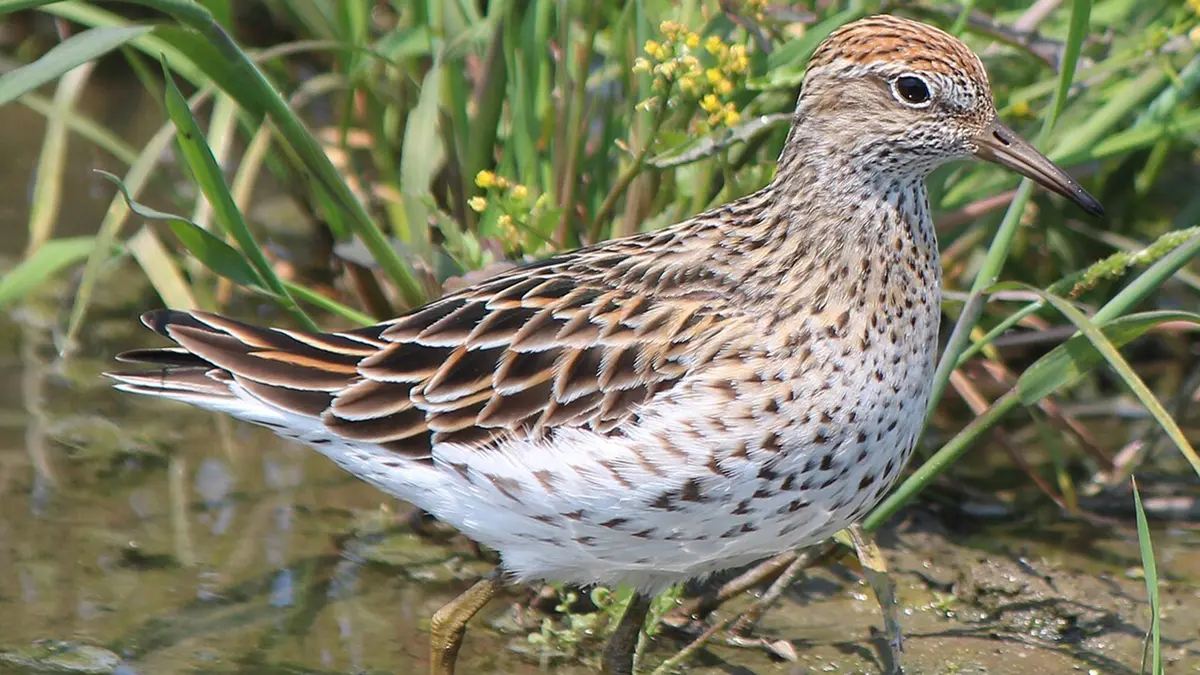
Birdwatchers photographed a Sharp-tailed Sandpiper near Najafgarh Jheel after several years without a local record. The sighting came from the Mankrola–Chandu area on the Gurugram side. This Siberian-breeding bird normally winters mainly in Australia and New Zealand. Its appearance highlights the international value of wetlands around Delhi and Haryana.
Identifying the bird
The Sharp-tailed Sandpiper is scientifically named Calidris acuminata. It belongs to the sandpiper family Scolopacidae. Adults are small migratory shorebirds with medium-length bills. Their shape can resemble the more familiar Pectoral Sandpiper.
Observers noted a pale eyebrow and warm, scalloped upperparts. Juveniles often show a rich chestnut crown and neatly edged feathers. Leg colour and breast pattern also help identification. Photographs are especially valuable for rare regional records.
A single unusual bird requires cautious checking. Light, age and feather wear can alter appearance. Experienced observers compare several features rather than one mark. Location and flock companions provide supporting context, not proof by themselves.
Normal range and migration
The species breeds on tundra in north-eastern Siberia. Most birds travel south through East Asia. Their main non-breeding areas lie in Australia and New Zealand. Smaller numbers occur across other parts of Asia and the Pacific.
Young birds may take different routes from adults. Weather can displace individuals during long journeys. Wetland loss can also force birds to use unfamiliar stopovers. A rare Indian sighting does not mean the species has shifted its entire range.
The birds feed in shallow freshwater marshes, flooded fields and muddy shorelines. They pick insects, worms, crustaceans and other small prey. Water depth determines whether a feeding site remains usable. Rapid drainage can remove suitable habitat within days.
Where Najafgarh Jheel is located
Najafgarh Jheel straddles the boundary between Haryana and the National Capital Territory of Delhi. It occupies a shallow depression within the Sahibi River basin. The basin extends across Rajasthan, Haryana and Delhi. Its water eventually drains towards the Yamuna system.
The present wetland is a fragment of a much larger historic lake. The Najafgarh Drain carries water eastwards through Delhi. Flooding, sewage, farming and urban development shape today’s water regime. Administrative division makes management unusually complex.
Mankrola and Chandu lie on the Gurugram side of this interstate wetland. Seasonal shallow water and exposed mud attract many waders. Nearby grassland and fields add feeding and resting areas. Development in one jurisdiction can affect birds across the boundary.
Why this record matters
Migratory birds connect breeding, stopover and wintering sites across countries. Loss of one important wetland can weaken the whole route. Najafgarh provides habitat near a dense urban region. That makes every reliable record useful for long-term monitoring.
The sighting also shows the value of citizen science. Dated photographs can document arrival, age and habitat use. Shared records help specialists review an unusual identification. Repeated observations are stronger than an isolated claim.
However, rarity can attract crowds to a sensitive site. Visitors should avoid flushing feeding birds. Vehicles must stay away from wet ground and nesting areas. Exact locations need care when disturbance risk is high.
Conservation concerns
The latest assessment cited by Cornell lists the species as Vulnerable. Its population is estimated to have declined substantially. Habitat change along migration routes is an important pressure. Reliable trend estimates remain difficult across such a wide range.
Wetlands around Gurugram face altered drainage, pollution and land conversion. Sudden water releases can also change feeding depth. Conservation must protect hydrology, not only a mapped boundary. Clean inflows and connected habitat are equally important.
Delhi and Haryana have prepared a joint management framework for Najafgarh Jheel. Effective action needs shared monitoring and enforceable responsibilities. Bird records can help identify priority zones. They cannot substitute for water-quality and land-use controls.
A rare visit reveals a larger ecological network
The bird’s journey links Siberian tundra with Asian wetlands and southern wintering grounds. Najafgarh becomes one temporary part of that network.
Conclusion
The Sharp-tailed Sandpiper record is locally rare and scientifically valuable. It also draws attention to Najafgarh’s role as an interstate wetland. Good photographs and expert review make unusual sightings more reliable. Protection must focus on water, habitat and low disturbance. One visiting bird can strengthen the case for coordinated wetland management.