

Why in news?
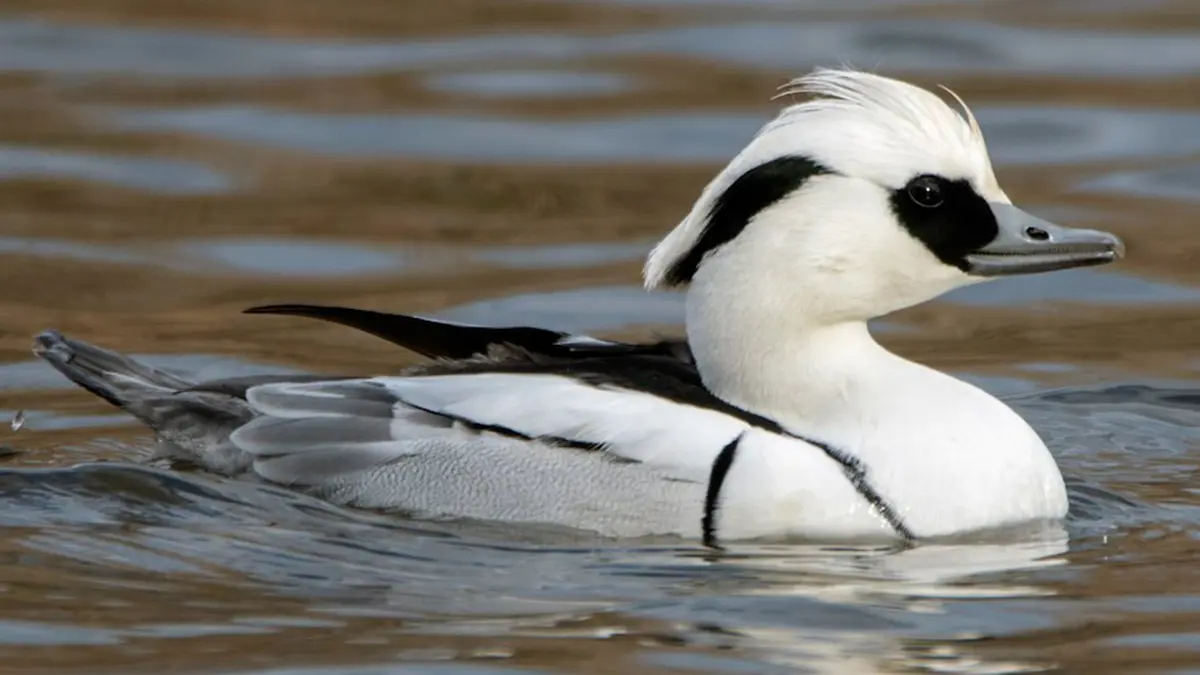
Assam officials announced the first recorded smew sighting at Laokhowa Wildlife Sanctuary. Surveyors observed the small Eurasian diving duck during the seventh Kaziranga Waterbird Count in 2026. The count covered Rowmari, Dondowa and Muamari beels within the sanctuary landscape. A dated Macaulay Library record documents a smew at Laokhowa on 18 January 2026, supporting the sanctuary-level first-record claim.
Identifying the smew
The smew’s scientific name is Mergellus albellus. It belongs to the duck family Anatidae and the order Anseriformes. Adult males are mainly white with black facial and back markings. Females and young birds have grey bodies, chestnut heads and pale cheeks.
It is a small sawbill related to mergansers. A narrow serrated bill helps it catch fish and aquatic invertebrates. The bird dives from the water surface. Accurate identification can require photographs because female-plumaged ducks resemble other species at a distance.
Normal range and migration
Smews breed across the northern taiga forests of Europe and Asia. They often nest in tree cavities near freshwater. Winter sends them towards milder lakes, reservoirs and slow rivers farther south. Most regular wintering areas lie across Europe and temperate Asia.
North-east India sits near the edge of the species’ usual movement. A Laokhowa record is therefore notable. One bird does not prove a permanent range shift. Weather, food or individual navigation can also produce an isolated appearance.
Conservation status needs careful description
The International Union for Conservation of Nature classifies the smew as Least Concern globally. Calling the species globally endangered would therefore be incorrect. It may still be scarce or declining within particular regions. A rare local record and a global threat category answer different questions.
Wetland loss and disturbance affect many migratory waterbirds. Fishing nets can also create entanglement risk. Changes in winter ice alter bird distribution across Eurasia. Long-term counts are needed before linking one Assam sighting with climate change.
Laokhowa’s location
Laokhowa Wildlife Sanctuary lies in Nagaon district on the Brahmaputra’s southern floodplain. It covers roughly 70 square kilometres. Burhachapori Wildlife Sanctuary lies nearby across the connected riverine landscape. Together they form an important buffer around the wider Kaziranga Tiger Reserve.
The Brahmaputra creates beels, channels, sandbars and seasonally flooded grasslands. “Beel” is the regional name for a wetland or lake. Floods renew fish habitat and nutrients. They also shift channels and reshape nesting or feeding areas each year.
The value of a waterbird count
A structured count records species, abundance and location over a defined period. Repeated methods can reveal change through time. Photographs and observer notes allow unusual records to be reviewed. Public biodiversity archives strengthen transparency and scientific value.
Counts also identify wetlands needing protection. High diversity can guide patrolling and habitat work. However, one count is a snapshot. Water level, weather and observer coverage affect totals. Managers should compare several years before declaring a trend.
What the first record indicates
The sighting confirms that Laokhowa can support this visiting diving duck. Suitable water depth, fish and resting space were available at that time. The record adds to the sanctuary’s documented diversity. It also improves knowledge of rare winter movement into Assam.
Officials described the sighting as evidence of wetland importance. That is reasonable when carefully scoped. The bird alone cannot certify the entire ecosystem as healthy. Water quality, invasive plants, fish populations and disturbance require separate measurement.
Protection priorities
Illegal fishing can disturb birds and reduce their food. Sanctuary teams have increased patrols and monitoring points. Habitat restoration must retain natural wetland edges. Plantation should not replace open grassland or seasonally flooded habitat needed by specialised species.
Management should coordinate across Laokhowa, Burhachapori and Kaziranga. Birds move across administrative boundaries as water changes. Community participation can reduce illegal activity and improve reporting. Responsible birdwatching should keep distance and avoid playback near resting flocks.
First for the sanctuary, not first for India
The official claim concerns Laokhowa Wildlife Sanctuary’s records. Smews were already known from other parts of India. Precise geographic scope prevents a local discovery from becoming a false national superlative.
Conclusion
The smew record adds a well-documented visitor to Laokhowa’s wetland history. Its significance lies in the sanctuary-level first and the habitat supporting it. Repeated counts can show whether such visits remain exceptional. Strong protection should cover fish, water and floodplain processes together. Good field records turn an unusual sighting into useful conservation knowledge without exaggeration.