

Why in news?
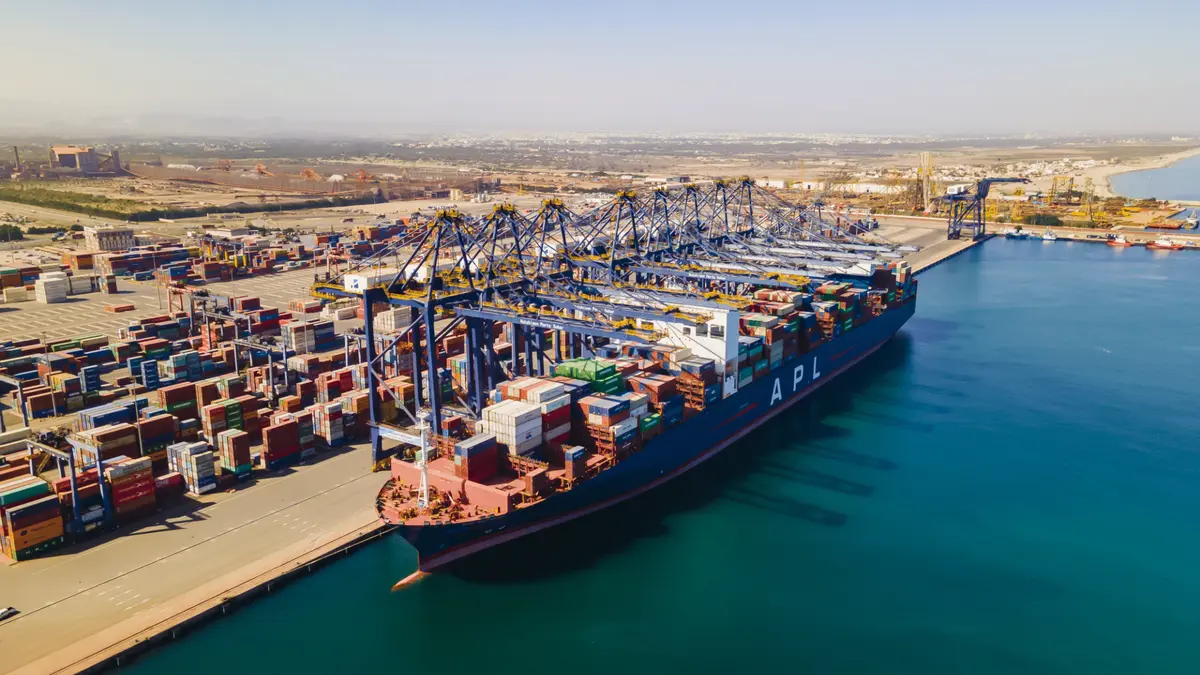
Oman has presented Sohar Port as an investment and logistics option for Indian businesses concerned about access to Gulf energy. Speaking in New Delhi on 16 September, Sohar's representatives highlighted the port's position outside the Strait of Hormuz. The Hindu reported the pitch amid concern about disruption along that shipping passage. Sohar is not a newly constructed port: it has operated since 2004. The new development is the effort to attract investment around its existing port and industrial facilities. Suitable cargo routes through Sohar can avoid the strait. However, producers inside the Gulf still need transport connections to reach this alternative outlet.
Where Sohar sits on the map
Sohar lies on Oman's northern coast, in North Al Batinah, facing the Gulf of Oman. Oman occupies the south-eastern corner of the Arabian Peninsula. It shares land borders with the United Arab Emirates, Saudi Arabia and Yemen. The Gulf of Oman lies along its north-eastern side, while the Arabian Sea extends along its south-eastern coast. This position connects the country directly with sea routes towards the wider Indian Ocean.
The Strait of Hormuz links the Persian Gulf with the Gulf of Oman. Iran lies on its northern side, while Oman's Musandam peninsula forms part of its southern side. Musandam is separated from Oman's main territory by the United Arab Emirates. Sohar lies outside the strait, on the main Omani coast. A vessel arriving from the Arabian Sea can therefore reach Sohar without entering the Persian Gulf.
An operating industrial port, not just a harbour
According to Asyad, Oman's logistics group, Sohar has operated since 2004. The port is managed through a partnership involving Asyad and the Port of Rotterdam. The ownership arrangement is an equal, 50:50 joint venture. This combines an Omani location and industrial base with the participation of an established European port operator. It should not be described as sole foreign ownership or as a recently announced construction project.
The port handles several kinds of cargo rather than serving only oil tankers. Its facilities include container, liquid-bulk and general-cargo operations. Nearby industrial activities include metals, petrochemicals, food and logistics. The associated free zone provides space for businesses linked to these activities. A port moves goods between sea and land; an industrial zone can also support processing, storage and production before goods move onward.
These connections help explain the investment pitch. An Indian company may be interested in importing a commodity, processing material locally or distributing products to regional buyers. Each activity requires a different combination of facilities and permissions. A container terminal alone cannot meet the requirements of every industrial project. Storage, handling equipment, utility supplies and inland transport must match the cargo and the business model.
Why being outside Hormuz matters
Hormuz is a narrow route serving major oil and gas exporters. Concentrating shipping through a constrained passage creates a chokepoint: disruption can affect many users at once. The United States Energy Information Administration identifies the limited availability of alternative routes as an important vulnerability. Sohar's position is therefore commercially significant for cargo that can originate there or reach it through dependable land connections.
However, a port's geographical position and an energy producer's transport network are separate questions. Oil stored at a terminal inside the Persian Gulf cannot simply appear at Sohar. It would need an available pipeline, suitable overland transport or another shipping arrangement. Existing bypass pipelines also lead to specific destinations. For example, the United Arab Emirates has a route to Fujairah, while Saudi Arabia's east–west pipeline reaches the Red Sea.
Neither of those routes should be presented as a pipeline to Sohar. Likewise, a proposed railway or future logistics corridor should not be treated as an operating connection. The relevant commercial test is whether the complete journey works: from production and processing through inland transport, port handling and final delivery. Geographical advantage is an important component, but it cannot substitute for the rest of that chain.
What the opportunity means for India
For Indian businesses, the roadshow offers a reason to examine diversification of suppliers, storage and shipping arrangements. It does not establish that shifting cargo will always be cheaper or safer. Freight costs, insurance, terminal capacity and contractual arrangements can all affect the result. Facilities that suit one commodity may not suit another. The practical value of Sohar therefore needs to be assessed cargo by cargo and project by project.
Oman's wider position also matters. Its coast gives it direct access to the Indian Ocean trading system while retaining connections with Arabian Peninsula markets. Sohar combines that setting with an existing industrial cluster. The September discussion concerns how much more use businesses can make of those assets. Claims about guaranteed access or uninterrupted supplies would go further than the evidence available from an investment presentation.
Conclusion
Sohar's attraction rests on a real geographical distinction: it is an established Omani port outside Hormuz. The current pitch asks Indian investors to make greater use of that location and its industrial facilities. Its contribution to energy security depends on actual cargo connections, capacity and commercial agreements. Explaining those conditions preserves the significance of the proposal without confusing a useful alternative location with a complete solution to Gulf shipping risks.