

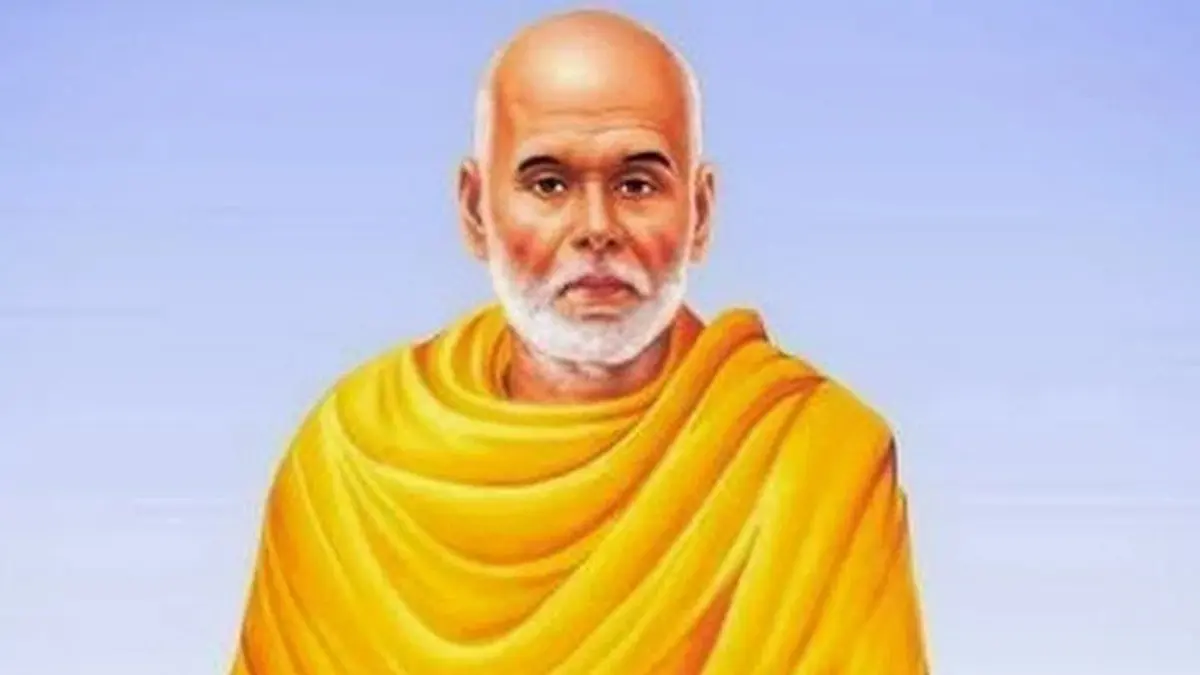
Why in news?
The Prime Minister paid tribute to Sree Narayana Guru on his birth anniversary. The observance fell on 28 August 2026. He recalled the reformer’s commitment to dignity, compassion and education. The occasion renewed attention to Guru’s role in Kerala’s struggle against caste exclusion.
Early life and social setting
Sree Narayana Guru was born in 1855 at Chempazhanthy near Thiruvananthapuram. His family belonged to the Ezhava community. That community faced severe caste restrictions in nineteenth-century Travancore. Education, temples, public roads and official employment were unequal or closed to many communities.
Guru learned Malayalam, Tamil and Sanskrit and studied Indian philosophical traditions. He later lived and meditated at several places. His spiritual learning did not lead him away from society. He used religious practice to challenge inherited social inequality.
The Aruvippuram consecration
In 1888, Guru consecrated a Shiva image at Aruvippuram. The act challenged the claim that only selected castes could perform temple consecration. It also created a place of worship open to marginalised people. The event became a landmark in Kerala’s social renaissance.
Aruvippuram lies beside the Neyyar River south-east of Thiruvananthapuram. The rural setting became an early centre of organisation and worship. Guru connected the temple with ethical reform and social service. He did not treat ritual as an end in itself.
Later consecrations used lamps, inscriptions and even a mirror. These choices directed attention towards knowledge and inner dignity. Guru increasingly emphasised schools, libraries and productive activity. His religious reform therefore carried a strong social purpose.
Organisation and education
The Sree Narayana Dharma Paripalana Yogam was founded in 1903. Guru’s followers included Dr Padmanabhan Palpu and poet Kumaran Asan. The organisation promoted education, social reform and community advancement. It helped translate spiritual teaching into institutions.
Guru urged people to gain strength through organisation and freedom through education. Schools and libraries were attached to several centres. He also encouraged industry and simpler social customs. These measures addressed both dignity and material disadvantage.
Education mattered because formal exclusion reproduced caste hierarchy. Literacy widened access to employment and public debate. Organisation gave dispersed communities a collective voice. Economic activity reduced dependence on traditional caste occupations.
His philosophical message
Guru drew deeply from Advaita, the philosophy of non-duality. He expressed it through simple ideas about shared humanity. His best-known message calls for one caste, one religion and one God for humanity. It rejects hierarchy without demanding cultural sameness.
His works include Atmopadesa Satakam, Daiva Dasakam and Darsana Mala. They explore self-knowledge, ethics and spiritual unity. He wrote in accessible Malayalam as well as Sanskrit and Tamil. Language helped carry philosophy beyond narrow scholarly circles.
In 1924, he convened an all-religion conference at Aluva. Its stated purpose was to know and inform, not argue and defeat. This approach placed dialogue above religious rivalry. It remains relevant in a diverse society.
Relationship with wider reform movements
The Vaikom Satyagraha of 1924–25 challenged road restrictions around the Vaikom temple. T. K. Madhavan was a principal leader. Guru supported the broader struggle against untouchability. It would be inaccurate to describe him as its sole leader.
Mahatma Gandhi met Guru at Sivagiri in 1925. Their conversation addressed caste and social reform. Guru’s movement had already built schools, organisations and places of worship. The meeting connected Kerala’s reform experience with a larger national debate.
Guru’s influence also extended through Sivagiri at Varkala. The hill stands near Kerala’s Arabian Sea coast north of Thiruvananthapuram. He established the Sarada temple there in 1912. Sivagiri later became the main centre of his monastic order.
Why his method mattered
Guru combined moral argument with practical institution building. He challenged exclusion without promoting revenge. Schools, associations and workplaces created paths for long-term mobility. This method allowed ideas to survive beyond a single protest.
His language joined spiritual dignity with social equality. That connection reached people for whom religion shaped everyday life. It also exposed the contradiction between spiritual unity and caste discrimination. Reform became both ethical and institutional.
Modern remembrance should avoid turning him into a slogan. His work addressed unequal access to knowledge, worship and livelihoods. Similar barriers can survive in new forms. The strongest tribute is continued attention to equality and education.
Support for Vaikom, not sole leadership
Guru’s ideas and support strengthened anti-caste reform. The Vaikom campaign had its own organisers, especially T. K. Madhavan and other local leaders. Accurate history recognises both influence and direct leadership.
Conclusion
Sree Narayana Guru joined spiritual thought with practical social change. His institutions expanded education, organisation and public dignity. His teachings opposed caste hierarchy through a language of shared humanity. Historical remembrance should preserve the precision of his contribution. Equality in schools, worship and livelihoods remains the living measure of his legacy.