

Why in news?
A peer-reviewed study published on 21 August 2026 mapped four antibody-binding sites on a key viral protein. The work concerns Crimean-Congo haemorrhagic fever, a serious tick-borne disease found across Africa, Asia and parts of Europe. Several tested antibodies protected laboratory mice, although they did not neutralise free virus directly. The findings offer an early route towards antibody treatments, but no human therapy has resulted yet.
The disease and its cause
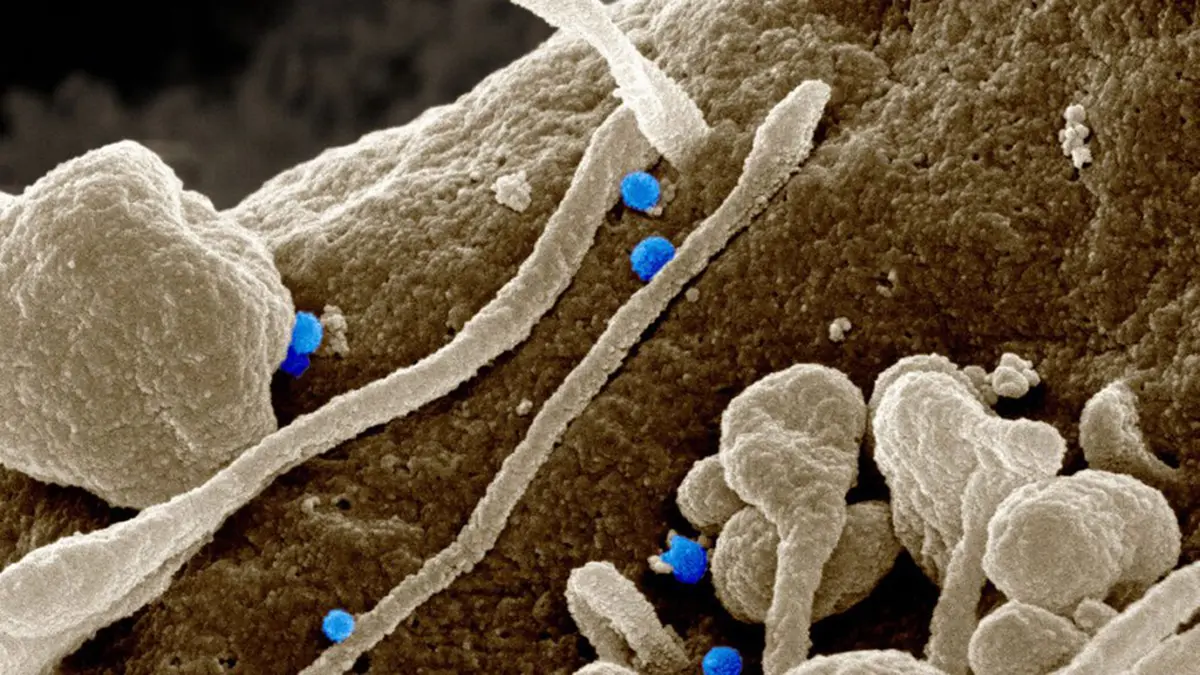
Crimean-Congo haemorrhagic fever is caused by the Crimean-Congo haemorrhagic fever virus. It belongs to the orthonairovirus group. Infection ranges from mild illness to severe bleeding, organ failure and death. The World Health Organization reports outbreak fatality rates between 10 and 40 per cent.
The disease was first described in Crimea during 1944 and 1945. Scientists later linked its agent with a virus identified in Congo in 1956. The combined name reflects that history. It does not mean that infection occurs only in those two places.
How infection spreads
Hyalomma ticks are the principal vectors. The virus circulates between ticks and many wild or domestic animals. Cattle, sheep and goats can carry it briefly without obvious illness. People may become infected through a tick bite or infected animal tissue.
Human transmission can also occur through infected blood or other body fluids. Health workers and family caregivers face particular danger without protective equipment. Hospital outbreaks have followed unsafe injections or contaminated materials. Standard infection control remains essential whenever clinicians suspect the disease.
Geography follows the tick vector
The established range includes Africa, the Balkans, the Middle East and much of Asia. Most endemic areas lie south of 50 degrees north. This broad band largely follows suitable conditions for Hyalomma ticks. Livestock movement can also carry infected ticks between regions.
Warming temperatures may improve tick survival in some new locations. Land use and animal movement also shape exposure. A single weather trend cannot explain every outbreak. Surveillance must combine human cases, livestock testing, tick ecology and local climate information.
What the new study examined
The team studied nine monoclonal antibodies against the virus’s nucleocapsid protein. This protein packages the viral genetic material and supports replication. Researchers used binding tests, mouse challenge experiments and X-ray crystallography. These methods connected molecular structure with observed protection in living animals.
The antibodies recognised four antigenic sites across the protein’s head and stalk regions. Protection varied between antibodies and did not depend only on site location. Antibody 9D5 gave the strongest protection. Structural work showed why its target region may remain conserved across diverse viral lineages.
Protection without classical neutralisation
Neutralising antibodies usually block a virus before it enters cells. These nucleocapsid antibodies behaved differently because their target is mainly inside the virus. Earlier research showed that antibody-bound viral protein can activate an intracellular defence called TRIM21. That pathway can destroy marked material after cell entry.
This mechanism widens the search beyond outer viral glycoproteins. It may also support combinations aimed at separate targets. However, protection in mice does not prove safety or benefit in people. Dosage, timing, cross-lineage activity and manufacturing still require extensive testing.
Current diagnosis and treatment
Diagnosis can use antigen tests, antibody tests or reverse-transcription polymerase chain reaction. Very early severe cases may not yet produce measurable antibodies. Samples can contain dangerous live virus. Special containment and trained laboratory staff are therefore necessary.
No specific treatment has secured broad approval. Care focuses on fluids, organ support and symptom management. Ribavirin has been used outside approved indications, but evidence remains uncertain. There is also no widely available safe and effective human vaccine.
Prevention remains the immediate defence
People in endemic areas should reduce tick exposure through suitable clothing and repellents. Livestock workers need gloves while slaughtering or handling animal tissue. Health facilities require isolation procedures and safe sharps management. Prompt case reporting helps trace contacts before further transmission develops.
Tick control across open landscapes is difficult. Targeted treatment can still help in managed livestock facilities. Public health and veterinary teams should share surveillance information. This One Health approach recognises that human risk begins within an animal–tick cycle.
A promising target is not an available cure
The 2026 study identified antibody targets and protection in mouse models. It did not test a licensed medicine in patients. Human trials must establish safety, dose, timing and real clinical benefit.
Conclusion
The research gives scientists a clearer view of an overlooked viral target. It also shows that protective antibodies need not always neutralise free virus. The discovery may support broader treatment combinations after further development. Meanwhile, surveillance, protective equipment and early supportive care remain decisive. Careful language must separate valuable preclinical progress from an approved medical countermeasure.