

Why in news?
The Tadoba–Andhari Tiger Reserve in Maharashtra conducted its annual census on 1 May 2026, when thousands of volunteers sat in machans (watchtowers) across the park. The census recorded 5,765 wildlife sightings, including 42 tigers and 13 leopards. Herbivores such as spotted deer, langurs and sambar dominated the observations. Officials say the data will inform habitat management and conservation strategies.
Background
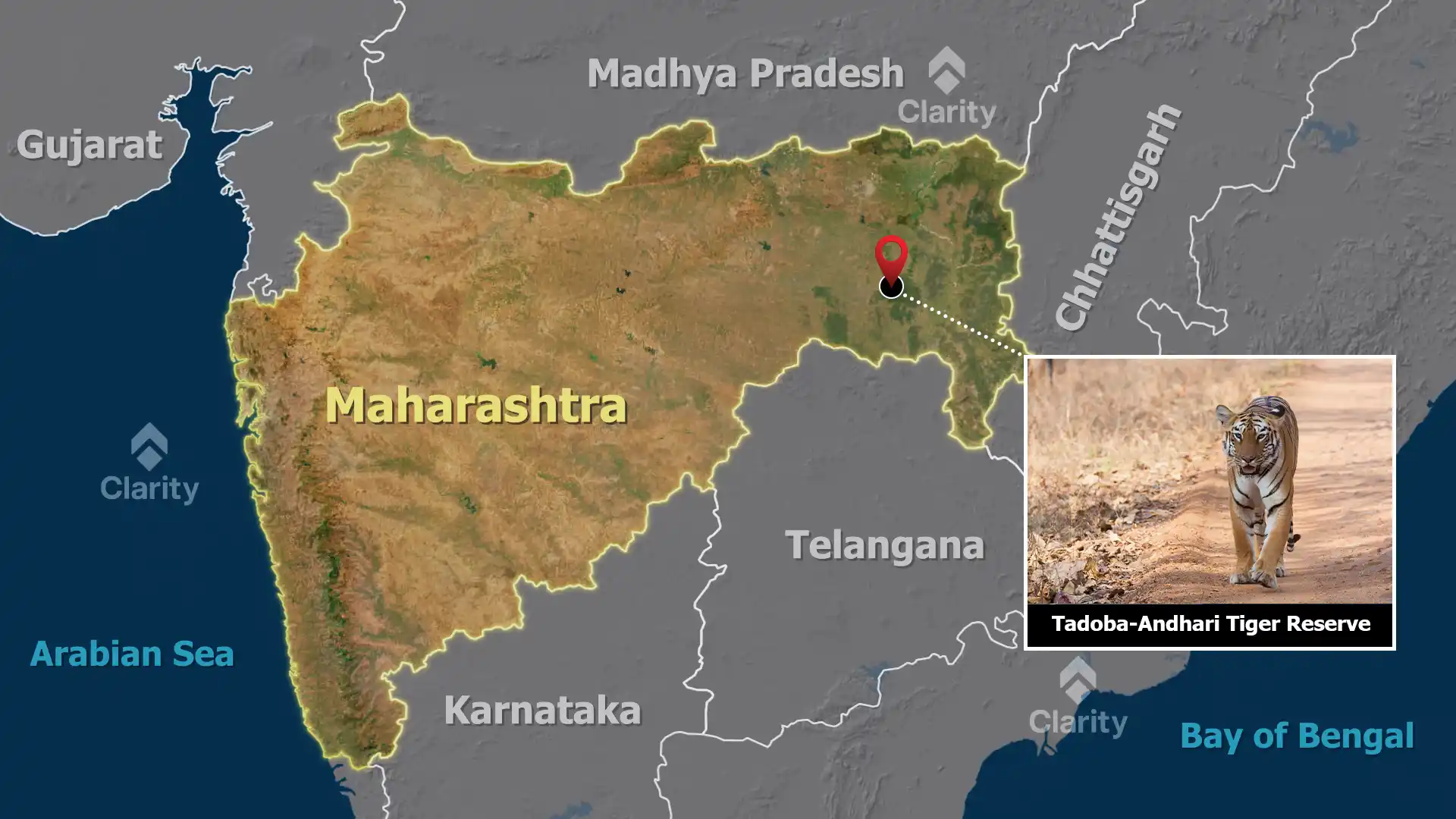
Tadoba–Andhari Tiger Reserve (TATR) lies in the Chandrapur district of Maharashtra and covers about 1,727 km² (including a core area of about 625 km²); within it, Tadoba National Park (116.55 km², established 1955) is Maharashtra’s oldest national park. The reserve is named after the local deity Taru (Tadoba) and the Andhari River that flows through the area. Its landscape is varied, with teak forests, meadows, cliffs, lakes and streams. Tadoba Lake, Kolsa Lake and the Andhari River provide water year‑round and support marsh crocodiles.
The forest is dominated by southern tropical dry deciduous trees such as teak. Medicinal plants like kach kujali and bheria grow here. The reserve is home to Bengal tigers, leopards, gaur (Indian bison), sloth bears, dholes (wild dogs), nilgai and more than 195 species of birds. Reptiles include snakes, pythons and star tortoises. The area was brought under Project Tiger in 1993-94, and conservation efforts focus on habitat restoration, anti‑poaching patrols and community awareness.
Key points
- Census findings: The machan census reported 42 tigers and 13 leopards. Herbivores made up more than half of the sightings, underscoring the reserve’s healthy prey base. Volunteers also noted gaur, wild boar and Indian peafowl. Citizen participation was high, with most watchtowers booked in advance.
- Biodiversity: Apart from big cats, TATR hosts rare species like sloth bears and honey badgers. Over 195 bird species, including honey buzzards, crested serpent eagles and paradise flycatchers, have been recorded.
- Tourism and seasons: Jeep safaris and boat rides operate mainly during winter and summer. Summer (March–May) offers higher chances of spotting tigers near waterholes, while the monsoon (June– September) brings lush greenery but limited tourism. Winters (October–February) provide comfortable weather.
- Access: The nearest railway station is Chandrapur, about 45 km away. The park can also be reached by road from Nagpur (~150 km) and via flights to Nagpur airport followed by a road journey.
Significance
Regular wildlife censuses help authorities monitor population trends and manage the reserve’s ecology. Healthy herbivore numbers are crucial for sustaining apex predators like tigers. TATR’s conservation efforts provide a model for balancing tourism with wildlife protection and engaging local communities in conservation.
Sources: Devdiscourse