

Why in news?
Russia has protested planned military exercises involving Japan, the United States and Australia. Its 1 September statement specifically objected to American Typhon ground-based missile systems. Moscow described the deployment as a security threat and warned of countermeasures. The dispute highlights how mobile long-range weapons can affect regional perceptions well beyond an exercise site.
What prompted the latest dispute?
Russian Foreign Ministry spokesperson Maria Zakharova discussed the issue during a briefing in Vladivostok. She said Moscow had raised its objections with Japan’s embassy. Russia also expressed concern about exercises near its Far Eastern borders. These statements describe Russia’s position, not an agreed assessment of the threat.
The United States had sent Typhon equipment to Kagoshima Prefecture for exercises earlier in 2026. Reporting based on Japan’s defence ministry identified Kanoya Air Base as a deployment location. Further participation was planned for September training. This is distinct from the system’s earlier appearance at Iwakuni in 2025.
Exercise deployments and permanent stationing are different arrangements. A temporary movement can still have political significance. However, its duration, purpose and subsequent location require separate evidence. An exercise announcement should not be turned into a claim of permanent basing.
What Typhon actually is
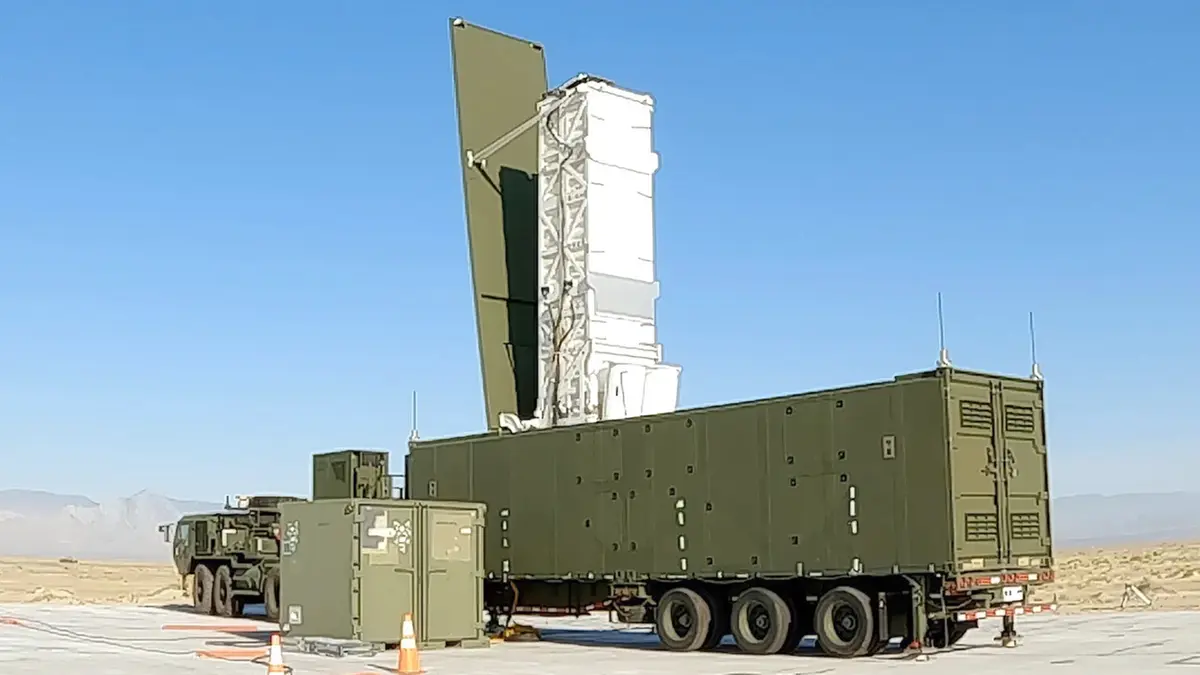
Typhon is the United States Army’s Mid-Range Capability system. It is a land-based missile-launching system, not a single missile type. Its launchers and supporting equipment can be transported between locations. The system also requires command, communication and logistical support.
It can launch Tomahawk cruise missiles and Standard Missile-6 weapons. These are different missile families with different characteristics and roles. Typhon adapts established naval technologies for land-based use. Its capabilities therefore depend partly on the ammunition and configuration involved.
A cruise missile flies through the atmosphere using powered flight. Its performance differs from that of a ballistic missile following a primarily ballistic trajectory. Typhon should not simply be described as a ballistic-missile system. Nor is the entire system equivalent to a hypersonic weapon.
The Army developed this capability to fill a gap in its longer-range land-based fires. Using existing technologies can shorten development compared with an entirely new missile family. However, moving a weapon onto land introduces new integration and support requirements. A launcher alone does not represent a complete operational capability.
Why Japan’s geography matters
Japan is an island country on the western side of the Pacific Ocean. Kyushu is the southwesternmost of its four principal islands. Kagoshima Prefecture includes the southern part of Kyushu. Kanoya is therefore in southern Japan, not beside Russia’s northern frontier.
Hokkaido lies at Japan’s northern end, much closer to Russia’s Far East. The Sea of Japan separates much of Japan from the Asian mainland. Russia’s Pacific coastline and nearby islands form part of the wider security setting. Exercise areas and missile locations must be distinguished within this geography.
This distinction prevents misleading maps or descriptions. Exercises may involve several widely separated regions. A weapon’s presence somewhere in Japan does not establish its presence at every training site. Specific deployment claims need evidence for the named location and period.
Deterrence and the risk of competing interpretations
Longer-range land-based weapons can add options for an alliance during a crisis. They can also complicate an opponent’s military planning. Supporters describe such capabilities as strengthening deterrence. Opponents may instead see them as increasing vulnerability and pressure to respond.
This creates a familiar security dilemma. One side’s effort to improve its own protection can alarm another side. The second side may then expand its forces or deployments. Each government can portray its response as defensive while overall tensions increase.
Public explanation and military communication cannot eliminate strategic rivalry. They can, however, reduce confusion about exercise schedules and intentions. Clear distinctions between training, testing and permanent deployment are useful. Misreading these categories can make an already tense situation more difficult.
India has an interest in a stable Indo-Pacific and predictable maritime conditions. It can study these developments without adopting every participant’s threat assessment. The relevant lesson is broader than any particular launcher. Technology, geography and political signalling must be assessed together.
Conclusion
The Typhon dispute shows how military exercises can carry wider strategic consequences. The system adds a mobile land-based option for long-range weapons. Its significance depends on location, ammunition, duration and operational context. Accurate reporting should separate these facts from competing political claims. Stable communication remains important as regional military capabilities continue to evolve.