

Why in news?
United States Ambassador Sergio Gor visited Thiksey Monastery during an official trip to Ladakh. He reached Leh from Srinagar and visited the monastery on 21 August 2026. The visit formed part of his engagements with local institutions and communities. Thiksey is a major Tibetan Buddhist centre in the Indus Valley, east of Leh. The event drew attention to Ladakh’s living monastic heritage and sensitive Himalayan setting.
Location and physical setting
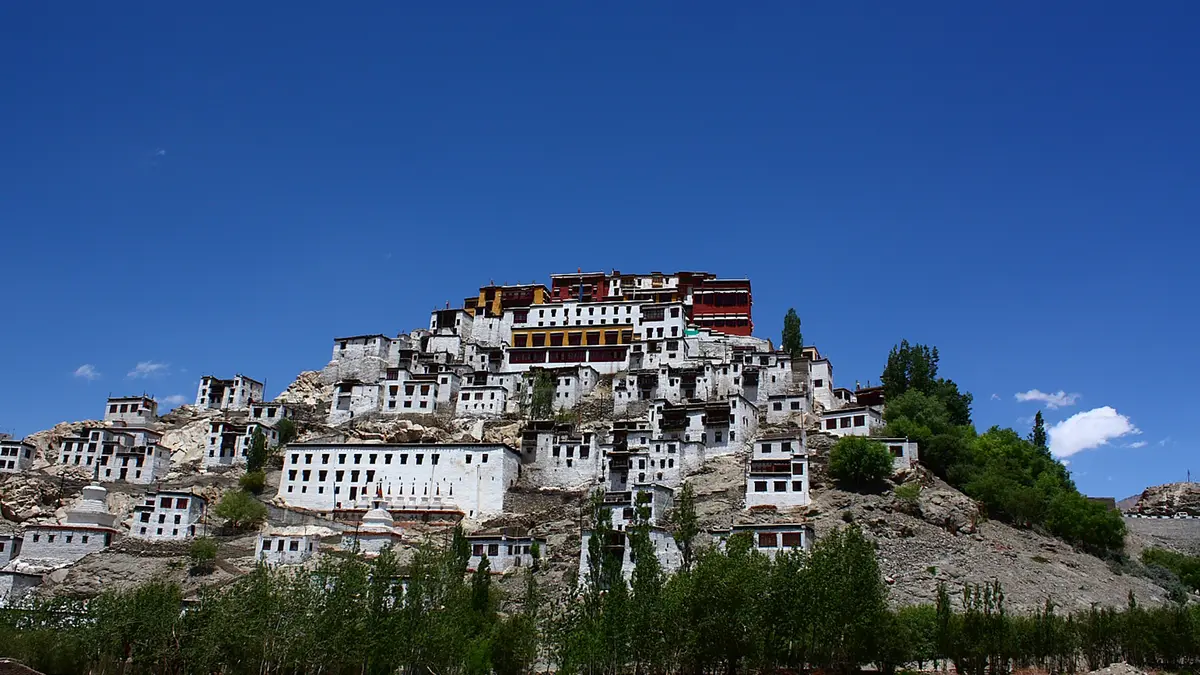
Thiksey stands on a hill around 19 kilometres east of Leh. It overlooks the Indus Valley and the settlements below. The monastery’s stepped buildings rise along the slope. Their arrangement gives the complex a fortress-like appearance when viewed from the valley floor.
The Indus enters Ladakh from the Tibetan Plateau and flows westwards through the region. Its valley supports settlements within a high-altitude cold desert. Rainfall is limited because surrounding mountains block monsoon moisture. Irrigation from rivers and snowmelt therefore supports most farming and habitation.
History and religious affiliation
Official Ladakh tourism records describe Thiksey as a fifteenth-century monastery. The Leh district administration gives 1433 as its founding year. It belongs to the Gelug school of Tibetan Buddhism. This school places strong emphasis on monastic discipline, study and organised religious education.
The monastery remains a functioning institution rather than an abandoned monument. Monks live, study and conduct ceremonies there. Prayer halls contain religious images, manuscripts and ritual objects. Residential spaces, assembly areas and shrines form one connected complex. Daily practice gives the heritage site its continuing meaning.
Architecture and important features
Thiksey’s white buildings rise in ordered tiers towards the main halls. Official descriptions compare its visual form with the Potala Palace in Lhasa. The comparison concerns appearance, not identical size or history. Its elevated plan also provides wide views across the Indus Valley.
A prominent attraction is a roughly 15-metre image of Maitreya Buddha. Maitreya represents the future Buddha in Buddhist tradition. The statue was installed during the twentieth century. Painted walls, thangkas and ceremonial objects add artistic value. Their care requires both specialised conservation and religious sensitivity.
Culture within a border region
Ladakh lies across the high mountains of northern India. Historic routes linked its valleys with Tibet, Central Asia and Kashmir. Buddhism travelled through these networks and developed local forms. Monasteries became centres of worship, learning, art and community organisation.
Modern borders reduced older movement, but cultural links remain visible. Language, architecture and ritual connect Ladakh with the wider Tibetan Buddhist world. This heritage does not remove local diversity. Muslim, Buddhist and other communities together shape the region’s social history.
Why diplomatic visits matter
A foreign ambassador’s monastery visit can support cultural understanding and people-to-people contact. It also gives visibility to regional history beyond strategic headlines. Such visits should respect monastic schedules and community priorities. They do not automatically create a new diplomatic agreement or policy.
Ladakh also has major strategic importance because of its international frontiers and military geography. Cultural engagement should not reduce the region to security concerns alone. Heritage, livelihoods and ecology deserve equal attention. Careful public language can recognise all these dimensions without making unsupported political claims.
Managing tourism and conservation
Visitors provide income for local transport, guides and hospitality. Heavy footfall can also strain old structures and narrow spaces. Dust, vibration and unsuitable repairs may harm paintings or woodwork. Conservation plans need trained specialists, monks and local administrators. Religious use must remain central to every decision.
The high-altitude environment creates additional difficulties. Strong sunlight, freezing temperatures and changing moisture affect materials. Water and waste systems face seasonal pressure. Visitor guidance can reduce crowding and disrespectful behaviour. Documentation and disaster planning can protect collections during fires or earthquakes.
A living monastery, not only a tourist site
Thiksey combines architecture, art, religious study and community life. Its value cannot be measured only through visitor numbers. Conservation must therefore preserve both physical objects and the practices that give them meaning.
Conclusion
The ambassador’s visit brought fresh attention to an important Ladakhi institution. Thiksey explains the region through landscape, faith, art and long cultural connections. Diplomatic visibility can help wider understanding, but preservation requires steady local work. Tourism should support rather than interrupt monastic life. The best outcome would protect both the historic complex and its living traditions.