

Why in news?
In June 2026 researchers published a study in the journal Science revealing how the Venus flytrap closes its trap so rapidly. The findings explain the physical changes that allow this carnivorous plant to snare insects in a fraction of a second.
Background
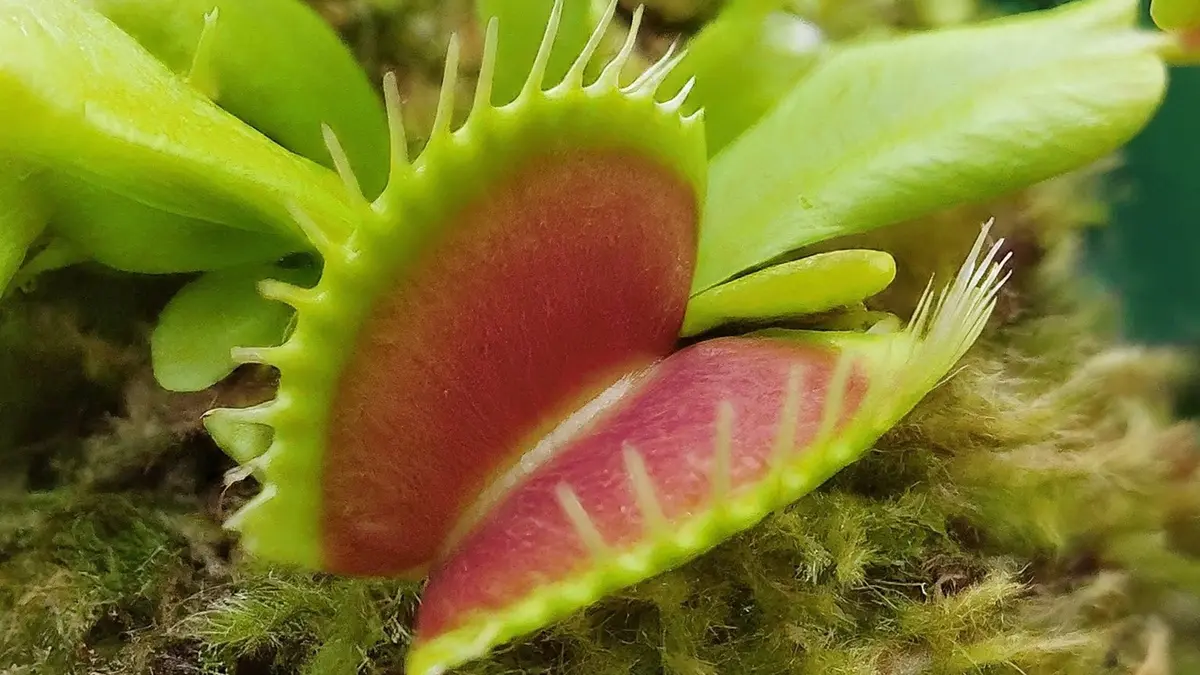
The Venus flytrap (Dionaea muscipula) is a small carnivorous plant native to the wetlands of North and South Carolina in the United States. It grows in nutrient‑poor, acidic soils and supplements its diet by capturing insects. Each leaf ends in a two‑lobed trap lined with trigger hairs. When an insect touches these hairs twice within about twenty seconds, an electrical signal travels through the leaf and the trap snaps shut, enclosing the prey for digestion. Charles Darwin called the Venus flytrap one of the most wonderful plants in the world.
What the study found
- Cell‑wall softening: Scientists observed that when the trap is stimulated, cells in the outer layer of the lobes soften by about 30–40 percent. This rapid softening makes the cell walls flexible and releases stored elastic energy.
- Pre‑loaded spring: The Venus flytrap behaves like a loaded spring. Before closure, the lobes are in a state of tension. When the cell walls soften, the stored energy causes the lobes to bend inward, closing the trap in as little as one tenth of a second.
- Methodology: Researchers used high‑speed imaging, mechanical indentation and mathematical modelling to measure changes in cell stiffness and to simulate the bending motion. They described the cell‑wall softening as the fastest known in plants.
Implications
Understanding the Venus flytrap’s snapping mechanism answers a long‑standing question in plant biology and may inspire the design of soft robotic devices that mimic its rapid motion. The study also shows how plants can convert chemical signals into fast mechanical responses.
Conclusion
The Venus flytrap’s snap demonstrates the remarkable ingenuity of plants. By uncovering the cellular changes that power this movement, scientists have provided insight into plant biomechanics and opened possibilities for bio‑inspired engineering.