

Why in news?
On 2 June 2026 the Archaeological Survey of India removed brick walls that had been built inside the towering eastern gateway of the Virupaksha Temple at Hampi. These walls had housed a temporary office. Their removal has reopened the original mantapa (pillared hall) and revealed a Shiva idol, much to the delight of devotees and local guides.
Background
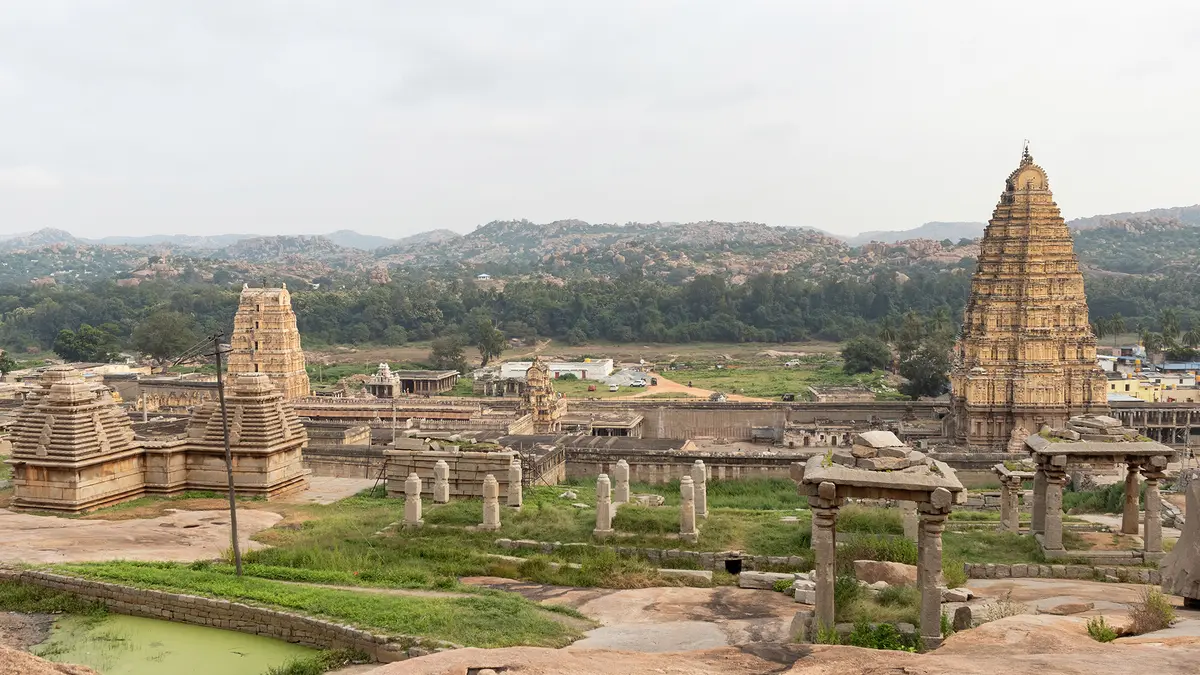
The Virupaksha Temple is the principal shrine in the Hampi group of monuments in Karnataka, a UNESCO World Heritage site. Dedicated to Lord Virupaksha, a form of Shiva, the temple complex has evolved over centuries. Its earliest shrines date to the seventh century, but most of the structure was built during the Vijayanagara Empire in the 14th to 16th centuries. The complex features a 49‑metre tall gopuram (gateway tower), courtyards, pillared halls and subsidiary shrines. Unlike many monuments at Hampi that are in ruins, the Virupaksha Temple continues to function as a living pilgrimage centre. Pilgrims flock to witness daily rituals and the annual chariot festival.
Recent restoration actions
- Removing intrusive walls: The ASI cleared the partition walls erected for office use inside the eastern gopuram, thereby restoring the architectural integrity of the gateway and allowing visitors to view the original mantapa and Shiva idol.
- Cleaning nearby temples: Officials also cleaned the nearby Kari Thiruvengalanatha Temple near Penukonda gate, which had been misused by anti‑social elements. The removal of debris aims to preserve the sanctity of the heritage structures.
- Community appreciation: Local guides and residents welcomed these actions, noting that such interventions improve visitor experience and highlight the original craftsmanship of the Vijayanagara builders.
Conclusion
The restoration of the Virupaksha Temple’s gopuram demonstrates how sensitive conservation work can enhance both heritage value and visitor experience. Keeping living temples free from intrusive structures ensures that future generations can appreciate their history and spirituality.