

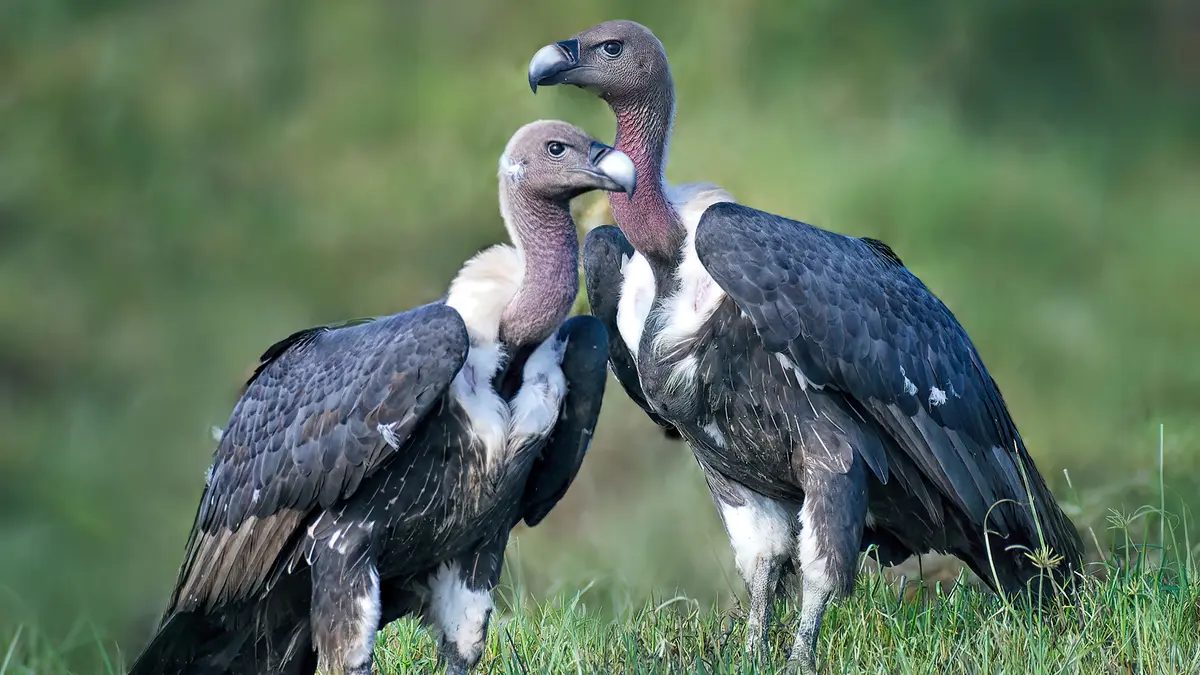
Why in news?
Wildlife reports in June 2026 noted the continued decline of South Asia’s vulture populations, drawing attention to the white‑rumped vulture. Once the most common bird of prey in India, its numbers have collapsed by more than 99 % since the 1990s due mainly to poisoning from veterinary drugs like diclofenac.
Background
The white‑rumped vulture (Gyps bengalensis) is a medium‑sized member of the griffon vulture group. It was formerly abundant across the Indian subcontinent, from Pakistan and India to Bangladesh, Nepal and Myanmar. The species nests in tall trees and cliffs and scavenges on livestock carcasses, playing a critical role in cleaning the environment. In the mid‑1990s populations crashed when vultures ingested the anti‑inflammatory drug diclofenac from dead cattle. The drug causes kidney failure in vultures, leading to almost total collapse of three Gyps species. India banned veterinary diclofenac in 2006 and later banned other harmful drugs such as ketoprofen and nimesulide, but recovery remains slow.
Physical description
- Size: Adults measure about 75–85 cm in length. Their wingspan ranges from 1.8 m to 2.1 m and weight varies between 3.5 and 7.5 kg. Males and females look similar.
- Plumage: Adults have blackish plumage with a distinctive white neck ruff and a white patch on the lower back and upper tail. The wings show a pale grey patch when folded. Immatures are browner and lack the bright white rump.
- Head and bill: Like other vultures, the head and neck are largely featherless, aiding hygiene while feeding on carrion. The bill is short, deep and stout, adapted for tearing flesh.
Ecology and threats
- Habitat: White‑rumped vultures occur in open countryside, villages and towns near human habitation. They roost and nest in trees or cliffs and travel long distances searching for carcasses.
- Ecological role: By consuming dead animals, vultures prevent the spread of disease and support human health. Their decline has been linked to increases in feral dog populations and associated rabies cases.
- Main threats: Diclofenac poisoning remains the leading cause of decline. Other threats include poisoning from carcasses laced with pesticides to kill stray dogs, collision with power lines and electrocution, habitat loss and human disturbance at nesting sites.
- Conservation actions: India, Nepal and Pakistan banned veterinary diclofenac and promote safer alternatives like meloxicam. Vulture conservation programmes run captive breeding centres and establish Vulture Safe Zones where harmful drugs are eliminated. Education and enforcement are ongoing.
Conclusion
The white‑rumped vulture is a vital part of South Asia’s ecosystem. Massive population declines due to drug poisoning prompted policy changes and conservation action, but recovery is slow and uncertain. Continued monitoring, strict control of harmful veterinary drugs and protection of nesting sites are essential to save this critically endangered scavenger.
Sources: TH