

Why in news?
Scientists at the Jawaharlal Nehru Centre for Advanced Scientific Research developed a new amyloid-detection platform. It combines a fluorescent molecule called TZ-48 with a smartphone-linked system named ADxFluor. The Department of Science and Technology publicised the work on 25 August. The study offers a possible route towards simpler Alzheimer’s biomarker testing.
Understanding Alzheimer’s disease
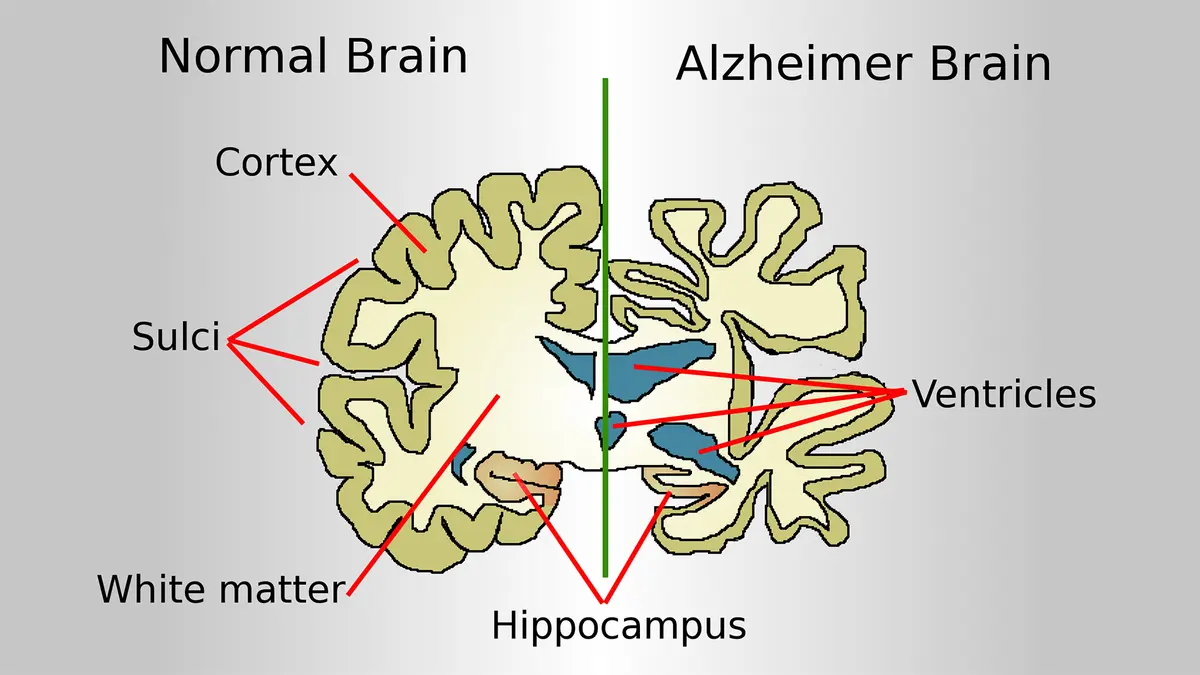
Alzheimer’s disease is a progressive disorder that damages brain cells. Memory difficulty is common, but language, judgement and behaviour can also change. Symptoms worsen as more brain networks become affected. It is the most common cause of dementia.
Dementia is a syndrome, not one single disease. The World Health Organization estimates that Alzheimer’s may cause 60 to 70 per cent of cases. Other causes include vascular disease and Lewy body disorders. Accurate assessment must therefore consider several possible explanations.
Amyloid and other biomarkers
Beta-amyloid is a protein fragment found naturally in the body. In Alzheimer’s, abnormal forms can collect into plaques outside nerve cells. Tau protein can also form tangles within cells. These changes accompany inflammation, damaged connections and eventual nerve-cell loss.
A biomarker is a measurable sign of a biological process. Amyloid can be examined through positron emission tomography or body-fluid tests. Cerebrospinal fluid tests also measure amyloid and tau. New blood tests seek easier access, but results still need clinical interpretation.
A positive amyloid result does not independently explain every memory problem. Some people have amyloid deposits without clear symptoms. Doctors combine history, cognitive testing, examination, laboratory work and brain imaging. Biomarkers support this assessment rather than replace it.
How TZ-48 works
TZ-48 is a small molecule that responds when it binds to amyloid-beta fibrils. Its fluorescence intensity and lifetime change after binding. Fluorescence lifetime measures how long emitted light persists after excitation. That measurement can be more stable than brightness alone.
The researchers used confocal microscopy and fluorescence lifetime imaging. TZ-48 crossed the blood–brain barrier in the tested mouse model. It labelled amyloid plaques in transgenic mouse brains. The team also examined amyloid in cerebrospinal fluid and blood serum.
What ADxFluor adds
ADxFluor links the probe’s fluorescence response with smartphone-based quantification. A dedicated application captures and analyses the visible change. This approach could make a future test more portable. It could also reduce dependence on costly imaging equipment for initial assessment.
The platform distinguished serum from Alzheimer’s-model and healthy mice in the study. This is useful proof of principle. It is not evidence of diagnostic accuracy in people. Human samples, clinical comparisons and regulatory review remain necessary before routine medical use.
Why accessible testing matters
Positron emission tomography needs specialised equipment and trained staff. A lumbar puncture collects cerebrospinal fluid and is more invasive than a blood draw. High costs limit availability in many settings. Portable blood-based methods could widen access if they achieve reliable clinical performance.
Earlier biological detection may help select patients for specialist care or research. It can also support monitoring in treatment trials. However, screening without counselling may create anxiety and false certainty. A responsible pathway needs consent, data protection and clear referral services.
Scientific and clinical limits
Mouse models reproduce selected features of Alzheimer’s, not the complete human disease. Serum chemistry can also differ across people and health conditions. A useful test must show sensitivity, specificity and repeatability in diverse human groups. Laboratories also need common calibration standards.
The peer-reviewed paper presents a research platform and translational foundation. It does not announce a hospital-ready diagnostic kit. That distinction protects patients and the credibility of the science. Strong validation can later determine the platform’s actual clinical role.
This is promising research, not a standalone diagnosis
TZ-48 and ADxFluor were demonstrated through laboratory work and mouse models. They have not yet replaced established clinical assessment. Human validation and regulatory evaluation are still required.
Conclusion
The Indian study combines molecular sensing with a familiar digital device. Its strongest promise is accessible measurement of an important Alzheimer’s biomarker. The present evidence remains preclinical and should be described honestly. Careful human validation is the next essential step. Affordability will matter only when accuracy, safety and counselling are also secured.