

Why in news?
Recent satellite studies and news reports have drawn attention to the alarming decline in the water level of the Caspian Sea. Experts warn that climate change and upstream water extraction could cause the sea to drop by up to 30 metres by the end of the century.
Background
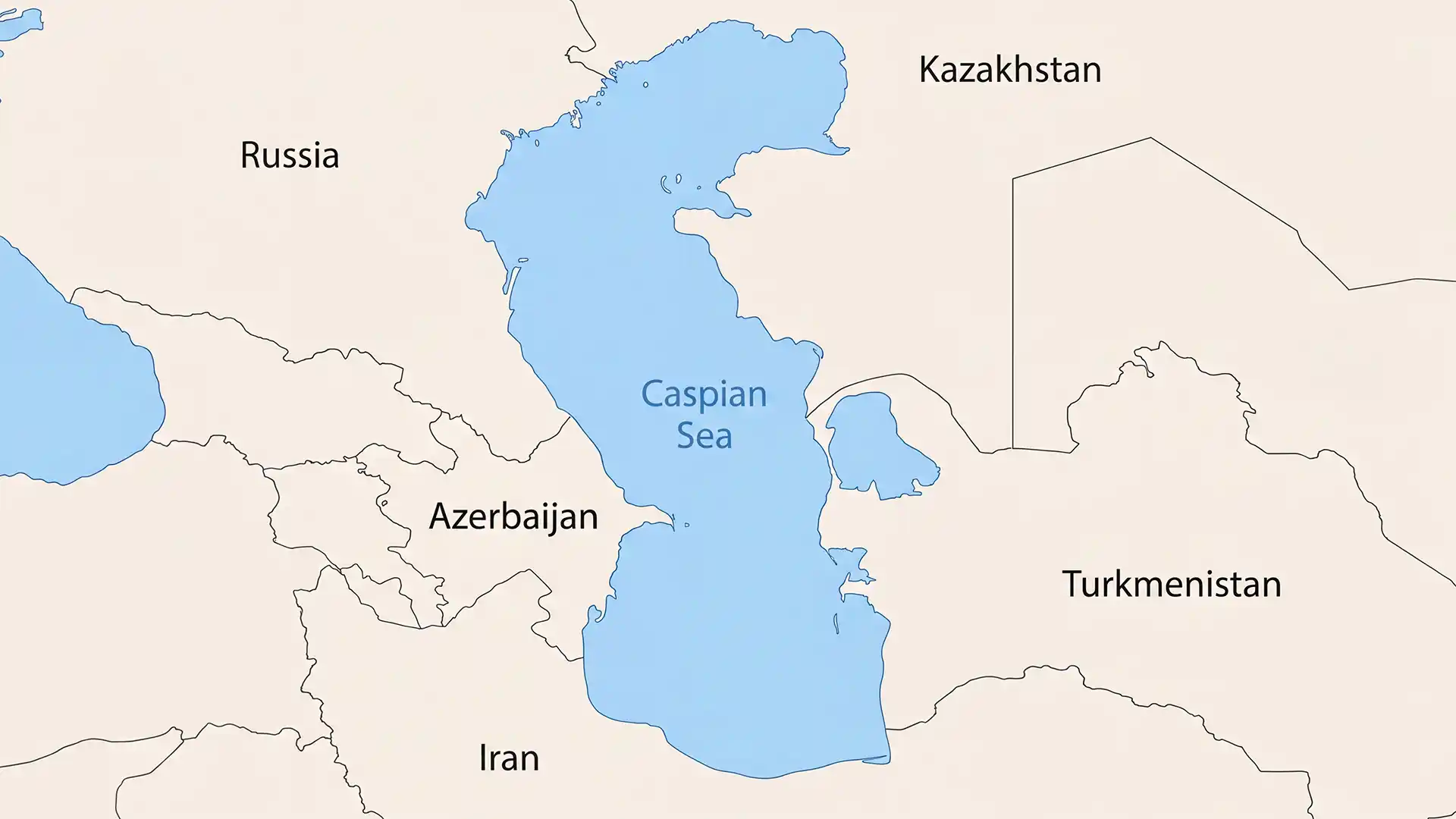
The Caspian Sea, bordered by Russia, Kazakhstan, Turkmenistan, Iran and Azerbaijan, is the world’s largest enclosed inland water body. Covering around 386,000 square kilometres—an area larger than Japan—it holds roughly one‑third of the planet’s inland surface water. It formed millions of years ago when an arm of the ancient Paratethys Ocean was cut off. The sea is saline but less so than oceans because it receives large inputs of freshwater from the Volga and other rivers.
Key facts
- Biodiversity hotspot: The sea hosts the endemic Caspian seal and several species of sturgeon whose roe is used to make caviar. Its wetlands support millions of migratory birds.
- Resource hub: Vast oil and gas reserves lie beneath its seabed, and its fisheries and agriculture sustain communities around its shores.
- Environmental decline: Since the mid‑1990s the Caspian’s water level has been falling due to higher evaporation from rising temperatures, reduced inflow and extraction for irrigation. Satellite images show salt flats replacing shallow bays, threatening fish breeding grounds.
- Projected drop: Scientists estimate that the sea could lose 8–30 metres of water by 2100, potentially stranding ports and altering regional climates.
Outlook
The shrinkage of the Caspian Sea is an urgent regional concern. It demands cooperation among littoral states to manage water use, mitigate climate change and protect vulnerable species. The crisis also highlights the broader impacts of global warming on inland seas and lakes worldwide.
Sources: ET