

Why in news?
A recent study warned that more than a third of Africa’s land could be at risk from Cassava Brown Streak Disease (CBSD), a viral blight that devastates cassava roots. The warning has raised concerns for food security because cassava is a major staple for millions of people across sub‑Saharan Africa.
Background
Cassava is a drought‑tolerant tuber crop grown widely in Africa. CBSD was first identified along the coast of East Africa in the mid‑20th century. It is caused by two related viruses – Cassava Brown Streak Virus (CBSV) and Ugandan Cassava Brown Streak Virus (UCBSV). The viruses infect the plant’s stems and storage roots, causing brown streaks in stems and necrotic rot in the tubers that often remains hidden until harvest.
Symptoms and spread
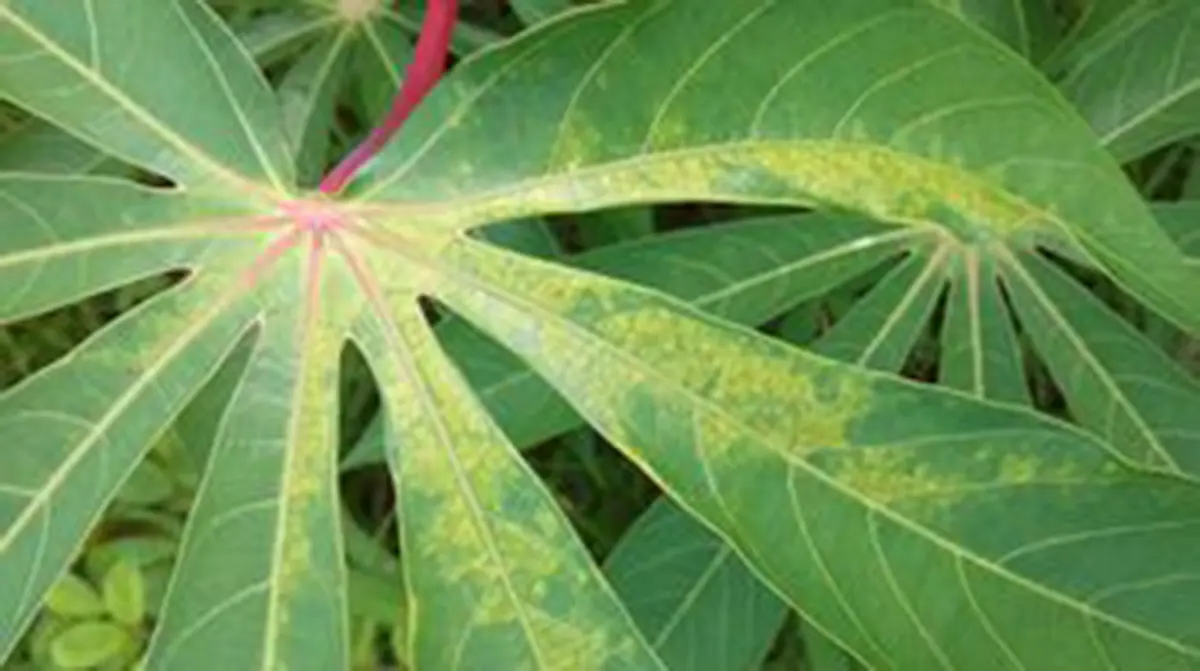
- Visible signs: Leaves show chlorosis (yellowing) and mottling; stems develop dark brown streaks; tubers exhibit brown, dry rot that severely reduces yield and quality.
- Vectors: The viruses are mainly transmitted by the whitefly Bemisia tabaci, particularly the Sub‑Saharan Africa 1 and 2 genetic groups that thrive in East and Central Africa. Farmers also spread the disease unintentionally by planting cuttings taken from infected plants.
- Climate and farming practices: Warmer temperatures and shifting rainfall patterns can favour whitefly populations. Weak formal seed systems and the reuse of contaminated cuttings allow the virus to persist and spread to new areas.
Impacts and management
- Food security threat: Cassava provides carbohydrates for hundreds of millions of Africans. Severe CBSD outbreaks can lead to total crop loss, undermining household food supplies and incomes.
- Geographical spread: Historically confined to coastal Tanzania and Mozambique, CBSD has moved inland to Uganda, Kenya, Rwanda, Burundi and the Democratic Republic of Congo. Researchers warn that without intervention it could reach major cassava‑growing countries in West Africa.
- Control measures: Scientists recommend distributing virus‑free planting material through clean‑seed schemes, developing and deploying cassava varieties resistant to both CBSD and cassava mosaic disease, practising crop rotation and intercropping to reduce whitefly populations, and strengthening farmer surveillance networks for early detection.
Conclusion
CBSD highlights the vulnerability of Africa’s food systems to plant diseases and pests. Timely surveillance, improved seed systems and investment in resistant varieties are essential to prevent the disease from spreading westward. Building farmer awareness and integrating pest management can help safeguard this vital crop.
Source: Down To Earth