

Why in news?
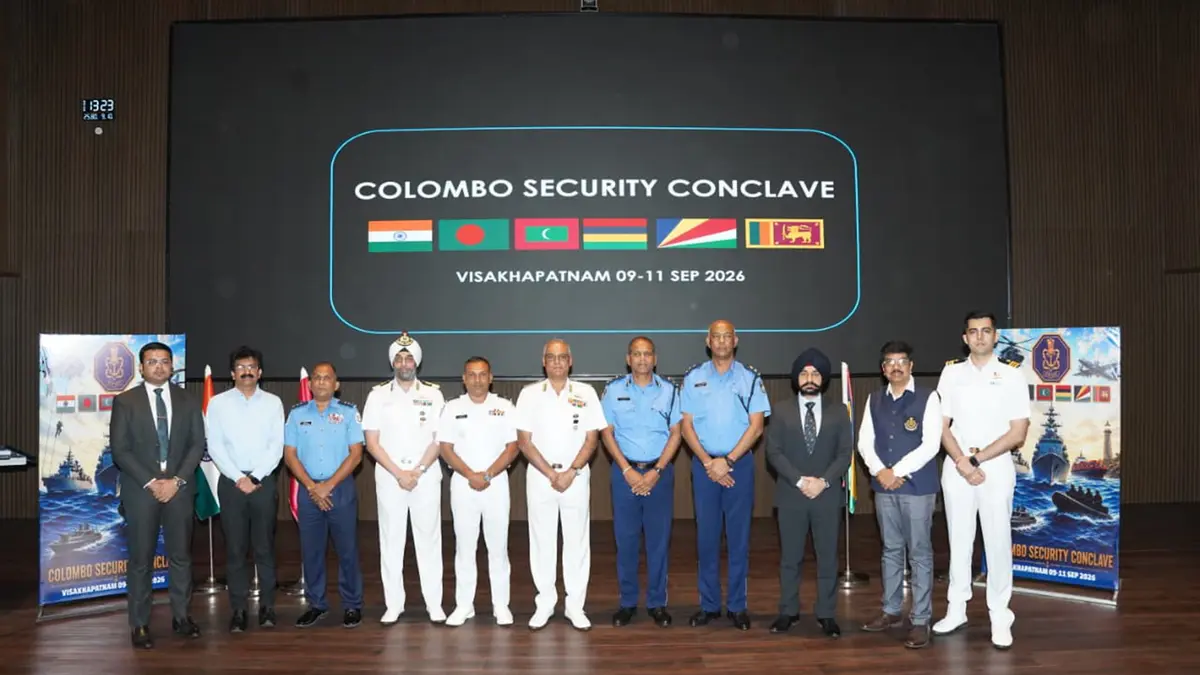
A three-day maritime-security exercise under the Colombo Security Conclave, or CSC, concluded in Visakhapatnam on 11 September 2026. The Defence Ministry announced its completion the following day. The conclave brings regional governments together to address security threats that cross national boundaries. Participants at the Eastern Naval Command worked through simulated situations involving terrorism, trafficking, narcotics and unlawful fishing. This was a tabletop exercise: officials practised decisions and coordination rather than conducting a reported combat operation at sea. A suspicious vessel may pass through several countries’ waters while different agencies hold separate pieces of information. The exercise addressed that coordination problem by reviewing procedures and information-sharing arrangements. Its value lies in improving readiness for an actual incident, not in establishing that a criminal network was dismantled during the simulation.
The organisation and its members
The conclave’s membership comprises India, Sri Lanka, Maldives, Mauritius, Bangladesh and Seychelles. Bangladesh was welcomed as the fifth member in July 2024. India publicly welcomed Seychelles as a full member in February 2026. Older descriptions that list Seychelles only as an observer therefore do not describe the position by this edition’s date.
The September exercise announcement refers to delegations from member states and observer nations without naming every participating country. Membership and attendance are different facts. The six-member list does not establish that each country sent a delegation to this event. Nor does it establish that participants had identical operational roles.
Members signed the charter and an agreement establishing the secretariat in Colombo on 30 August 2024. A permanent coordination structure helps turn occasional meetings into continuing work. It provides a setting for agreed priorities and follow-up. It does not replace national governments’ responsibility for their own forces, laws and investigations.
Five connected areas of cooperation
The founding statement identifies five areas: maritime safety and security; terrorism and radicalisation; trafficking and transnational organised crime; cybersecurity; and disaster assistance. The cybersecurity area also covers critical infrastructure and technology. These connections matter because a port, shipping company or coastal community can face several kinds of disruption at once.
A cargo movement, for example, involves shipping information, port procedures and decisions by national authorities. A suspicious movement may require information held outside the country where it is first noticed. This is an explanatory example, not an incident reported from the exercise. It illustrates why shared procedures can matter as much as patrol capacity.
What a tabletop exercise can test
In a simulated scenario, participants can work through who receives an alert, what information is missing and which authority should respond. They can identify delays without exposing people to a real emergency. Reviewing standard operating procedures means examining the agreed sequence of actions, including contacts, responsibilities and information that must accompany a request.
The ministry also referred to maritime domain awareness. This means understanding relevant activity in the maritime environment well enough to recognise risks and make decisions. More information alone is not sufficient. Agencies need reliable identification, timely exchange and a common understanding of what a report does, and does not, establish.
That awareness must then connect to lawful action. Detecting a suspicious vessel and proving an offence are different stages. An operational response may need to preserve evidence for investigators and courts. Regional coordination can support those stages, but a simulation does not itself confer arrest powers or remove jurisdictional requirements.
Why fishing was included
The exercise covered illegal, unreported and unregulated fishing. These are related but distinct problems. Illegal fishing violates applicable rules or permissions. Unreported fishing conceals or misstates catches where reporting is required. Unregulated activity involves gaps or failures in management arrangements, with its legal position depending on the circumstances.
The Food and Agriculture Organization explains that such practices undermine conservation and disadvantage fishers who follow the rules. Hidden catches also weaken the information used to manage fish stocks. The issue therefore links environmental protection, livelihoods and enforcement. It should not be reduced to a naval problem or a label for every foreign fishing vessel.
Geography and the practical outcome
Visakhapatnam lies on Andhra Pradesh’s Bay of Bengal coast and hosts the Eastern Naval Command. The exercise concerned the wider Indian Ocean, not merely the waters outside its venue. Members include mainland and island states, so cooperation must bridge different coastlines, distances and national capabilities rather than assume one uniform operating environment.
Conclusion
The exercise tested how regional authorities would connect information with decisions during maritime threats. The next substantive measure is whether agreed procedures improve real coordination when an incident occurs. Clear responsibilities, usable information and lawful follow-through are the practical outcomes sought. Completing an exercise marks preparation; those arrangements must then work during actual incidents.