

Why in news?
Queensland announced on 17 September that the Fitzroy River course at Rockhampton had received international sporting endorsement for the 2032 Games. The proposal covers rowing, para rowing, canoe sprint and para canoe events. World Rowing and Paddle Worldwide supported the course following a technical assessment of river and racing conditions. The planned venue is on the freshwater side of the existing Fitzroy Barrage, not an exposed ocean course. This endorsement allows the project to progress, but detailed planning and delivery remain ahead. The discussion has also drawn attention to flooding, water conditions and wildlife management, making the river's geography essential to understanding the sporting decision.
First identify the correct Fitzroy
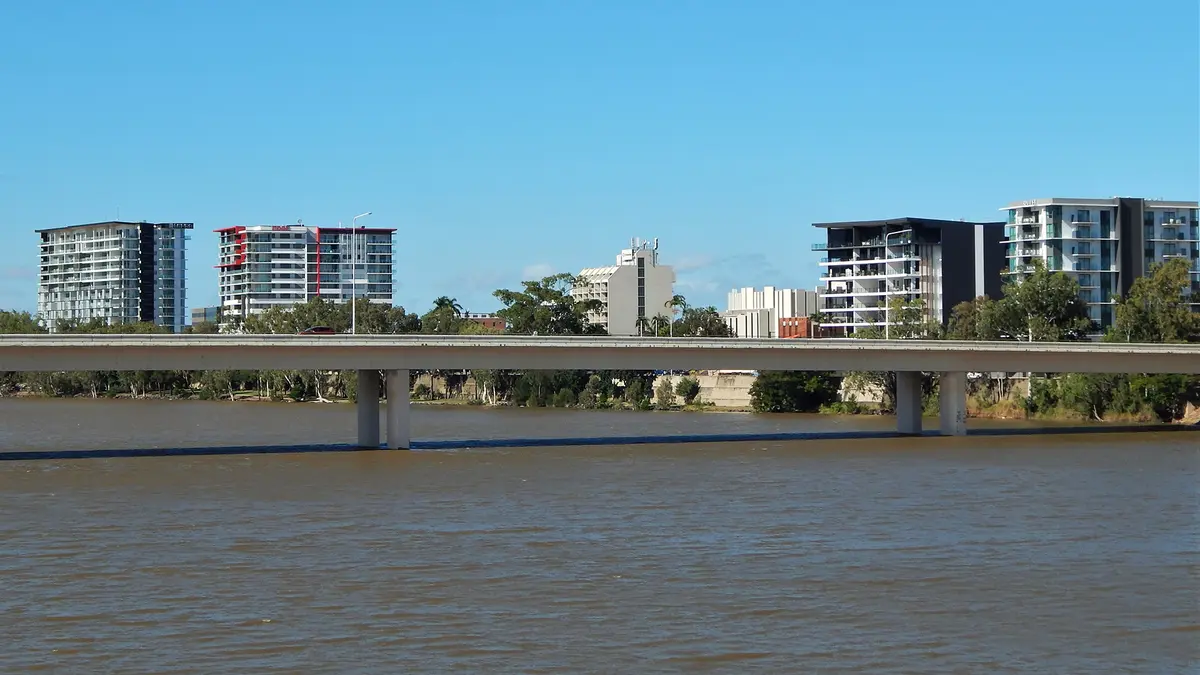
This is the Fitzroy River in Queensland, in eastern Australia. It flows through Rockhampton towards the coast. Australia also has a different Fitzroy River in Western Australia's Kimberley region. Facts about that western river cannot be transferred to the Olympic venue. Keeping the state and catchment clear is particularly important because descriptions of the two rivers can otherwise produce a convincing but geographically incorrect account.
The Queensland system drains a large part of central Queensland. The Dawson and Mackenzie join near Duaringa to form the Fitzroy. The Isaac, Nogoa and Comet also contribute to the wider basin. The Bureau of Meteorology describes a catchment of roughly 140,000 square kilometres. Water collected from extensive inland areas eventually passes through Rockhampton and reaches Keppel Bay, beside the southern Great Barrier Reef. Conditions at the proposed venue therefore depend partly on rainfall far upstream.
Why the barrage changes the setting
The proposed racing course lies upstream of the Fitzroy Barrage, in an existing freshwater reach. Downstream, the lower river is affected by tides. The barrage helps explain why a river near the coast can offer a different racing environment from an open tidal estuary. The September announcement does not concern construction of a new ocean barrier. It concerns assessment and development of a venue within an already modified river system.
Flatwater racing depends on fair conditions across neighbouring lanes. Differences in current, depth, wind exposure or waves can advantage one competitor over another. Technical assessment therefore needs more than a photograph of calm water. Queensland's announcement describes investigations into flows, riverbed conditions, water levels, wind and waves. The sporting endorsement concerns the suitability of the proposed course under that assessment; it is not a promise that natural conditions never vary.
A large catchment brings flood-management questions
The Bureau of Meteorology identifies the catchment's size and fan-like form as reasons for significant flood risk after prolonged heavy rain. Floodwater from major tributaries can converge and move through the lower system. Heavy rainfall nearer Rockhampton can also contribute. This makes catchment monitoring and advance planning important even when the venue itself has not experienced the heaviest rain.
Historical floods demonstrate that this is a working river system, not a permanently controlled sporting basin. That does not make a venue impossible. It means design and operating arrangements must respond to the river's behaviour. Access, drainage, equipment protection and emergency procedures belong alongside the racing layout. A successful technical assessment is one part of this process, while detailed infrastructure and operational decisions remain separate tasks.
Existing use and the proposed upgrade
The Games Independent Infrastructure and Coordination Authority identifies the existing flatwater course and Ski Gardens Precinct for upgrading. The river already supports rowing and paddling activities, including regattas and training. The project therefore builds on established use rather than introducing boating to an unused location. Proposed improvements are intended to support both Games-time requirements and continuing community sport afterwards.
The authority lists the site on Darumbal Country and places the project in its planning and approvals phase. Its timetable extends this work through 2026 and into 2027. Consultation, design and environmental considerations remain relevant as the proposal develops. The sporting federations' endorsement should not be mistaken for completion of every construction, cultural-heritage or environmental requirement associated with the project.
Wildlife and environmental safeguards
Public concern about crocodiles should be addressed through location-specific assessment and management, not through an unsupported claim that risk has disappeared. A count for a wider river or region would not establish the number present on a particular racing course. Equally, the existence of wildlife in the catchment does not by itself describe the effectiveness of proposed safeguards. Those questions require evidence about the venue and its operating arrangements.
The authority's environmental framework includes habitat disturbance, water quality, erosion, sediment runoff and cultural heritage. Construction can affect a river even without changing its main channel. For example, exposed soil can enter the water during rainfall. Managing these pathways connects venue development with the health of the surrounding river environment. The aim should be a usable sporting facility whose construction and operation respect the setting that makes it possible.
Conclusion
The Fitzroy decision is a sporting endorsement for a proposed upgrade on an existing freshwater reach in Queensland. It is neither a completed Olympic venue nor a declaration that river-management challenges have vanished. Its large catchment, barrage, flood behaviour and community use all shape the project. The next stages must turn the technical assessment into reliable infrastructure and operating safeguards while retaining the river's value beyond the Games.