

Why in news?
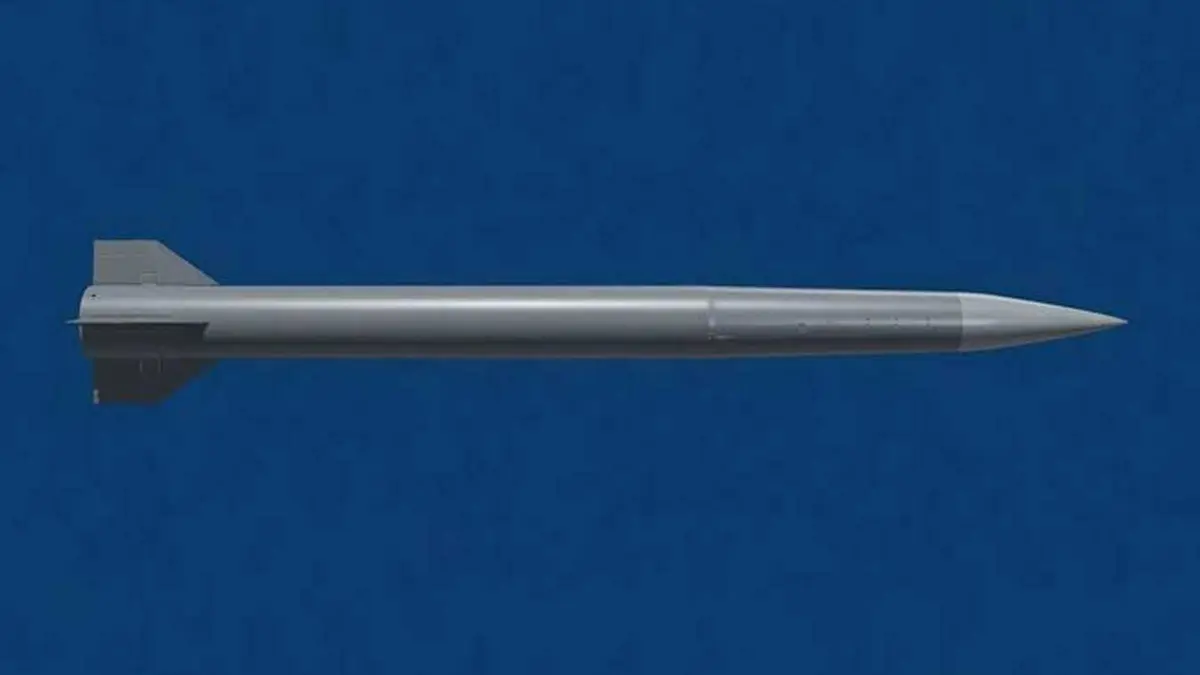
Ukrainian President Volodymyr Zelensky announced the first combat use of the domestically developed FP-7 missile on 1 October 2026. Built by the Ukrainian company Fire Point, FP-7 is a ground-launched ballistic missile intended to strike surface targets. The announcement matters because Ukraine is trying to develop its own weapons alongside supplies from foreign partners. Zelensky released launch footage and indicated that production was the next step. However, the target, location and detailed results were not disclosed, and the claimed combat outcome was not independently verified. The development is therefore an attributed operational claim, not public proof of the missile's accuracy, available stock or sustained production capacity.
Identifying the weapon before interpreting the claim
Fire Point develops several systems with similar names, including drones, the FP-5 Flamingo cruise missile and ballistic missiles. FP-7 belongs to the ballistic category. Its surface-strike role must also be distinguished from work on an interceptor derived from the same family. An interceptor is intended to engage an incoming threat; a surface-strike missile attacks a target on the ground. Similar designations do not make those missions interchangeable.
The War Zone's dated account describes an approximate range of 250 kilometres, based on Ukrainian and company information. That is a reported specification, not a measurement independently established from the announced strike. Range figures describe a design's intended reach under relevant conditions. They do not reveal where a particular missile was launched, what it carried or how far it actually travelled.
What makes a missile ballistic?
A ballistic missile is accelerated by a rocket during a powered part of its flight. Much of its subsequent path is governed by momentum and gravity, although guidance can still influence its course. The United States Missile Defense Agency describes boost, midcourse and terminal phases. These names separate the initial acceleration, the intervening flight and the final approach. They are a broad framework, not identical timings for every missile.
A cruise missile follows a different general pattern, using aerodynamic lift and sustained propulsion over much of its journey. In broad terms, it flies more like an aircraft, whereas a ballistic missile receives much of its energy early. The United States Congressional Budget Office explains this distinction in its missile-defence assessment. It concerns the flight mechanism, not whether a weapon is automatically accurate or impossible to intercept.
Why one launch cannot establish every advertised capability
A launch video can show that a vehicle left its launcher, but that observation answers only part of the question. Establishing a complete outcome requires evidence about the flight and what happened at its destination. Without those details, the public cannot infer an exact impact point or measure accuracy. The announcement should therefore be understood at the level actually supported: Ukraine says that FP-7 has entered combat use.
Range, payload and accuracy answer different technical questions. Range concerns distance; payload concerns what is carried; accuracy concerns closeness to the intended point. Speed is another characteristic, describing movement rather than the size of the carried load. These quantities cannot substitute for one another. A specification sheet helps identify a design's intended role, while flight and impact evidence are needed to evaluate its actual performance.
From development to a repeatable capability
Domestic production gives Ukraine a way to develop weapons under its own industrial programme. But a programme's strategic effect depends on more than ownership of the design. Repeatable manufacturing, dependable components and consistent performance determine whether an initial success can become a continuing capability. Zelensky's reference to production makes that next stage part of the announcement itself, rather than something already demonstrated by the footage.
The distinction between a prototype and a repeatable product helps explain this industrial challenge. A prototype tests whether a design can work; production must reproduce the required quality across many units. The broader programme also has to sustain testing and support, rather than relying on one successful example. These are general requirements of manufacturing, not evidence of a particular failure or achieved output at Fire Point.
Conclusion
The FP-7 announcement signals a claimed move from development into combat employment. Its longer-term significance depends on verified performance and the ability to manufacture dependable systems repeatedly. Keeping those stages separate allows the news to be understood without turning a first-use claim into an unsupported assessment of military effectiveness.