

Why in news?
A new study modelled hexavalent vaccination within India's public immunisation programme. One injection would combine antigens now delivered through separate infant vaccines. The model found operational savings but higher acquisition costs at current prices. It evaluated policy options and did not announce a national rollout.
Background
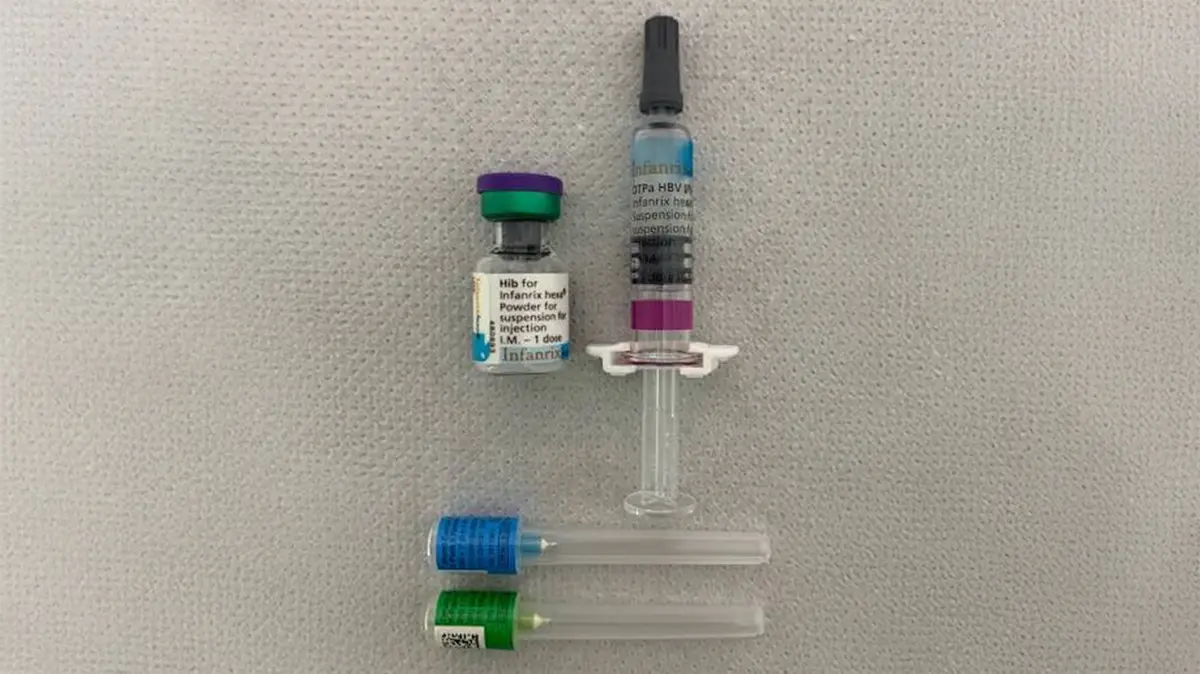
A hexavalent vaccine protects against six disease targets through one injection. These are diphtheria, tetanus, pertussis, hepatitis B, poliomyelitis and invasive Haemophilus influenzae type b disease. Pertussis is commonly called whooping cough.
Combination vaccines place several compatible antigens within one licensed product. They reduce injections without weakening the need for complete schedules; each dose must still arrive at the recommended age.
India's Universal Immunisation Programme currently gives pentavalent vaccine during infancy. Pentavalent doses cover the first five targets except polio; separate fractional inactivated poliovirus vaccine doses provide injectable polio protection.
Pentavalent doses occur at six, ten and fourteen weeks; injectable polio doses occur at six and fourteen weeks. A third fractional polio dose follows at nine months, while the first booster window is 16–24 months.
What the 2026 study examined
The published analysis compared existing delivery with two possible hexavalent strategies. It considered costs to government providers and to households; researchers included both vaccine prices and programme operations.
The first scenario replaced pentavalent and injectable polio vaccines during infancy. The second also replaced the first diphtheria, pertussis and tetanus booster; these alternatives produce different dose counts and price requirements.
Government costs included vaccines, syringes, storage and health-worker time. Household estimates covered caregivers' session time, while programme estimates included record-keeping and supply-chain work. The model assumed no fewer journeys because other vaccines remain due.
Fewer injections lowered requirements for syringes, safety boxes and cold storage. They also reduced administration time during infant visits; these operational gains were measurable but smaller than vaccine-price differences.
Why price determines the result
The current hexavalent price made both modelled scenarios more expensive overall. Scenario one added an estimated ₹8,821 million, while scenario two added ₹14,427 million. These results change when procurement prices change.
The study estimated that halving the unit price could balance its first scenario. The broader second scenario required ₹93 per dose or less for net savings.
Large public tenders can secure prices unlike those in private markets. Manufacturers may also offer different vial presentations or contract terms; a policy decision would therefore require current procurement quotations.
Economic models depend upon wages, attendance, wastage and cold-chain assumptions. Changes in any input alter the result. Sensitivity analysis shows uncertainty but cannot predict every implementation problem.
Potential programme benefits
Fewer injections may reduce distress for infants and caregivers. Simpler preparation can also lower handling mistakes during busy sessions. Health workers could spend saved time tracing missed children.
A combined product can simplify stock management when every component arrives together. Conversely, one shortage could interrupt protection against all six targets. Procurement planning must consider that concentration risk.
Cold-chain savings depend upon the product's vial size and packaging; a bulky single-dose presentation may not deliver every expected benefit. Storage estimates must therefore use the exact proposed product.
Combination does not necessarily remove clinic visits. Other vaccines remain due at the same ages. Programme designers should avoid promising fewer visits unless the complete schedule supports that claim.
Safety, effectiveness and regulation
A licensed hexavalent vaccine must demonstrate quality, safety and immune responses. The national regulator evaluates the particular product, manufacturing site and evidence; experience with one brand cannot automatically authorise another.
Post-marketing surveillance remains important after any introduction. Health workers report suspected adverse events following immunisation for investigation. A report alone does not prove that vaccination caused the event.
Changing products also requires training, revised records and clear public communication. Catch-up rules must cover children who began another schedule; digital systems should preserve each antigen's history accurately.
Equity and implementation
A simpler injection schedule can help understaffed facilities and mobile populations. Yet improved convenience will not remove distance, hesitancy or workforce shortages. Outreach and reliable supply remain central.
Budget impact matters because India vaccinates a very large birth cohort; a small price difference per dose becomes substantial nationally. Decision-makers must compare that cost with other health priorities.
Pilot implementation could test storage, acceptance and data systems before wider use. Independent evaluation should measure missed doses and real delivery costs. Price negotiations would then use stronger domestic evidence.
Conclusion
Hexavalent vaccination could simplify infant delivery and reduce several operational burdens. Adoption still requires an affordable product, regulatory approval and programme evidence.